
The world is born from chaos: cosmogonies
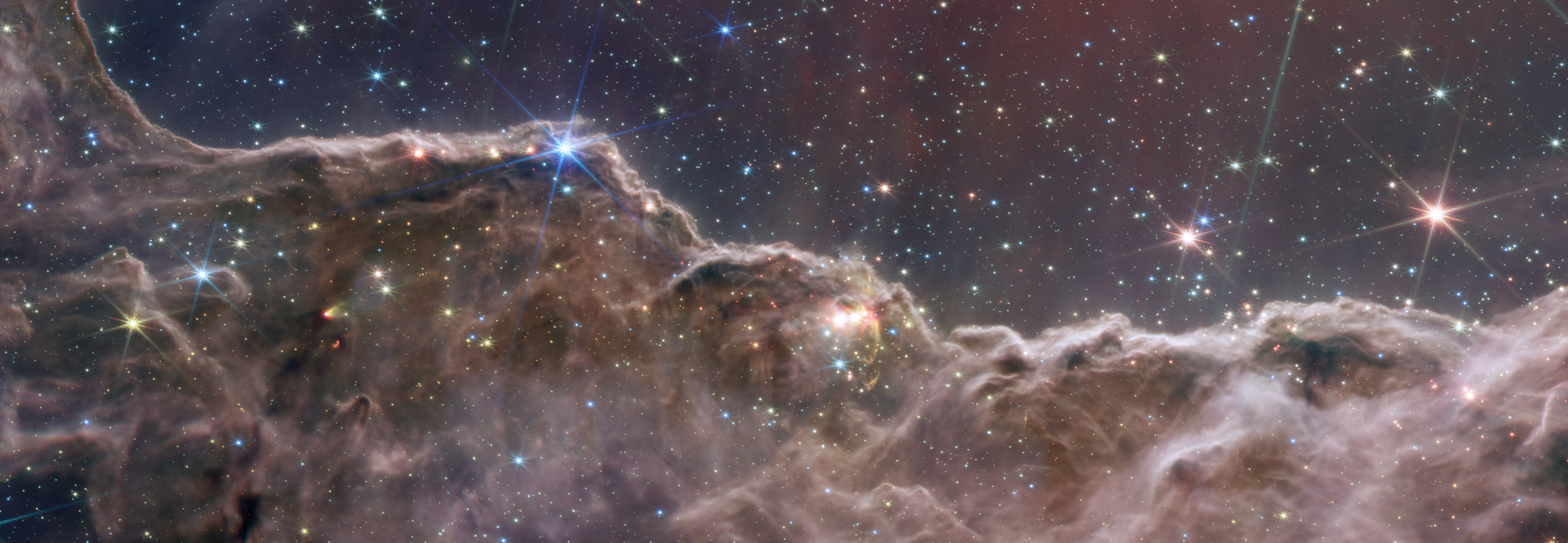
In Genesis, the earth is “formless and void.” Hesiod begins with Chaos. Norse stories open an abyss, Ginnungagap, between fire and ice. In Egypt, the waters of Nun precede the land. In Chinese tradition, Pangu emerges from an egg. These stories have neither the same origin nor the same meaning. Yet each imagines form emerging from a state in which the distinctions ordering our world do not yet exist.
Cosmology does not validate these stories. The Big Bang describes the expansion of a universe once extremely hot and dense, not an egg exploding into an empty nothing. The “vacuum” of physics has properties; it is not the absence of everything. Myths offer an image with which to think about the passage from the undifferentiated to the distinct, not a rival scientific explanation.
In the Mesopotamian Enuma Elish, Tiamat and Apsû give the primordial waters creative power. The egg of Pangu, like the Hiranyagarbha or “golden embryo” of Vedic texts, imagines a world contained before it unfolds. A formal resemblance to a cosmological beginning is not evidence of an ancient account of the Big Bang.
The bodies of Ymir and Pangu become the stuff of the world. We are not made from the body of a giant, yet the carbon, oxygen and iron in us were forged in earlier generations of stars. What makes structure possible in both scientific accounts and many creation stories is a difference: hot and cold, dry and wet, an energy gradient. Without difference, nothing takes shape.
Life and humanity: five persistent motifs
Adam is linked to adamah, the ground; Khnum models human beings on his potter’s wheel; Nüwa works with yellow mud; Enki and Ninmah knead clay. The human is made from ordinary matter, but a gesture, breath or name is still needed to bring it before its maker. Our talk about artificial intelligence often echoes this divide: we give a model an architecture, data and energy, then ask it to answer.
The clay motif has a distant scientific counterpart. Graham Cairns-Smith proposed that mineral surfaces might have organized the first complex molecules. It remains a hypothesis, not a demonstrated origin. In 1953, Stanley Miller produced amino acids by exposing a gas mixture to electrical discharges. He did not create life; he showed that some of its chemistry can arise from simpler compounds supplied with energy. The exact composition of the early atmosphere remains debated, and later analyses of Miller’s preserved samples revealed a richer chemistry than first reported.
In the Mayan Popol Vuh, creations are attempted in succession: mud dissolves, wood fails to become fully human, and maize opens another possibility. I do not read Darwin before Darwin here. I find an intuition that remains powerful: creation involves failures, variants and the unpredictable resistance of materials.
These are three motifs: clay, breath and failed attempts. A fourth is spontaneous generation. Aristotle accepted that some animals arose from mud or putrefying matter. Pasteur refuted that idea for organisms today. Abiogenesis poses a different, ancient question: how could chemistry once have produced a system able to sustain and evolve itself? The fifth motif, seeds arriving from elsewhere, takes us from the potter’s workshop into space.
The spread of life: panspermia
Anaxagoras imagined seeds dispersed throughout the universe. Lord Kelvin later considered meteorites as carriers of life; Svante Arrhenius proposed in 1903 that spores could travel under the pressure of starlight. In 1973 Francis Crick and Leslie Orgel speculated about directed panspermia, an intentional seeding of life. These ideas must be separated: the arrival of organic molecules is documented; the transport of viable organisms between worlds remains unproven; intentional seeding has no evidence at all.
The Murchison meteorite, which fell in 1969, yielded a rich inventory of organic compounds. Samples returned from Ryugu in 2020 contain uracil. NASA’s OSIRIS-REx mission returned samples from Bennu in 2023; analyses released in 2025 reported fourteen of the twenty amino acids used in terrestrial proteins, all five nucleobases of DNA and RNA, and salts from an older watery environment. None of this is the discovery of extraterrestrial life. It shows that some of life’s ingredients can form beyond Earth.
Some resilient organisms have survived experimental exposure to space. But survival outside the International Space Station does not demonstrate an interplanetary journey followed by the establishment of life elsewhere. Neither the Martian meteorite ALH84001 nor the Cheyava Falls rock studied by Perseverance constitutes accepted proof of extraterrestrial organisms.
Panspermia may change the scale of the question without resolving it. If life arrived from elsewhere, how did it begin there? Molecular panspermia is the best-supported version; lithopanspermia remains possible but unproved; directed panspermia is speculation.
Making life in the laboratory
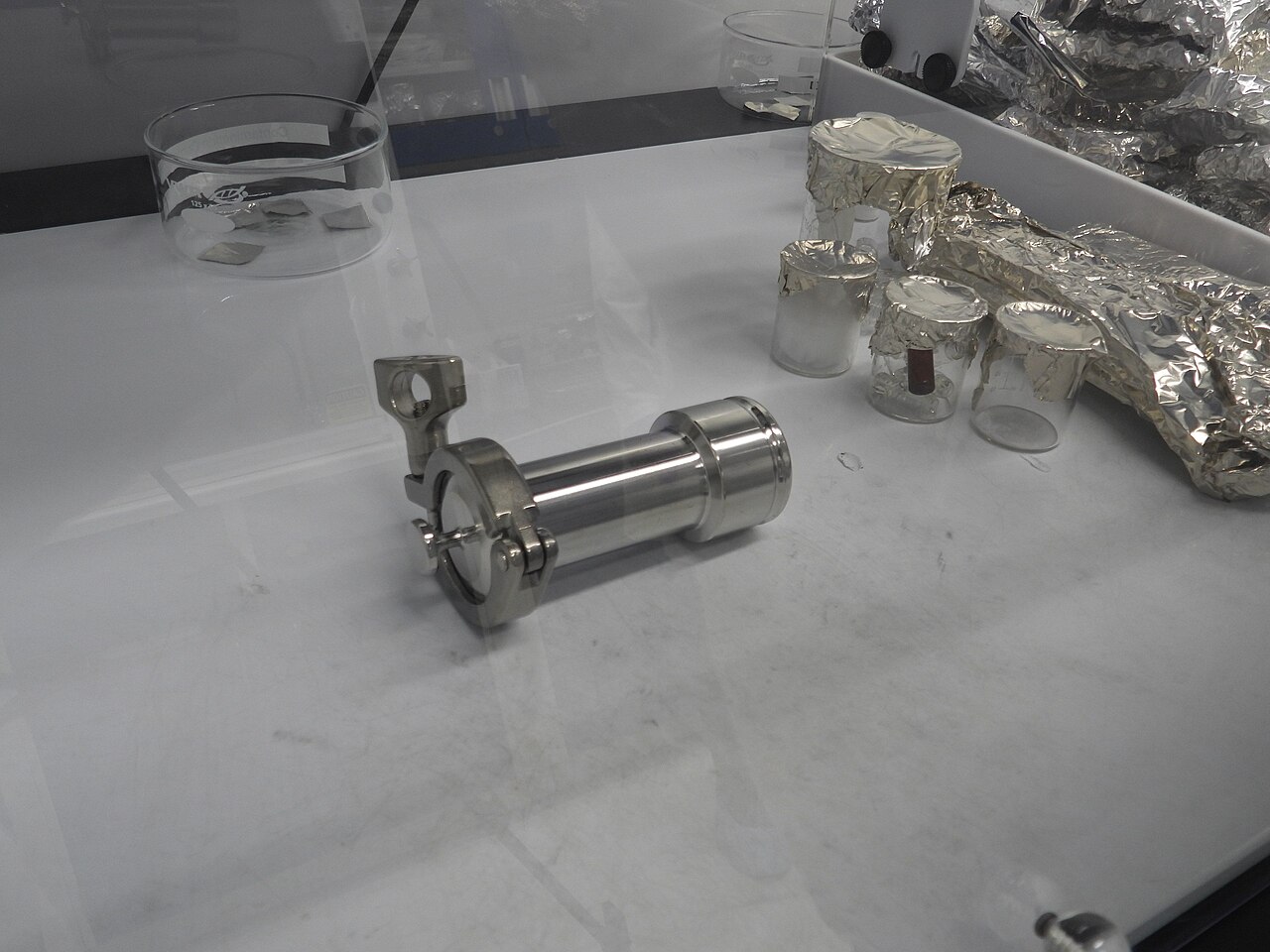
Two scientific strategies coexist. A bottom-up approach investigates how information-storing molecules, membranes and energy-producing reactions might have met. A top-down approach rewrites organisms that already exist.
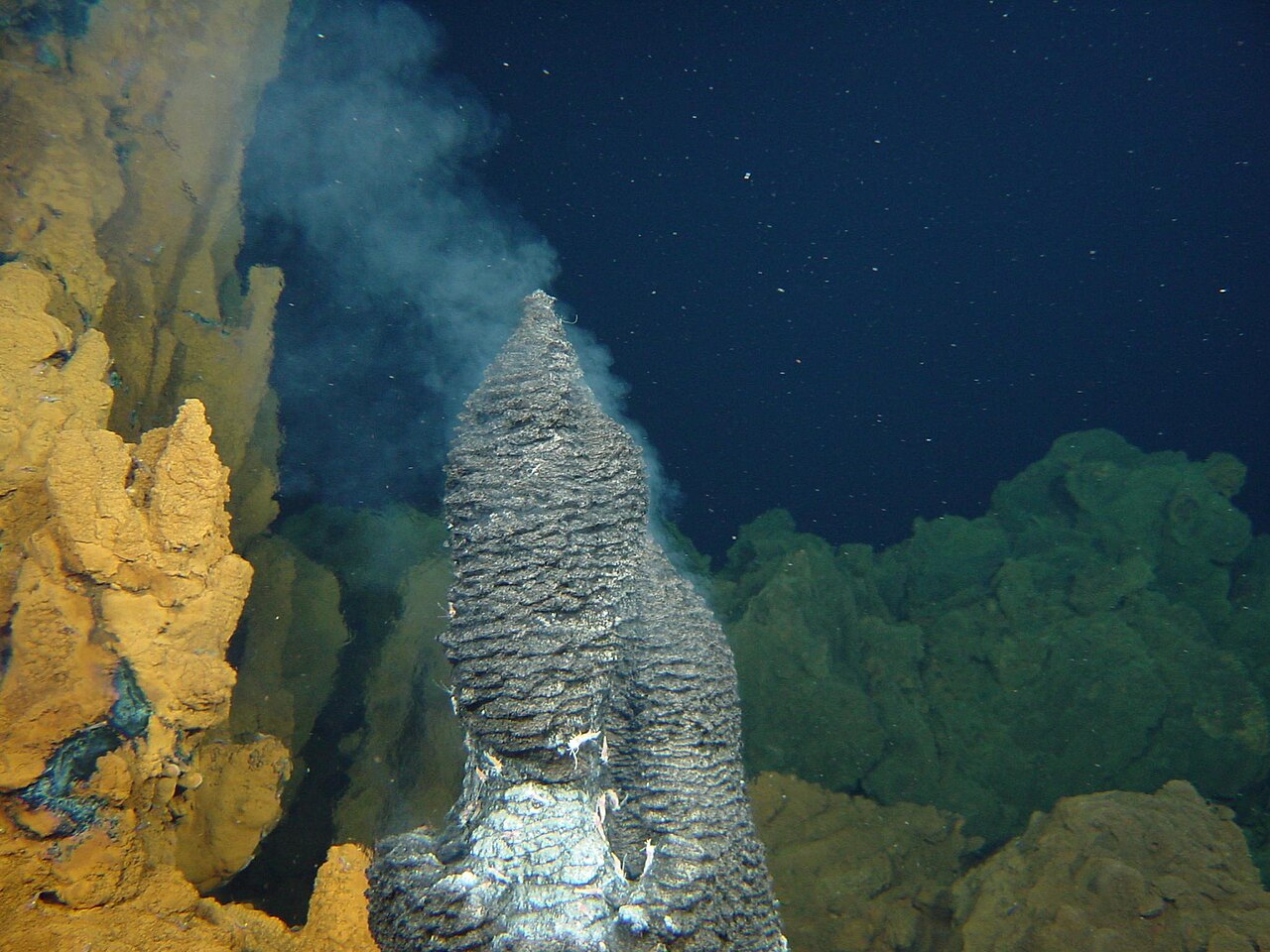
The discovery of ribozymes by Thomas Cech and Sidney Altman made an “RNA world” plausible: RNA can store information and catalyze reactions. In 2009 John Sutherland’s team proposed a route to RNA nucleotides from simpler compounds. Jack Szostak studies protocell membranes; Nick Lane and William Martin have explored the chemical gradients available at hydrothermal vents. Each reconstructs a possible step. None reconstructs the emergence of terrestrial life from beginning to end.
In 2010 J. Craig Venter’s team activated a synthesized bacterial genome in a recipient cell. In 2016 they presented a minimal cell with 473 genes, some of whose functions remained unknown. This is a considerable achievement, but the recipient cell’s membrane and machinery did not appear from nothing. Jason Chin’s recoded E. coli, the Sc2.0 synthetic-yeast project and Philipp Holliger’s XNAs further show how biological inheritance may be rewritten or implemented with different chemistry.
Xenobots rearrange frog cells into novel forms and behaviours. Some configurations gathered loose cells into mobile copies of themselves under controlled conditions. Anthrobots, reported in 2023, are assembled from human tracheal cells. They neither establish an autonomous new species nor demonstrate artificial consciousness. They reveal the plasticity of living matter and our growing ability to direct it.
The ethical question cannot be postponed until after the experiment. In 2024 scientists warned against developing “mirror” bacteria made from biological molecules with reversed handedness, given potentially grave ecological and health risks. We have not created them; we can still decide not to.
Creating intelligence: from automata to AI
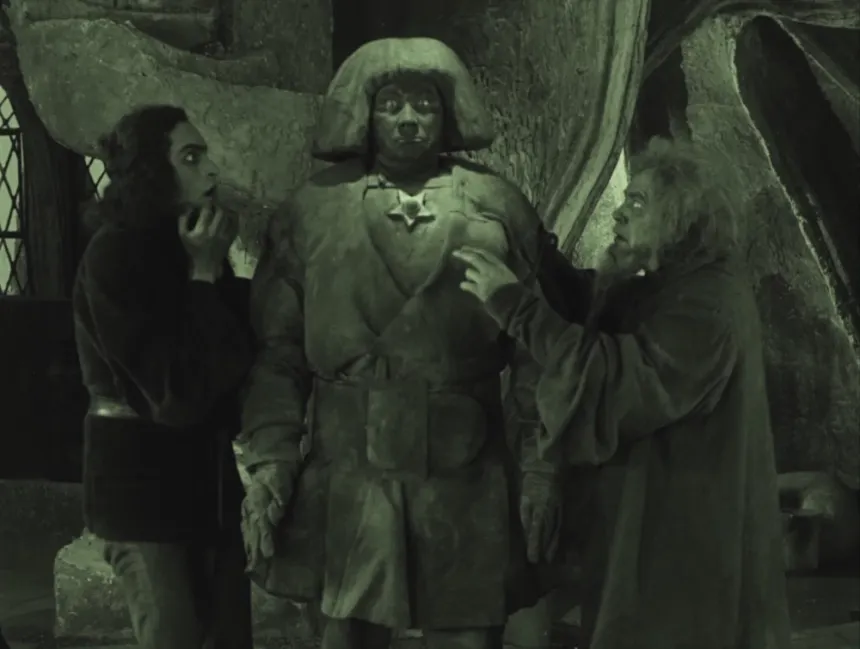
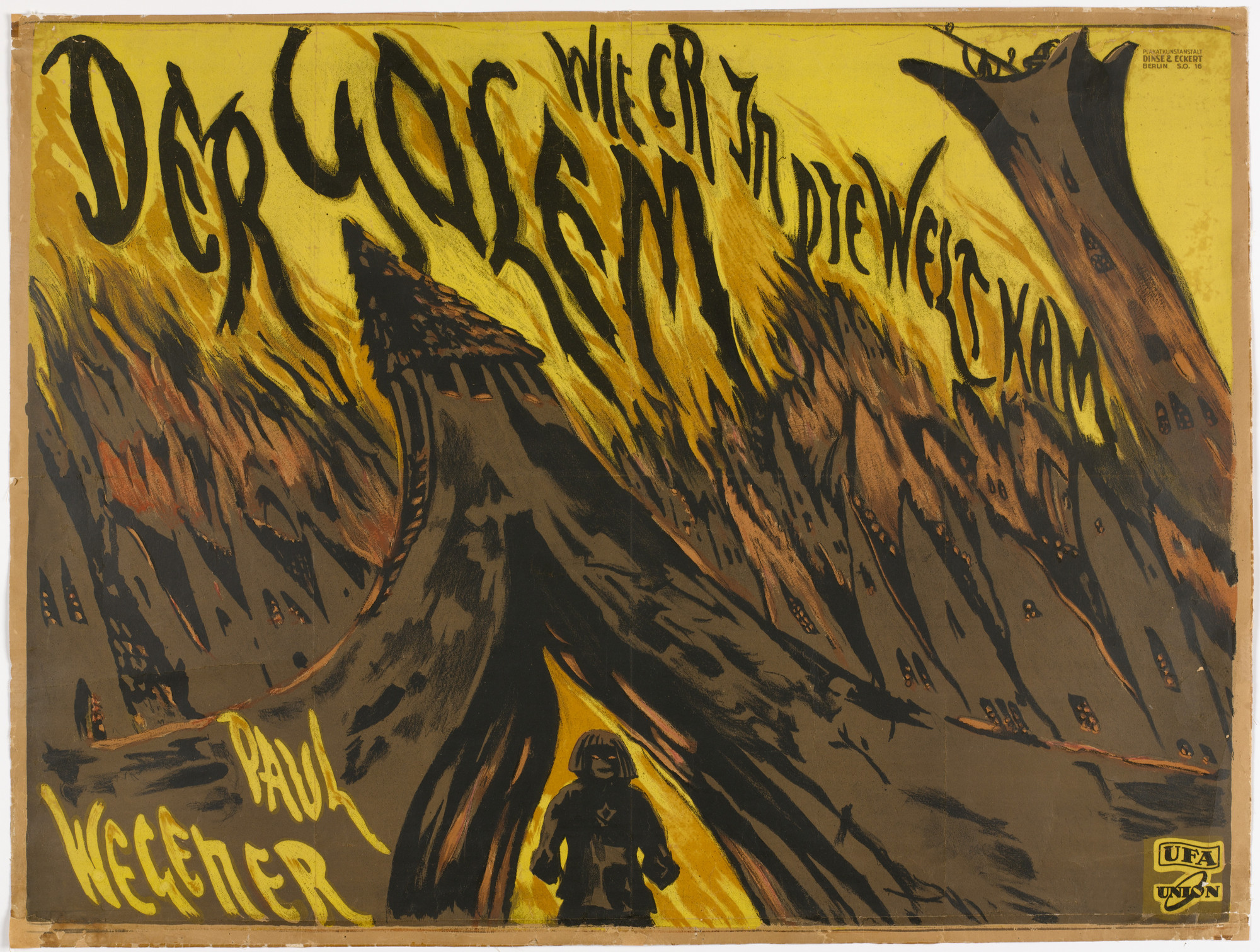
Hephaestus’ golden attendants move and speak; the bronze giant Talos guards Crete; Pygmalion loves a statue animated by a goddess. The Golem is clay activated by writing. A late version associates the legend with Rabbi Loew of Prague; another turns emet, “truth,” into met, “death,” by removing a letter. Power resides in writing, which can also be misread.
From the automata of Hero of Alexandria and Al-Jazari to Vaucanson’s eighteenth-century machines, makers have simulated life without thought. Karel Čapek’s R.U.R. gave us the word “robot” in 1920 and imagined a revolt. Turing asked in 1950 whether machines can think; the 1956 Dartmouth meeting named the field “artificial intelligence.” Deep learning, the transformer architecture published in 2017 and today’s large language models bring that history to a new computational scale.
Three analogies remain useful. The Golem, executing an instruction without sharing its author’s intention, gives a form to the alignment problem. Pygmalion reminds us of the inner life we project onto something that answers. Brain organoids and the 2022 DishBrain experiment blur the boundary between living tissue, interface and computation. Solving problems is not the same as having subjective experience; none of these experiments settles the question of artificial consciousness.
While working on GOLLM, I asked what we truly wanted of these creatures: obedience, resemblance or surprise? An instruction is not an understanding of everything it sets in motion.
Art as a laboratory for myths
Scientists measure; artists stage. Faced with the same power to create, art makes the vertigo of beginnings and makers perceptible. I see three attitudes, sometimes coexisting in one work: celebrating that power, questioning it and warning about its consequences.
Cosmogony: giving form to a beginning
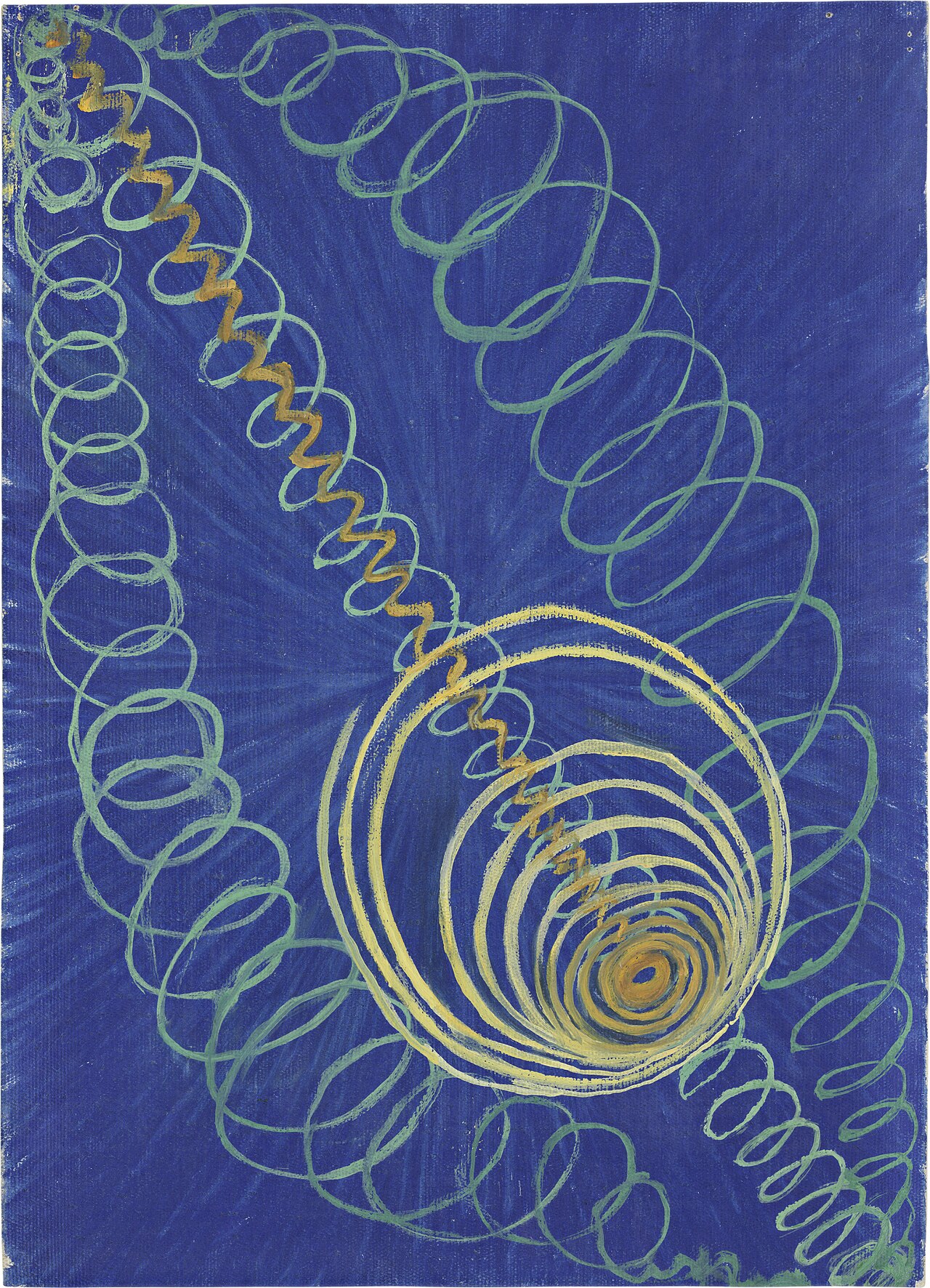
The opening of Haydn’s The Creation (1798) turns chaos into music. Hilma af Klint’s Paintings for the Temple and Primordial Chaos give it pictorial form. Stanley Kubrick’s 2001: A Space Odyssey (1968) brings the origins of technology into contact with the cosmic unknown. Terrence Malick’s The Tree of Life (2011) moves between the birth of stars and a Texas family. These works verify no cosmology; they show how origin stories still organize perception.
Life and bio-art: writing with matter
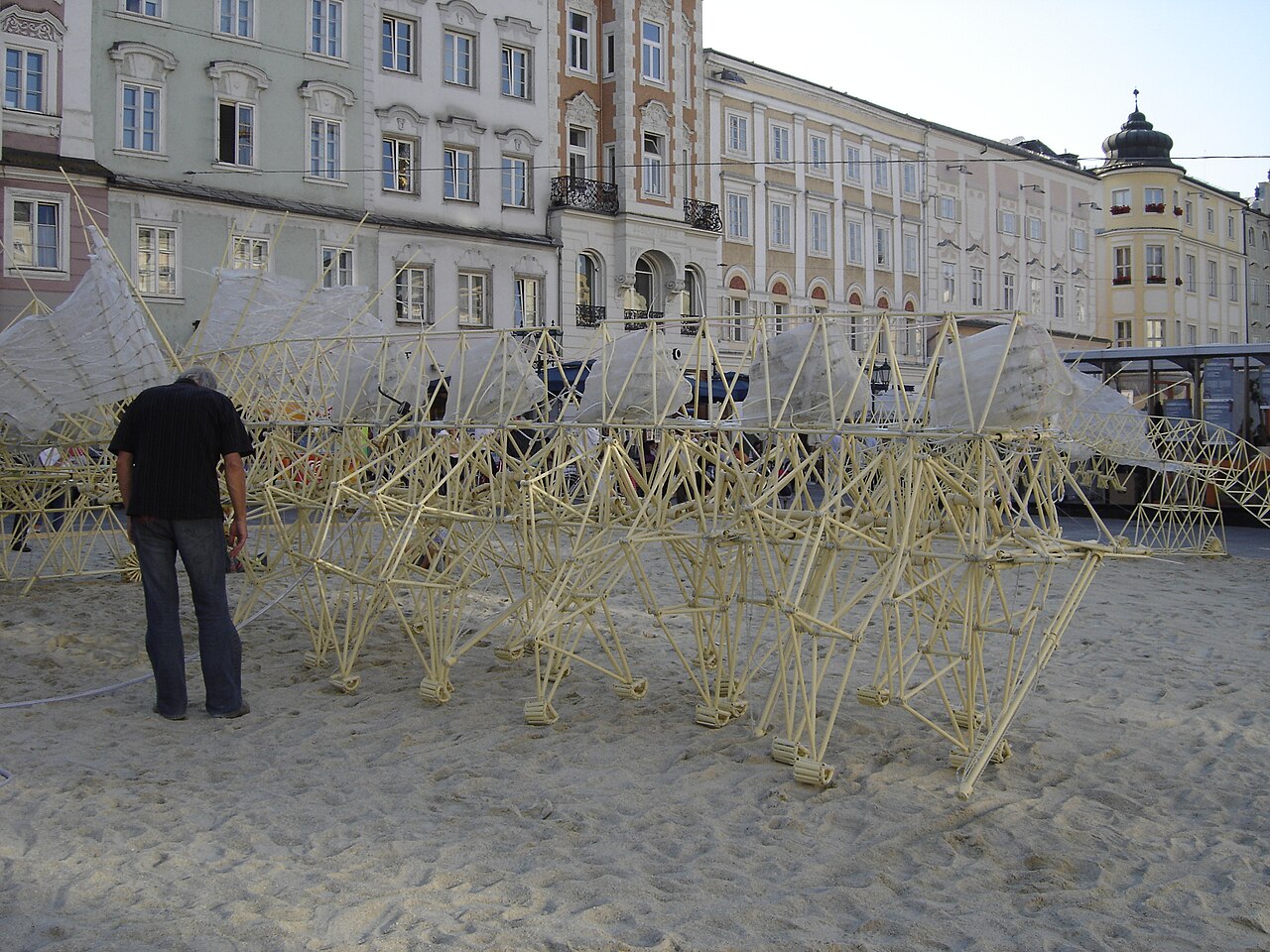
Joe Davis encoded a symbol in bacterial DNA for Microvenus. In Genesis, Eduardo Kac translated a sentence from Genesis into bacterial DNA and allowed the public to alter it. Oron Catts and Ionat Zurr cultivated a tiny living jacket for Victimless Leather (2004), asking what “without victims” means when an artwork is semi-living and dependent on a laboratory. Patricia Piccinini’s hybrid creatures shift this question toward empathy. Theo Jansen’s wind-powered Strandbeests turn mechanical structures into walking “animals.”
Artificial evolution: creatures and environments
Karl Sims lets variation and selection shape his Evolved Virtual Creatures (1994). In A-Volve (1994) by Christa Sommerer and Laurent Mignonneau, visitors draw a shape and watch the resulting virtual creature live, compete and reproduce in a real water-filled pool. In Pierre Huyghe’s After ALife Ahead (2017), the work is no longer a single generated organism but a site where biological, technical and physical processes respond to one another.
Artificial minds and messages to the future
Harold Cohen developed AARON over decades: a drawing machine guided by a rule system elaborated with the artist. Lynn Hershman Leeson’s Agent Ruby (1998–2002) became an artificial interlocutor shaped by exchanges. In PROTO (2019), Holly Herndon and Mat Dryhurst put a voice model called Spawn to work with a group of singers. This is another Pygmalion: not a sculpture animated in a single gesture, but a system raised collectively.
The Voyager Golden Record (1977), Trevor Paglen’s The Last Pictures (2012) and the KEO project reverse the question: what do we send into space or time for unknown recipients? They are symbolic panspermia, messages rather than organisms, and they connect with my work on A.L.I. — Atelier langages interstellaires.
Other Dialogz articles continue this conversation. MAIO asks how a process becomes an artwork. Zombie, the Fly asks what is reanimated when a simulated brain acts: architecture, memory or experience? From the Game of Life to Infinite Worlds follows what may emerge from simple local rules.
Recent projects: when the environment becomes the work
Pierre Huyghe’s 2026 Fondation Beyeler exhibition assembled films, objects, organisms and machine learning. Apnea joins an aquarium, soft robotics, breath and a mineral landscape. Liminals (2025) follows a faceless figure through an unstable world. Adversary (2026), a relief and threshold, arises from a process between human imagination and machine computation.
At the 2026 Venice Biennale, Alexandre Estrela’s RedSkyFalls gives luminous digital creatures, the Réplicas, a habitat in the grooves of a computer landscape. They respond to seismic signals. They do not literally foresee an earthquake; they give its forces a perceptible presence. I see here a new creature-oracle, sensing differently from us.
Anna Dumitriu’s BioArt Transformations (2026) works with the history of disease, bodies and microorganisms. Her Plague Dress brings together textile, epidemic history and bacterial DNA. The collective exhibition Living Matter, Shaping Futures (Brooklyn, 2025) explores living materials and multispecies perspectives. At the 2025 Venice Architecture Biennale, Refik Anadol Studio’s Living Architecture: Biophilia transforms more than a hundred million images of flora, fauna and fungi into immersive digital ecosystems.
These works no longer produce only isolated creatures. They construct environments, combine human and non-human perception, register forces we cannot directly sense, and ask how to coexist with life and computation that we never completely control.
Conclusion: creation entails responsibility
The sequence moves from a world emerging from chaos, through life made from clay and energy and humanity emerging through successive attempts, to a mind shaped by an artisan. At each step science has replaced gods with mechanisms without exhausting the questions. We can synthesize genomes but not yet build a living cell from scratch; identify life’s ingredients in space but not prove the arrival of extraterrestrial life; generate language but not settle what an artificial subjective experience would be.
Art did not wait for science to revisit these stories. Its works stage chaos, manufactured life and artificial minds, moving the question from “who creates?” to “what do we live with?”
The most durable thread of the myths is moral rather than technical: creation entails responsibility. The Golem, Prometheus and Frankenstein predict no technology. They remind us that the power to give shape to life or mind does not tell us what to do with it. That may be where ancient stories are most contemporary.