
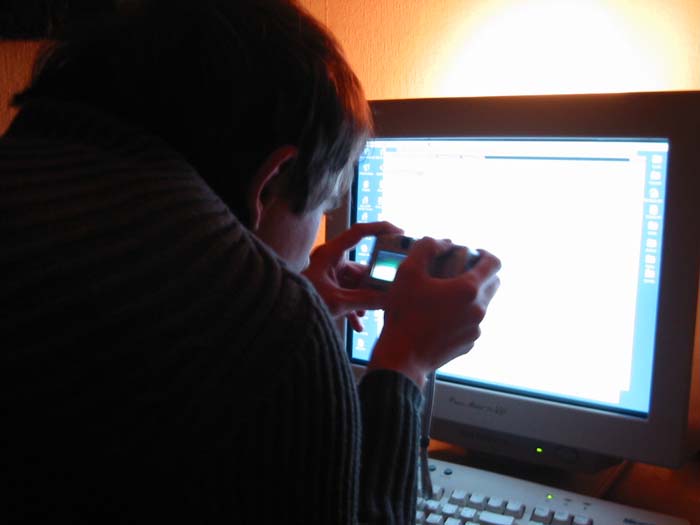
Nearly twenty years ago, I called Hypermoi the part of ourselves deposited on the network: texts, images, opinions, desires, fragments of an identity that keeps circulating after its author is gone. The question was not only what the internet preserved. It was what those pieces would become without us.
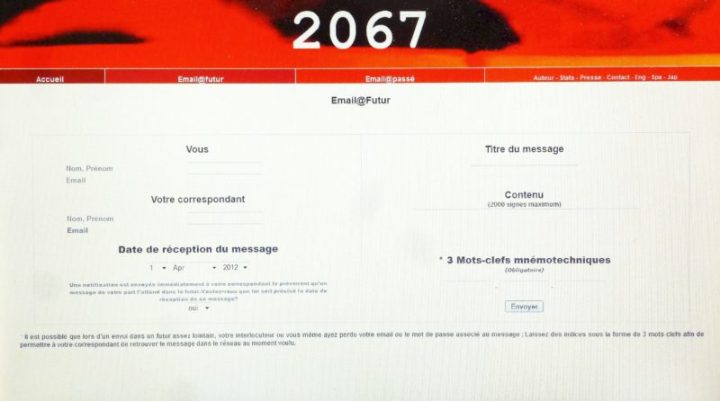
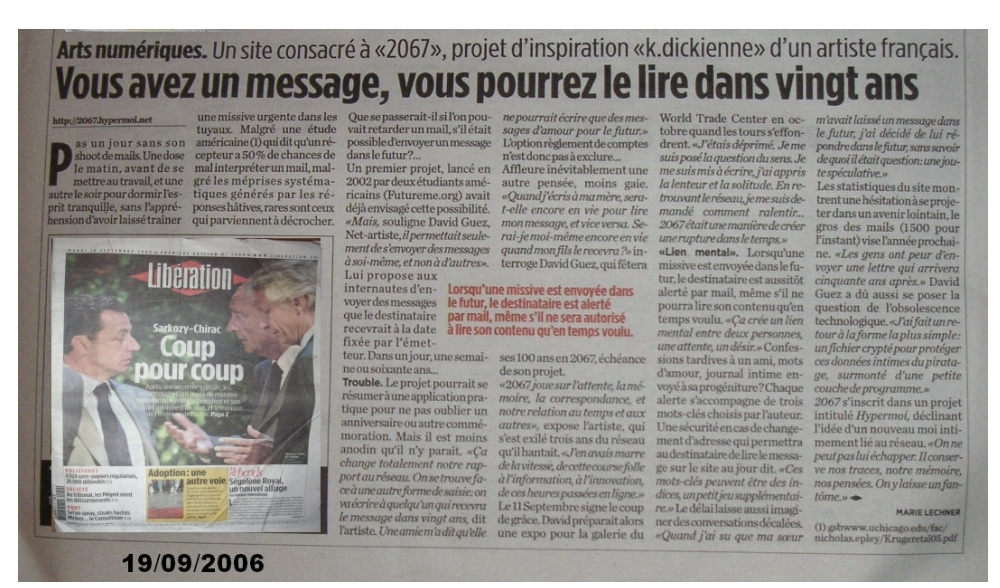
With Email 2067, begun in 2006, I invited people to send a message to themselves or to someone else in the future. Between writing and reception lay a delay, sometimes a lifetime. The message could not answer; it waited. That silence was part of the work. Its recipient could change, forget, or die. What arrived was not a living double but a situated, dated, irreversible utterance. This project formed part of my research into Hypermoi and was discussed in 2006 by EspacesTemps.net.
A Libération clipping dated 19 September 2006 gave this hypothesis an early public formulation. Marie Lechner presented Email 2067 and placed it in the wider Hypermoi project: a “new self” on the internet whose traces and thoughts might remain after the body disappears. It did not yet anticipate large language models by name; it already posed the problem their arrival makes concrete.
A year later, Poptronics quoted me in “Sur le Net, à la vie à la mort”, connecting Email 2067 with etoy’s Mission Eternity. The collective imagined a capsule of digital traces intended to maintain a presence after death through distributed preservation. In the article’s comments, I argued that the essential question was not how many megabytes one could store but the desire and meaning of a message. AI sharpens that objection: how much data do we collect to make a likeness, and what have we gained if it no longer knows whom it addresses?
The temptation to record everything
Long before generative models, artists made the recording of their lives into a protocol. From 1968 to 1979, On Kawara sent postcards every day recording when he woke up: a life made visible by a tiny, repeated index. In Time Clock Piece, Tehching Hsieh punched a time clock every hour for a year, photographing each punch. Recorded time was not a convenience; it was a discipline imposed on the body.
In ADaM-Project, Timothée Rolin systematically photographed everyday life, then indexed the images by day, person, place and keyword. The project expanded to the days of other participants. It was no longer just a self-portrait but a network of intersecting lives. Rolin describes a method that archives exceptional events and ordinary gestures alike. What happens to a life when the machine grants a cup of coffee, a journey and a meeting the same availability to memory?
With 3rdi, Wafaa Bilal fixed a camera behind his head to make one image per minute, recording even what he left behind. In Tracking Transience, Hasan Elahi accumulated and published traces of his movements in response to surveillance. These works do not merely advocate keeping everything. They ask who watches, who classifies, and what the archive makes of us.
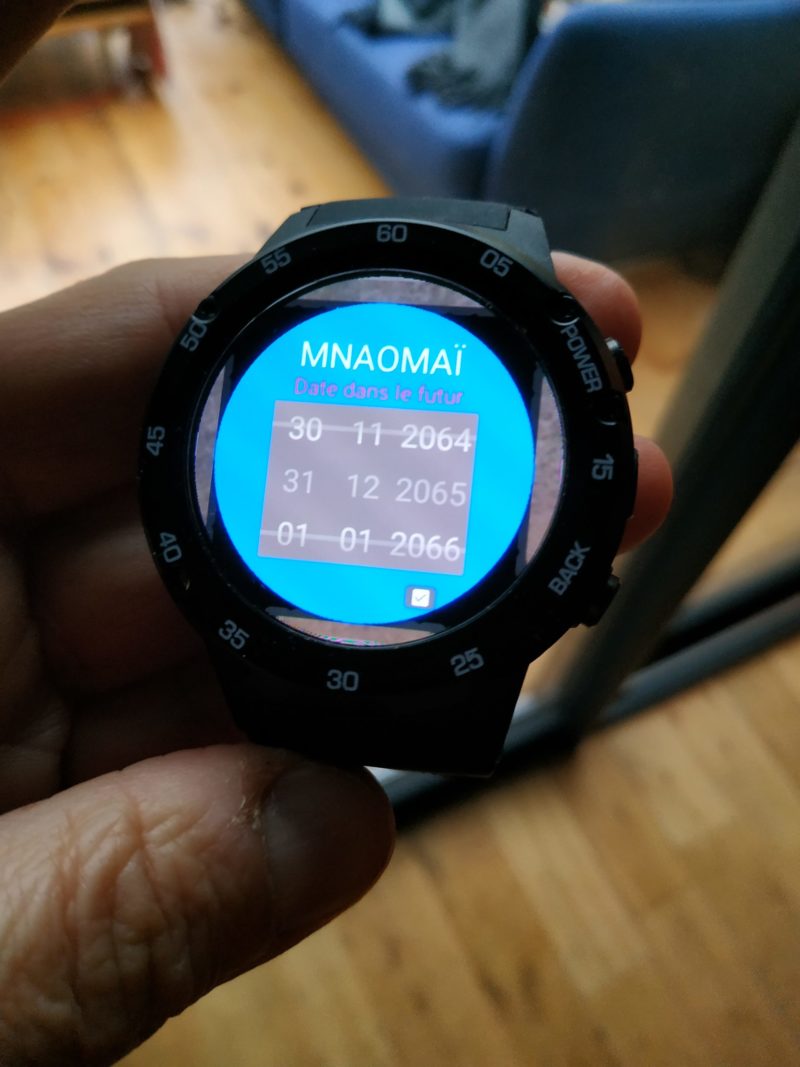
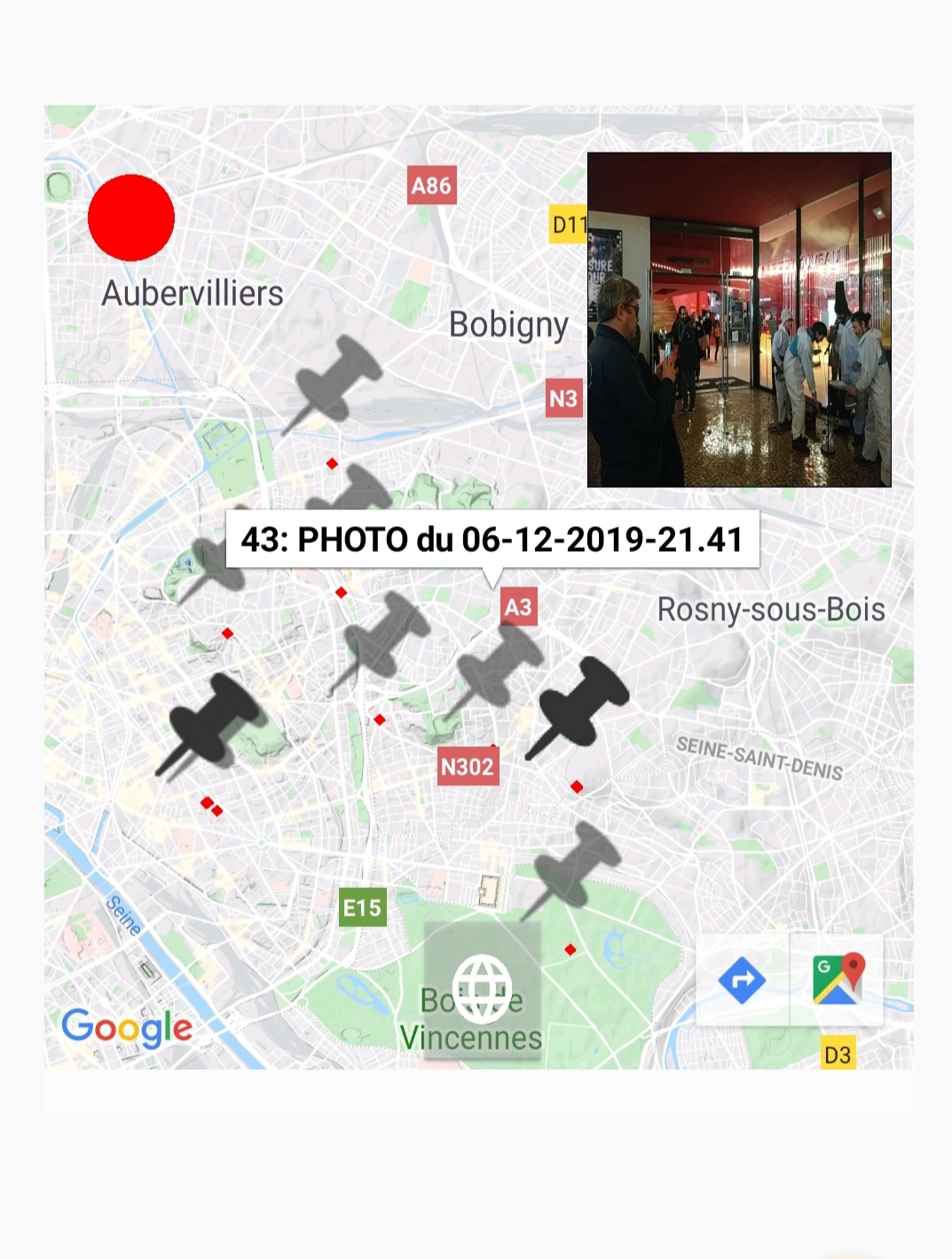
I proposed a different relation between memory and device in Mnaomaï: an augmented-reality application for placing fragments of memory in a location and a time, to be rediscovered later. A memory is not simply dated; it waits somewhere. This spatial dimension could be decisive for Hypermoi. Instead of asking only what did I say?, we might ask where were we when it was said, and who was there?
From remnant to respondent
The network stored remnants. Artificial intelligence now adds a new capacity: response. From a selected corpus — letters, interviews, notebooks, videos, and contradictions too — a system can generate new sentences in a recognizable style. The leap matters. A document witnesses what I said; a model generates what I might have said. Listeners can quickly cease to hear the conditional tense.
This “LLM of oneself” is not an upload of consciousness. It models patterns of language and draws on retrieved sources to compose a reply. It has neither the body that lived the events nor inner experience nor an automatic right to speak in my name. Its very resemblance makes confusion possible: the more convincingly present it seems, the more visibly we must mark what it lacks.
The problem may not be that a machine speaks like me after my death. It is that it goes on changing my story when I can no longer contradict it.
A psychology of the double
The double is not a digital invention. It has long inhabited stories of mirrors, ghosts and automata. But a networked double is distributed. It exists through the profiles I make, photographs others take, comments I regret and databases that classify me. A study in Les Cahiers du numérique described Hypermoi as a part of ourselves delegated to the web that may outlive us. AI could gather that mosaic into an apparently coherent personality. But coherence would already falsify something: we are not the same person to everyone, in every era and situation.
Grief psychology has also moved beyond the assumption that one must necessarily break every bond with the dead. The work gathered in Continuing Bonds examines the persistence and transformation of those relationships. Yet a photograph, a letter and an agent that replies at three in the morning do not occupy the same position. Long-term effects of “griefbots” remain largely unknown. Memory, consolation and dependence must be distinguished. University of Cambridge research stresses consent and responsible design.
What others know about me
My memory of myself is incomplete; other people’s memories are incomplete in different ways. A friend remembers a sentence I forgot. A child never knew who I was before they were born. A former partner might retain a portrait I would reject. In Take Care of Yourself, Sophie Calle gives one message to many interpreters. This plurality seems truer to me than a single model claiming to say who I finally am.
Cinema and literature anticipated the tension. In Adolfo Bioy Casares’s The Invention of Morel, recorded presences repeat without recognizing their observer. The Final Cut imagines a whole life filmed and edited after death: official memory depends on the editor. The Black Mirror episode The Entire History of You makes replayable memory a trial for intimacy. Be Right Back and Marjorie Prime turn to conversations with the dead, where the double is shaped by the expectations of those who address it.
Muse and Meta’s glasses: the double as a service
In September 2026, Meta introduced Muse as a personal agent that learns from conversations, remembers details, acts across apps, and can turn a saved Instagram reel into a shopping list. The company plans to bring it to its AI glasses: seeing an object, asking for advice, making an appointment or buying something could become parts of one conversation. I see the outline of a successor to social networks, where a profile and a feed are extended by an agent familiar with our habits and able to act in the world we move through.
We must distinguish the promise from present use. Meta’s glasses take photos and videos when asked; Meta says these captures are not automatically posted to social media. Muse is not currently a camera recording an entire life. Yet the technical direction is explicit: the company is developing an assistant that can relate what it sees and hears to personal context across days or weeks. Its engineers describe cloud processing inside encrypted, “private” environments. That is a claimed protection for data during processing; it is not the same as a local, portable memory governed outside the platform by its subject and the people it includes.
My question is political as well as psychological. When the same company sells the glasses, hosts the agent, controls access for other apps, recommends content and supports purchases, our traces become the material of a commercial service. This is not a claim that every captured image is sold or used to train a model. It is a recognition that memory, its interpretation and the actions it enables remain inside a proprietary system. Who can export this double, change its model, audit its omissions, or ensure that a loved one’s memories never become inputs to a recommendation? The Hypermoi I imagine must answer where that closed model offers only a privacy setting.
What could Hypermoi become with AI?
I imagine a connected object one wears: a camera and microphone one can switch off, rather than an invisible apparatus that captures everything by default. Over the years it could learn from what I see, say and choose to keep. A place, a familiar voice or a repeated gesture could connect fragments. Mnaomaï would give it a geography; ADaM, a method for archiving the everyday; AI, an ability to question and connect.
But my double cannot be made only from my own eyes. There should be a second interface for those who know me. Each person might deposit a memory, recount a scene, dispute my version, or say what they refuse to transmit. Hypermoi would be a meeting of partial, intimate perspectives, not an identity calculated once and for all. It could set alongside one another the person who wrote in 2006, the one who rereads it twenty years later, the one others remember, and the one a model infers. Those voices must remain distinct.
Artistic proposal: Hypermoi / AI version
- Three voices, not one: exact archive, explicitly generated reformulation, and silence where sources cannot support an answer.
- A timeline: the model does not merge my twenties, forties and sixties into an average personality; reversals and contradictions remain visible.
- Others’ memories: relatives and interlocutors may contribute their accounts, but testimony remains attributed; it never silently becomes “my” speech.
- A memory of places: some fragments can be found where they were lived or entrusted, continuing Mnaomaï.
- Chosen capture: a visible indicator, physical off switch, prohibited zones, consent of recorded people and the ability to erase a segment before archiving.
- A right to absence: while alive I decide what is permitted, for whom and how long, and what must be destroyed. The double may have an end date.
Technically, a first prototype could begin with a small, voluntary corpus. The object would temporarily retain captures, then ask which deserve to enter the archive. Images, transcripts and places would be indexed in a memory controlled by its wearer. A language model would consult those sources before composing a sentence. Every answer would show its origin: an actual quotation, a synthesis or a hypothesis. Accounts contributed by relatives would form a separate layer that each could still control. There is no need to train a giant model on an entire life. The hardest part is less reproducing a voice than designing the conditions under which that voice is legitimate.
Who owns the dead?
After my death, who may change this double? Could a child correct a reply? Could a platform use it to sell, recruit or persuade? Could someone named in my archives request removal? Work on “generative ghosts” shows how these systems create a new relationship between the deceased, the living and the company operating the server. Consent given once cannot resolve every future conflict.
I therefore imagine a Hypermoi that never pretends to abolish death. Instead, it would expose what death does to our words: some remain, some are misread, and others no longer have anyone to take them up. AI might extend a conversation. It should not erase the fact that its author can no longer reply.