Today we ask artificial intelligence to make images. Then we ask it to animate those images, give them a voice, music, a story. I would like to ask a stranger question: can it take part in an artwork that cannot be reduced to what it represents?
Audiovisual and narrative production dominates the artistic use of AI. It demonstrates the power of these tools immediately. But it also sets a reflex in motion: every idea is expected to end in something we can look at, hear or recount. A beautiful image can leave untouched the rules that made it possible.
I want to turn towards those rules. A work might be a relationship between elements, an instruction, a fictional equation, a social protocol, a system of signs, an organization changed by those who pass through it. Its beauty might lie in a proposition so precise that it changes how we see the world without producing a photograph of it.
This territory has a history. AI did not invent it. But it could become a new participant, able to connect distant fields, test the consequences of a rule, reveal its contradictions and propose transformations neither artist nor public had anticipated.
From MAIO to Before the I_mage
This text directly extends my project MAIO: Can a Machine Infer an Artwork? With MAIO, I asked how a machine might start from an intuition and expose the forces that turn it into art: genealogies, institutions, criticism, markets, contradictions and blind spots. The machine does not predict art; it makes visible the system of relationships through which we decide that something is art.
Before the I_mage moves one step upstream. The question is no longer only how to infer a possible work, but how to invent the proposition, rule or protocol from which several forms may emerge. MAIO maps what turns an intuition into an artwork; here AI becomes one of the operators of the intuition itself, before it is flattened into an image.
The force of language
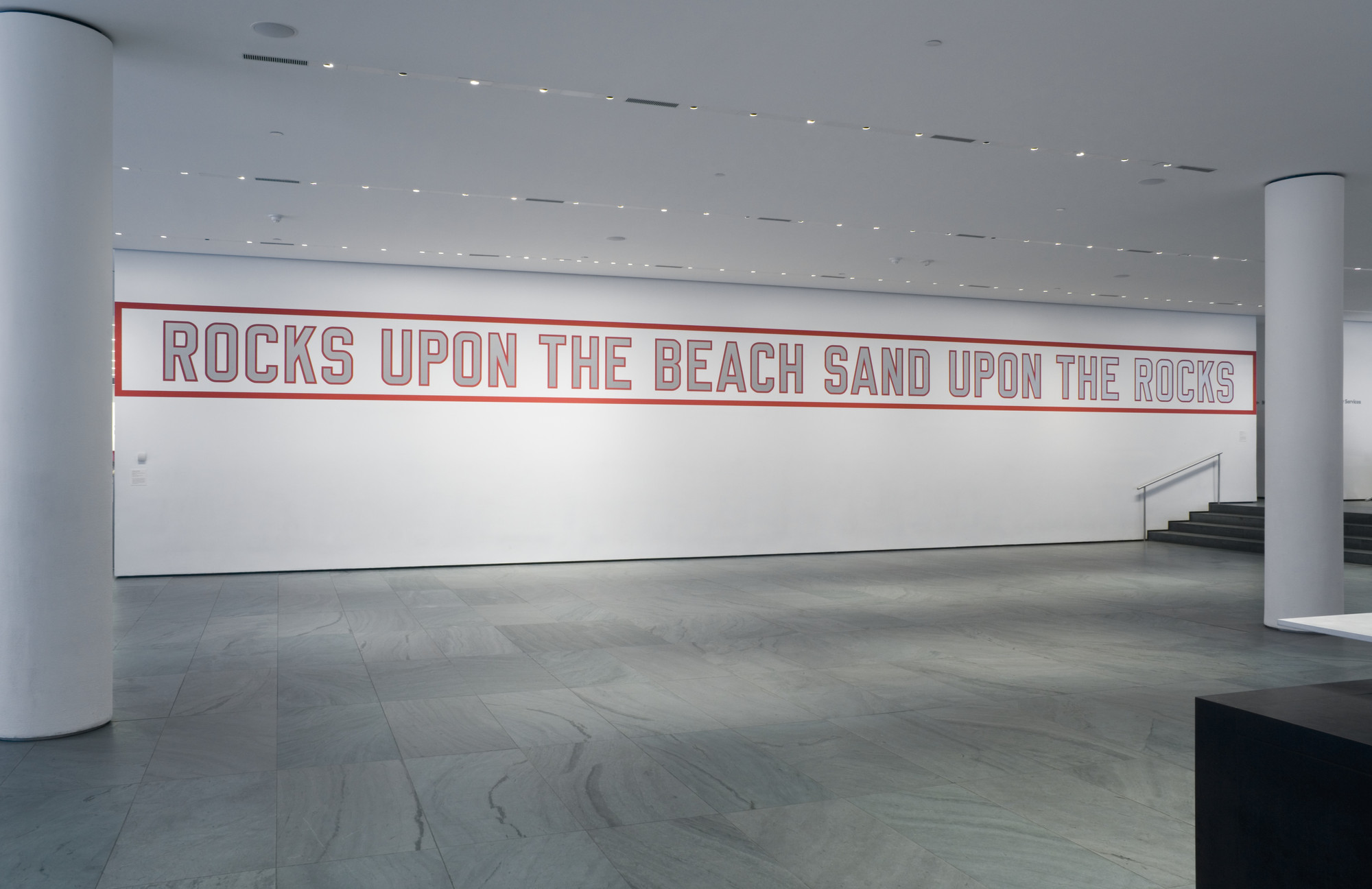
Lawrence Weiner is an essential guide. His propositions evoke matter, displacement or relationship without requiring the corresponding object to be built. Sculpture also takes place in the reader’s mind. Language is not a caption placed beneath the work: it is its material and, sometimes, its entire presence.
This is not merely an economy of means. A short formula can leave more space than an exhaustive image. It can call up materials and relationships no rendering can settle. I would like AI to enter this field not as an automatic illustrator of a statement, but as an interlocutor able to test its ambiguities.
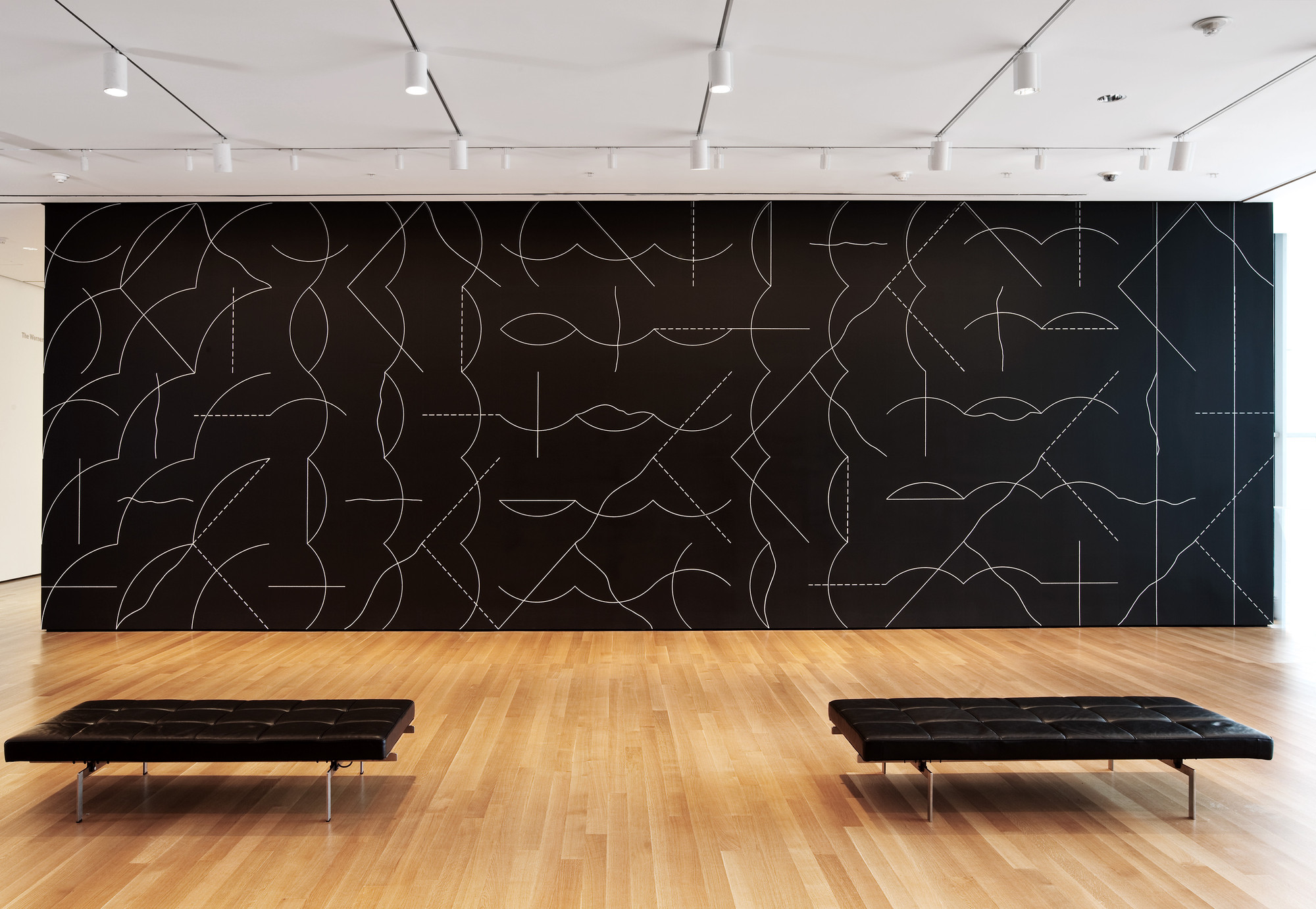
Sol LeWitt had already separated the idea from its realizations: other people execute his wall drawings from the systems he designs. Yoko Ono’s Grapefruit turns an instruction into a possible event, sometimes impossible to realize except in the imagination. The work becomes an invitation addressed to someone, not a finished object handed to a spectator.
The texts gathered in Art conceptuel — une entologie (MIX. editions, 2008) testify to this diversity: propositions, descriptions, scores, protocols, almost scientific or intensely poetic statements. Its title already suggests a graft between textual artworks and literature. Conceptual art has never belonged to a single discipline.
Art & Language make conversation, classification and disagreement the material of art. Hans Haacke exposes property networks in Shapolsky et al. (1971). Through her actions and encounters, Mierle Laderman Ukeles reveals the maintenance work that keeps a city alive. Form has not disappeared in these works: it has moved towards a relationship, an inquiry or an organization.
From object to system
Science offers other ways of thinking about this history. Cybernetics describes the feedback loops through which a system changes its behavior in response to its effects. Complexity science studies how collective forms emerge from local interactions. Yet a society is not a thermostat: what it measures, ignores and tries to stabilize are political choices already.
Semiotics adds another difficulty. For Charles Sanders Peirce, a sign does not simply join a word to a thing: it involves an interpretation. The same proposition can become a promise, a threat, a joke or an artwork depending on its receiver and situation. AI can manipulate signs without possessing the totality of their lived consequences.
Ecological psychology reminds us that we do not perceive shapes alone; we perceive possibilities for action. A door invites us in, a form asks us to classify ourselves, a platform pushes us to click. Conceptual art can work at precisely this point by changing what an environment allows or forbids. Creating a situation that changes behavior, however, is not the same as secretly manipulating its participants.
Research on institutions and commons shows there is no political formula valid everywhere. Elinor Ostrom revealed the diversity of rules with which groups organize a resource and resolve conflicts. AI might compare possibilities; it cannot decide on its own which arrangement is just. That refusal to delegate moral judgment can itself become artistic material.
A rule has a form. It has a syntax, exceptions, a duration, recipients and people it forgets. It can be as exact as a drawing and as violent as a border.
Before generative AI, Casey Reas connected conceptual art and software. In {Software} Structures (2004), natural-language descriptions define dynamic relationships that are subsequently interpreted as programs. Code can execute an idea, but execution cannot exhaust it.
The Equation of Art
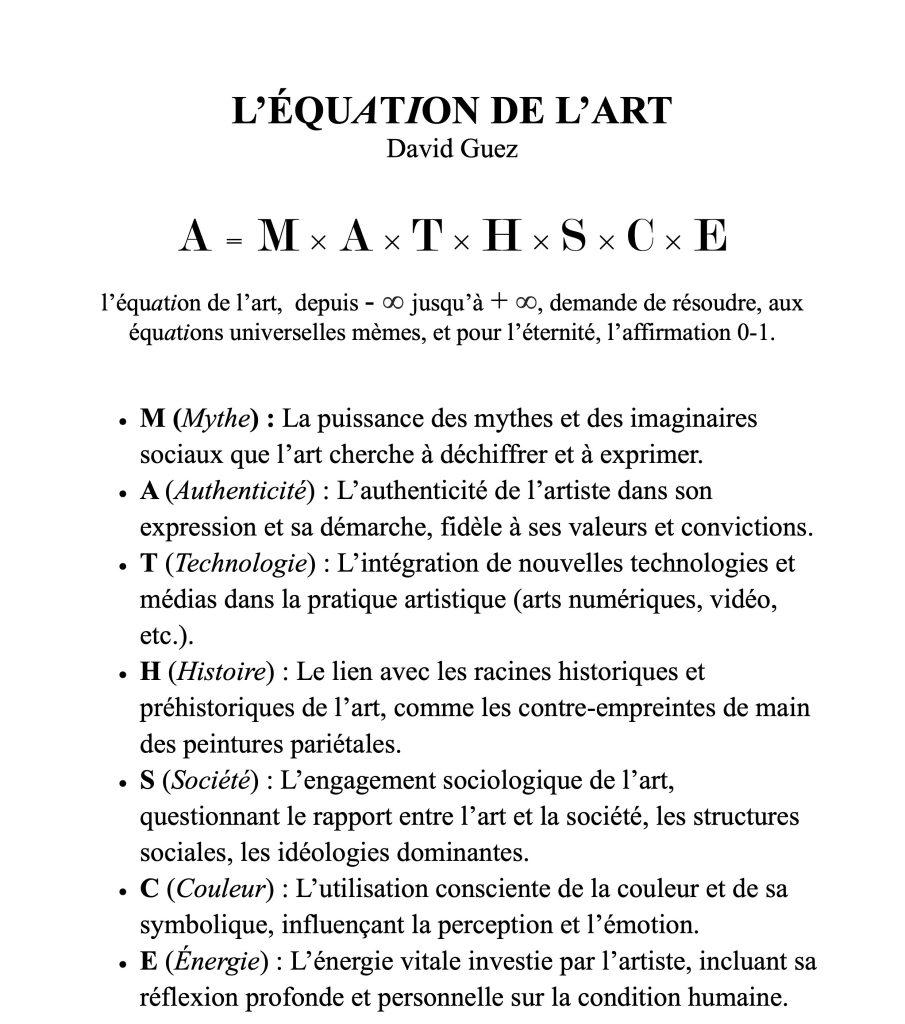
I approached this frontier in a project I called The Equation of Art. I proposed a formula in which art emerges from the interaction of Myth, Authenticity, Technology, History, Society, Color and Energy: A = M × A × T × H × S × C × E.
This equation does not calculate the value of an artwork. It borrows mathematics’ promise of precision to reveal what refuses to be quantified. Every letter opens a territory; no unit measures a myth, the authenticity of an action or the energy of a gesture.
I also introduce MArt — Mt, a hypothetical “zero-first” element placed symbolically before hydrogen: an artistic matter unmeasurable by classical instruments but able to transform objects, perceptions, beliefs and systems. This is neither chemistry nor applied mathematics. It is a conceptual fiction that diverts their forms in order to think about art differently.
AI might be questioned through this experiment. Not as another variable in the formula—it would simply be one of the technologies—but as an operator capable of changing the relationships between the terms. Would it try to measure myth? Reduce authenticity to a recognizable style? Mistake the energy of a gesture for the labor required to perform it? What it attempts to calculate might reveal as much about its limits as it does about art.
Precedents involving AI
It would be wrong to claim that no one has worked on this ground. Several artists already move AI away from image production and towards questions of authorship, protocol, data and governance.
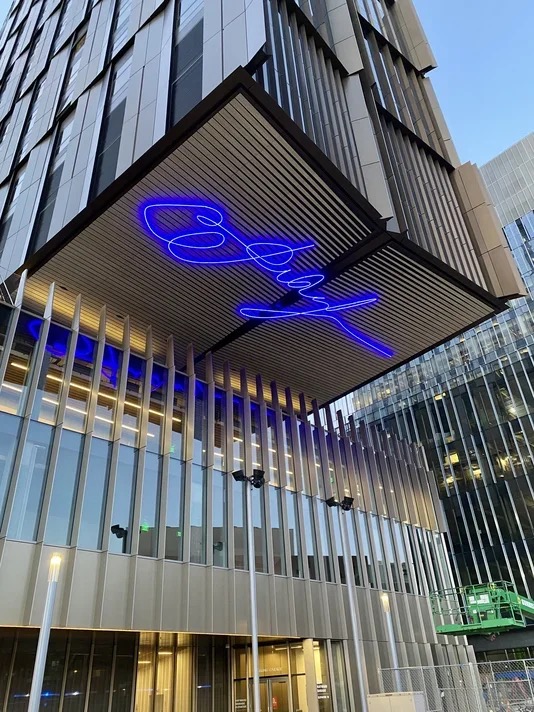
In The End of Signature, Agnieszka Kurant and her collaborators use machine learning to merge real signatures into a collective one. The result takes the form of light, but the conceptual core lies in a changed subject: who signs when a community becomes the author of a single gesture? The model does more than draw a curve; it puts individual authorship in doubt.
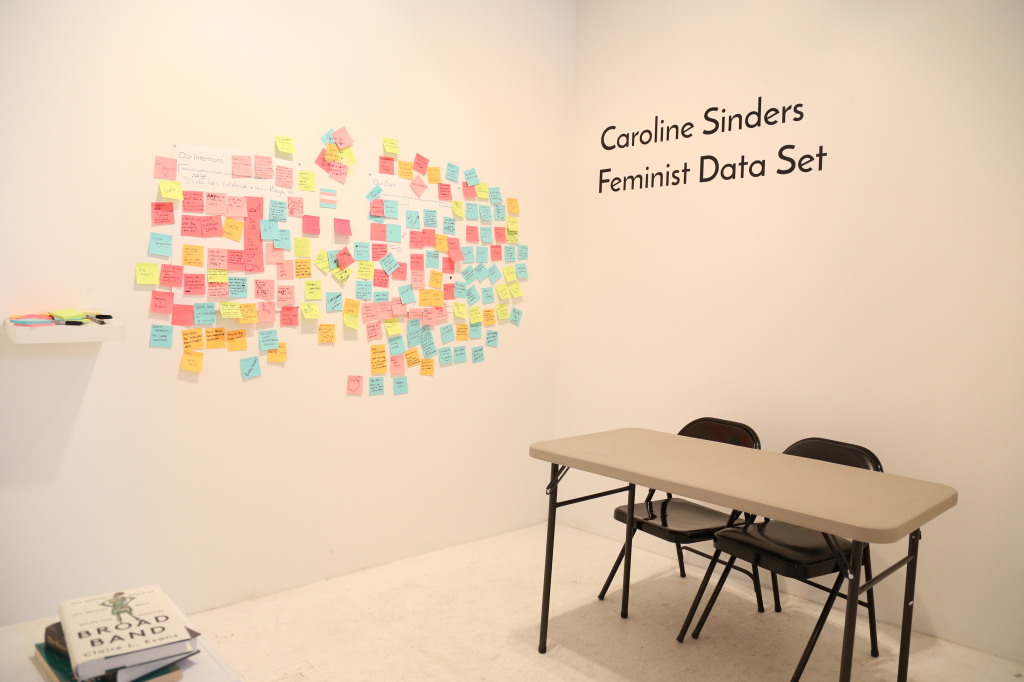
With Feminist Data Set, Caroline Sinders makes the construction of AI publicly debatable. Who selects the data? Who annotates it? Who is paid? Which values are encoded before the model gives its first answer? The work also exists in the workshops, procedures and community’s ability to discuss what a machine will learn.
Asunder, by Tega Brain, Julian Oliver and Bengt Sjölén, imagines an artificially intelligent environmental manager that proposes planetary interventions based on climate models. Screens display its proposals, but the work lies in the logic of this fictional administration: what happens when a machine treats the Earth’s ecological boundaries as a problem to optimize?
The 2026 exhibition Strange Rules at Venice’s Palazzo Diedo brings new visibility to the “art of protocols.” Its artists examine algorithms, AI models and the infrastructures governing culture’s circulation. It does not prove that a movement is complete; it suggests that several lines of research are converging.
These examples differ. Reas works with software before contemporary generative AI; Kurant uses learning to question collective authorship; Sinders makes data production a critical practice; Asunder stages the rationality of a decision system. Together they show that another history of AI in art has already begun.
What remains to be invented
I am not looking for an AI that declares what art is, or a machine that applies social rules efficiently. I am looking for a form able to hold together three forces rarely united: the precision of a protocol, the poetic openness of a proposition and the power to dispute a system while it is operating.
Such a work might be described in natural language, unfold in code, meet people and change under their objections. It might reveal not only what a model calculates, but what it must exclude in order to calculate. It might retain incompatible interpretations rather than crush them into a plausible synthesis.
The work would not be AI’s answer. It would be the visible, alterable relationship between a human proposition, a machine testing it and people able to answer back.
The concrete project accompanying this research should not merely illustrate it. It should test the hypothesis by asking AI not for a new appearance, but for a new way in which something might exist. For that, I return to a founding gesture of conceptual art: Joseph Kosuth’s chair.
Perhaps a new form of conceptual art developed with AI would begin there: not with the machine’s triumphant autonomy, but with a space where meaning, rules and the freedom to respond to them remain in motion.
The fourth chair
In One and Three Chairs (1965), Joseph Kosuth brings together a chair, its photograph and a dictionary definition of the word “chair.” He does not repeat the same object three times: he juxtaposes thing, representation and statement. Their association already suggests a fourth chair—ideal, invisible, conceptual—that neither wood, image nor language can contain.
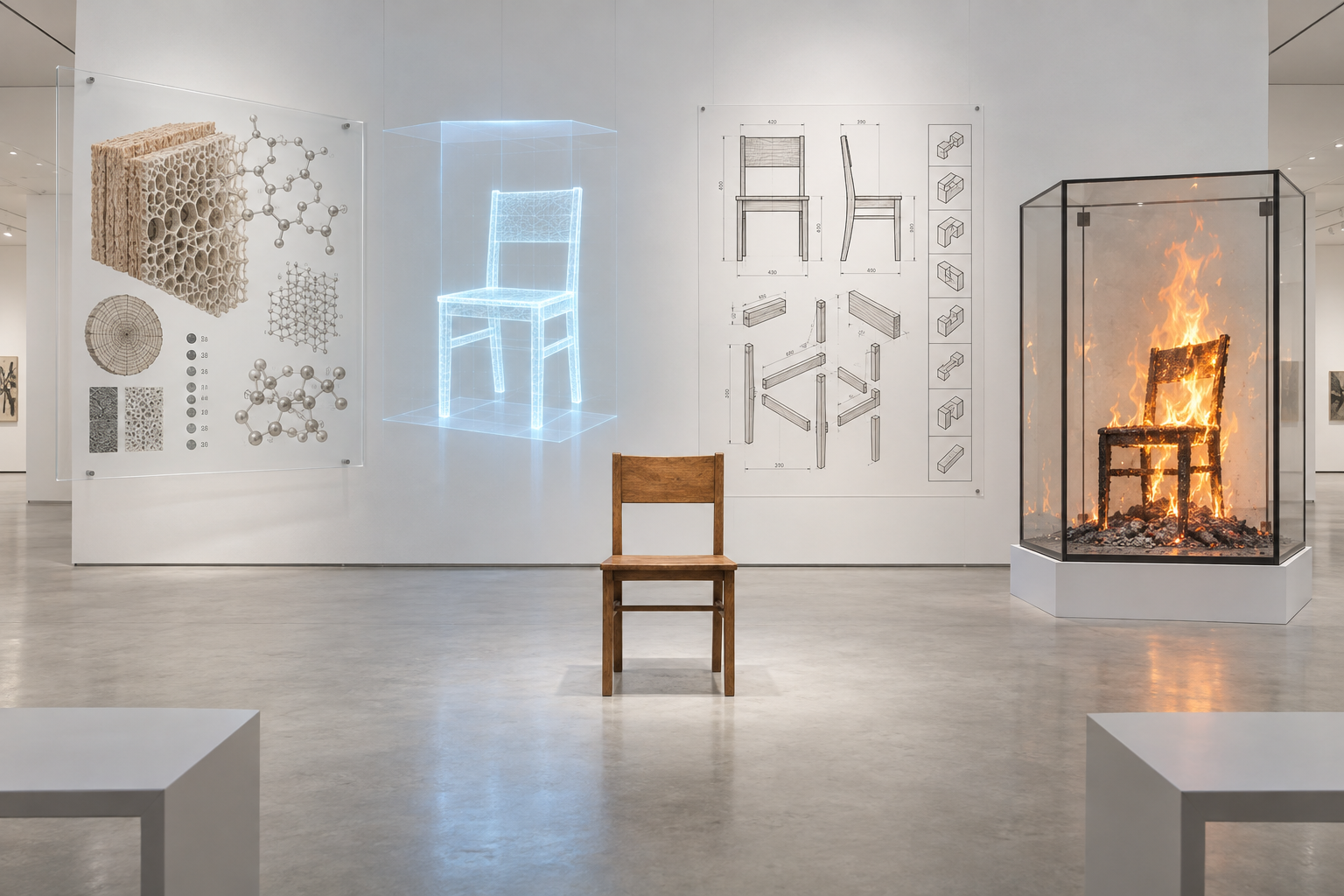
I propose to address that invisible chair to an artificial intelligence. Not to ask it to draw another chair, but to produce and defend a list of possible fourth propositions. Each shifts the chair into another mode of existence:
- The molecular chair. Its exact material composition—cellulose, lignin, pigments, metal, moisture—becomes its definition. The object appears as a temporary arrangement of matter.
- The holographic chair. A volumetric double occupies space without weight or the possibility of sitting. The image leaves the wall and simulates presence.
- The algorithm-chair. Parametric dimensions, material choices, assembly order, tolerances and gestures: a chair exists as an executable protocol able to generate a potentially infinite family of chairs.
- The burning chair. The object is no longer a stable state but a transformation into heat, light, smoke, ash and memory. The fourth proposition is a duration that cannot be reversed.
- The latent chair. A statistical vector learned from millions of images and texts contains the machine’s “chair.” It has no singular form or substance but quietly structures what the model can recognize and generate.
- The chair of use. Weights, postures, durations, movements and the bodies that have sat on it redefine the object through lived relations rather than appearance alone.
The project might be called One and Three Chairs, Plus an Infinity. At each activation, the system would propose another fourth chair, explain its assumptions, and submit it to artist and public. A proposition could be kept, contradicted, combined with another or refused. AI would not have the last word; it would make the proliferation of definitions perceptible.
The fourth chair would not be a fourth image. It would be the machine that prevents a chair from closing upon a single definition.
The nod to Kosuth becomes a contemporary experiment. Object, image and language are now confronted not only with an invisible concept but with a system capable of indefinitely varying that concept’s conditions of existence. This is the territory I seek: AI that first makes relationships, hypotheses and possible worlds rather than representations.