I am drawn to Conway’s Game of Life because it overturns the usual relationship to creation. We do not draw a form: we set conditions. We do not tell a story: we watch what a rule makes possible. The world is an infinite grid. Each square is alive or dead. At every generation, it consults eight neighbours. Nothing more.
A thought experiment that became a legend
John Horton Conway devised Life in Cambridge at the end of the 1960s, in the wake of John von Neumann’s cellular automata. Martin Gardner introduced it to the public in Scientific American in October 1970. The response was immediate: on university machines, enthusiasts hunted for patterns that endure, oscillate, travel or reproduce.
Conway’s invention is less a faithful model of life than a conceptual trap. I know every rule, yet I cannot tell what a configuration will become without running it. The simplicity of a program offers no guarantee that its future will be simple.
Block, blinker, glider: the vocabulary of a world
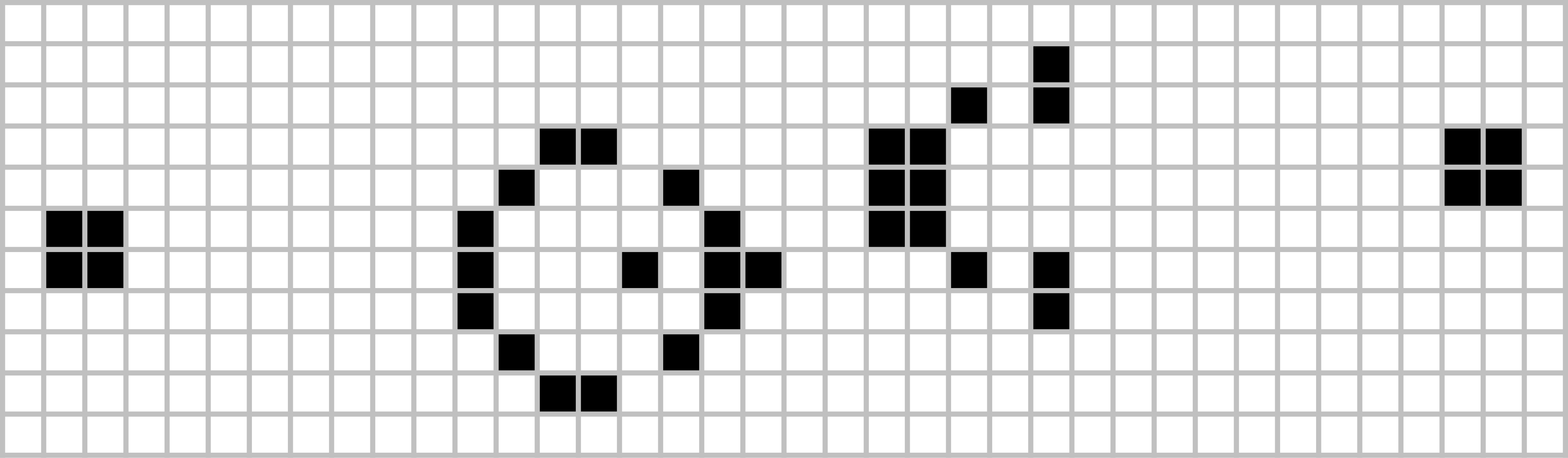
A block remains in place: a still life. A blinker alternates between two states: an oscillator. The glider, discovered by Richard Guy, crosses the grid diagonally. Then comes the Gosper glider gun, a stationary installation that periodically sends gliders away. It answered one of Conway’s early questions: a finite pattern can grow without bound.
From there, gliders become signals. They can form logic gates, memory and eventually a computer. The Game of Life is Turing-complete: given unbounded time and space, it can carry out any computation a universal machine can. What appears to be pixels being born and dying contains the possibility of an computer.
After Conway: rules that learn
In the age of AI, the Game of Life does not stop with its four rules. Neural cellular automata replace a written rule with a small trained network. In Growing Neural Cellular Automata, Alexander Mordvintsev and colleagues grow a form from one cell, then train it to persist and regenerate after damage. The question becomes: not “what pattern does this rule produce?”, but “what local rule can learn to keep a form alive?”
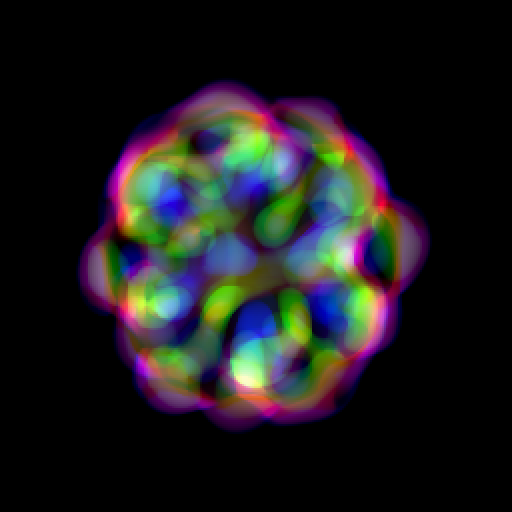
Lenia, created by Bert Wang-Chak Chan, shifts the frame again: space, time and cellular state become continuous. Instead of merely alive or dead squares, intensities propagate. Blurry, mobile, resilient and almost zoological organisms appear. Flow-Lenia research explores whether evolution can be kept from immediately exhausting itself.
From the grid to the open world
An open world such as GTA is not a cellular automaton: it is written, modelled, staged and carefully constrained. Yet it gives players the intuition at the heart of Conway’s work. Traffic, policing, crowds, economics, collisions, weather and non-player behaviours cross each other and create situations no one has scripted shot by shot. The next threshold is not a larger map. It is a world capable of transforming without becoming unreadable.
This is already a university field of its own. Procedural content generation studies the making of terrains, cities, quests, creatures and game rules. Cellular automata, grammars, noise, evolutionary search and machine learning compose less an image than a system of constraints. For me, the Game of Life is the stripped-down prototype of this idea: a world is not just scenery; it is a machine for consequences.
Fractals, perceptrons: two other grammars of life
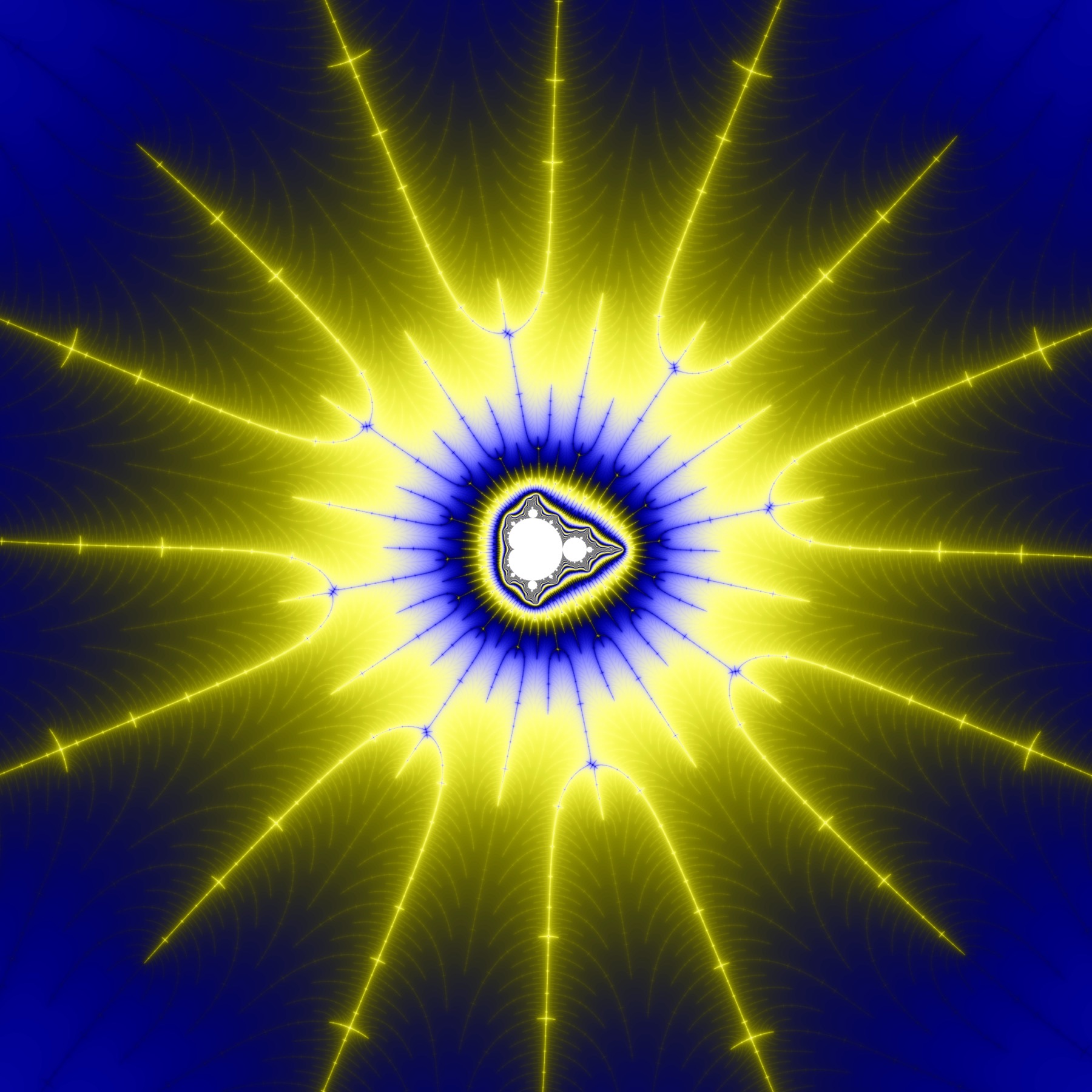
Fractals and the Game of Life do not arise from the same gesture. A fractal repeats a relation of scale; an automaton makes a neighbourhood interact over time. Yet they share an aesthetic and scientific lesson: a very short formula can generate an overwhelmingly rich geography. In a future open world, a mountain range could derive from a fractal rule, a forest from a growth system, a city from a local economy and its inhabitants from learning agents. The universe would no longer be generated once and for all: it would have an ecology of computation.
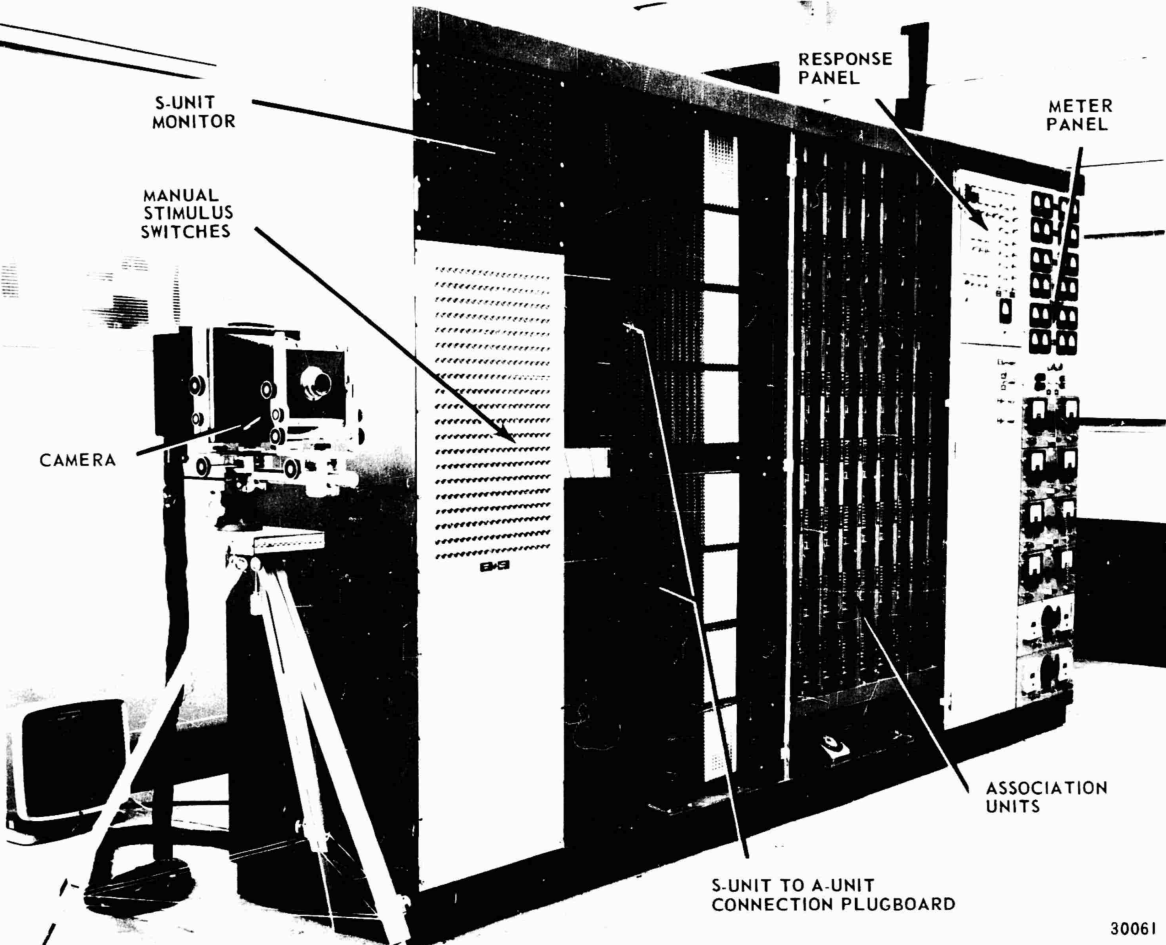
Frank Rosenblatt’s 1958 perceptron introduced a second break. A rule no longer only applies; it can be adjusted through experience. An artificial neuron weights inputs and changes those weights; a neural network distributes this principle across very large ensembles. Neural cellular automata bring the two lineages together: each cell has a learned rule, while still knowing only its local neighbourhood. Form becomes an hypothesis that corrects itself locally.
When matter learns: the horizon of organoids
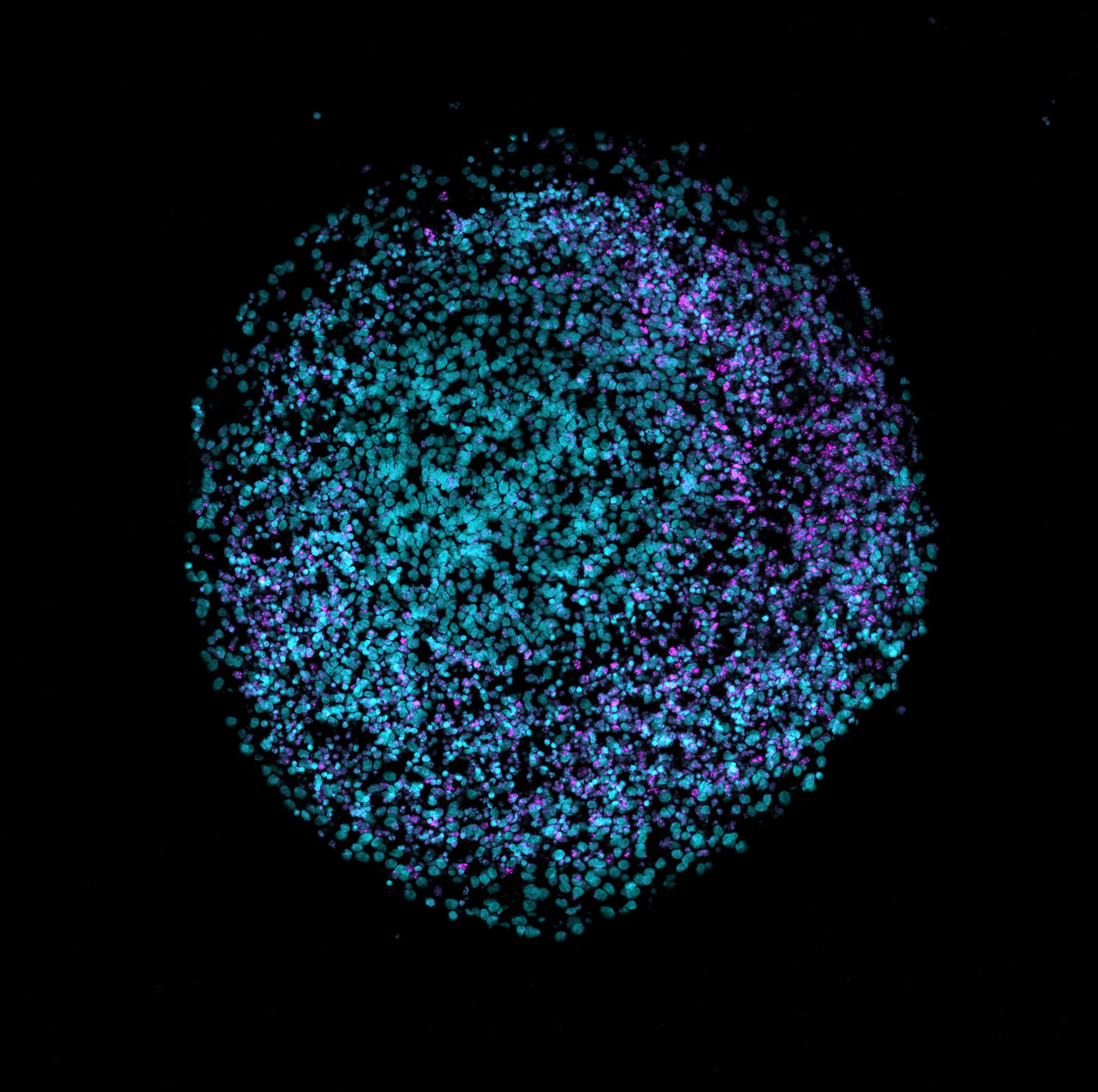
Here metaphor must stop and research must begin. Cerebral organoids are three-dimensional tissues grown from stem cells, used above all to study development, disease and treatment. They are neither completed miniature brains nor people awaiting a world. In 2022, a team connected neuronal cultures to a simplified version of Pong: the outcome was an experiment in a perception-action loop, not evidence of consciousness.
The shift remains striking. Between Conway, the perceptron and the organoid, three regimes of rules emerge: symbolic, trained and biological. In all three cases, the academic question is similar: how does a local organisation stabilise a form, change state, remember disturbance or invent a response? These are not three versions of one intelligence. They are three laboratories for thinking about matter, learning and environment.
Language as a new cell
The next Game of Life might no longer have alive or dead cells, but cells that speak. Teams are already studying communication protocols emerging between agents: a sign matters only because a neighbour learns to interpret and answer it. A vocabulary could appear, deform, vanish or travel like a glider. In an artwork, a cell would not contain a profile or a personal text, but a proposition: “welcome”, “repair”, “refuse”, “translate”. Language would become an observable organising force.
Open-endedness: a world that does not exhaust its possibilities
What I am looking for is not merely a complex system. It is a system that keeps producing novelty without converging on a final state. Biological evolution remains the overwhelming reference: replication, mutation and selection have produced bacteria, eyes, societies and finally beings able to study evolution itself. Nothing in the initial rules contained the plot of those stages.
In ordinary conditions, the Game of Life largely fails this test. A random grid stirs and often settles into ashes: blocks, oscillators and distant gliders. It is Turing-complete and can theoretically host constructions of arbitrary complexity. But possibility is not dynamics. Its great replicators and computing machines remain human inventions, monuments patiently built in a universe which otherwise tends to quieten down.
Novelty is not enough. Random noise is new at every instant, yet it is not interesting. Edward Hughes and colleagues propose to think of open-endedness through an observer: a system should make things that are both novel and learnable, carrying regularities that can be understood, retained and reused. The central issue is therefore: who judges what deserves to persist, and through which forms of understanding?
Four paths towards the inexhaustible
01 · Diversify rather than optimise. Kenneth Stanley and Joel Lehman’s novelty search, followed by quality-diversity methods such as MAP-Elites, do not seek a single best answer. They cultivate an archive of different solutions that perform in their own niches: an ecology of paths, not a race to one summit.
02 · Let worlds and inhabitants coevolve. In POET, environments gradually become harder while agents learn to cross them. Solutions transfer between worlds and become unexpected stepping stones. An open world would no longer be the fixed stage of learning: it would learn to invent its own obstacles.
03 · Give an AI the task of looking. ASAL uses a vision-language model to assess what a simulation produces: is it unlike its history? Is it structurally or visually worth exploring? It has been tried on the Game of Life, Lenia, boids and neural cellular automata. The model does not create life by itself; it works as a gardener-critic in a space of possible rules too large for one human gaze.
04 · Accumulate knowledge that changes exploration. In Voyager, an LLM-based agent explores Minecraft, builds a library of executable skills and reuses what it learns. The Darwin Gödel Machine takes this further, retaining an archive of variants and testing changes to its own code. This is still far from endless evolution, but the idea of a collective memory of bifurcations has become technically active.
Towards an augmented Game of Life
I imagine a simulation in which an AI does not write the result but watches over the conditions in which it appears. It identifies a structure that moves, repairs itself, cooperates or copies itself; it changes resources, borders or interactions very slowly to prevent extinction and stasis. It becomes gardener, archivist and critic at once. Its criterion is not fixed beforehand: it rewrites itself in contact with what the world produces.
Such a machine is as dangerous as it is compelling. Nobody can yet measure open-endedness by consensus. An algorithmic judge may reward its own biases — a form of reward hacking — rather than recognise genuine novelty. A system that preserves variants, transforms its rules or alters its own code becomes difficult to foresee and constrain. The artwork must therefore expose its archive, criteria, bifurcations and refusals. The inexhaustible is not a promise of total autonomy: it is a responsibility of looking.
When artists make rules live
Art did not wait for generative models to take rules as material. Sol LeWitt and Vera Molnár had already shifted the artwork towards instruction and variation. Artists of artificial life add something essential: the work is not merely the result of a rule, but the environment in which that rule meets a visitor, an accident and duration.
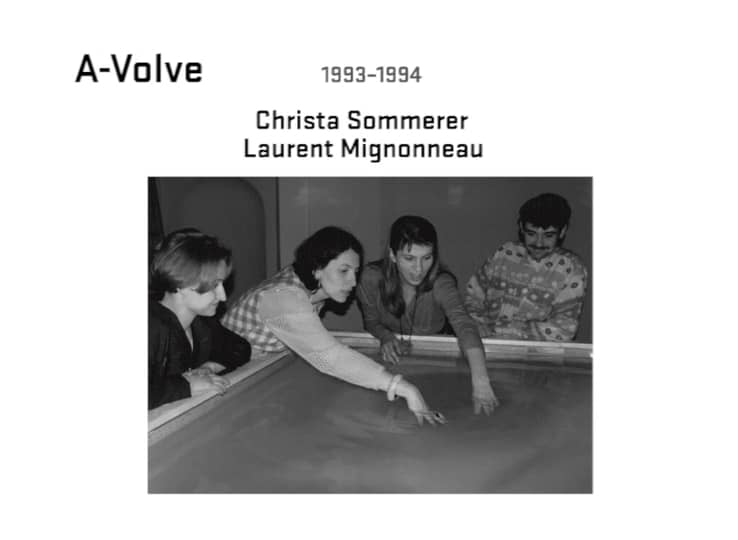
With A-Volve (1994), Christa Sommerer and Laurent Mignonneau invited visitors to draw organisms that live and compete in a pool. In Ian Cheng’s simulations, the work is not a finished film: it persists, branches and brings autonomous agents into an unresolved narrative. These works do not reproduce Conway’s game. They extend its gesture: entrust part of a world to a rule, then accept that control is incomplete.
An extrapolation: The Game of Neighbourhoods
I do not want to turn humans into cells, nor suggest that a society can be governed by a formula. Credit scoring, predictive policing, recommendation platforms and social scores already dream of mistaking behaviour for a variable. A human Game of Life would become a nightmarish administration in which an invisible rule decides who may appear, survive or disappear.
I propose the reverse: a performance-installation which makes its rules debatable. The Game of Neighbourhoods would occupy an art centre or a district for several days. A light grid, on the ground and online, would not represent individuals but shared situations: a meal, a repair session, a translation, a library, an absence, a disagreement, a celebration. Each square would light up only when a real group chooses to activate it. A local AI would merely suggest unlikely neighbourhoods and show the conditions of each situation. Rules would be public, revisable every evening in assembly, and every change would create a new version of the common world.
Open the interactive Game of Life simulation ↗