Since generative artificial intelligence became capable of producing a convincing image in a few seconds, one question has returned insistently: can it make art? I believe the question is poorly framed. An image may be seductive, strange and technically impressive while remaining without consequence. Conversely, a work may appear poor, almost empty, yet permanently displace the way we see. The problem is therefore not merely to produce a form. It is to understand how a form becomes an act, how that act meets its period, contradicts a rule, finds allies, provokes rejection and eventually acquires—or fails to acquire—the status of an artwork.
This is where MAIO, the Machine for Artwork Inference, begins. I do not imagine it as an automatic masterpiece dispenser or an oracle charged with announcing the next avant-garde. I imagine it as a critical machine: a device capable of formulating hypotheses about the mechanisms that transform an intuition into a recognized artwork. It would ask not only “what does it look like?” but also “which rule does it contradict?”, “which history does it inherit?”, “who benefits from making it visible?” and “what does it lose at the very moment the institution accepts it?”
MAIO would not predict art. It would expose the system of relations through which we decide that something is art.
Before the computer, inference
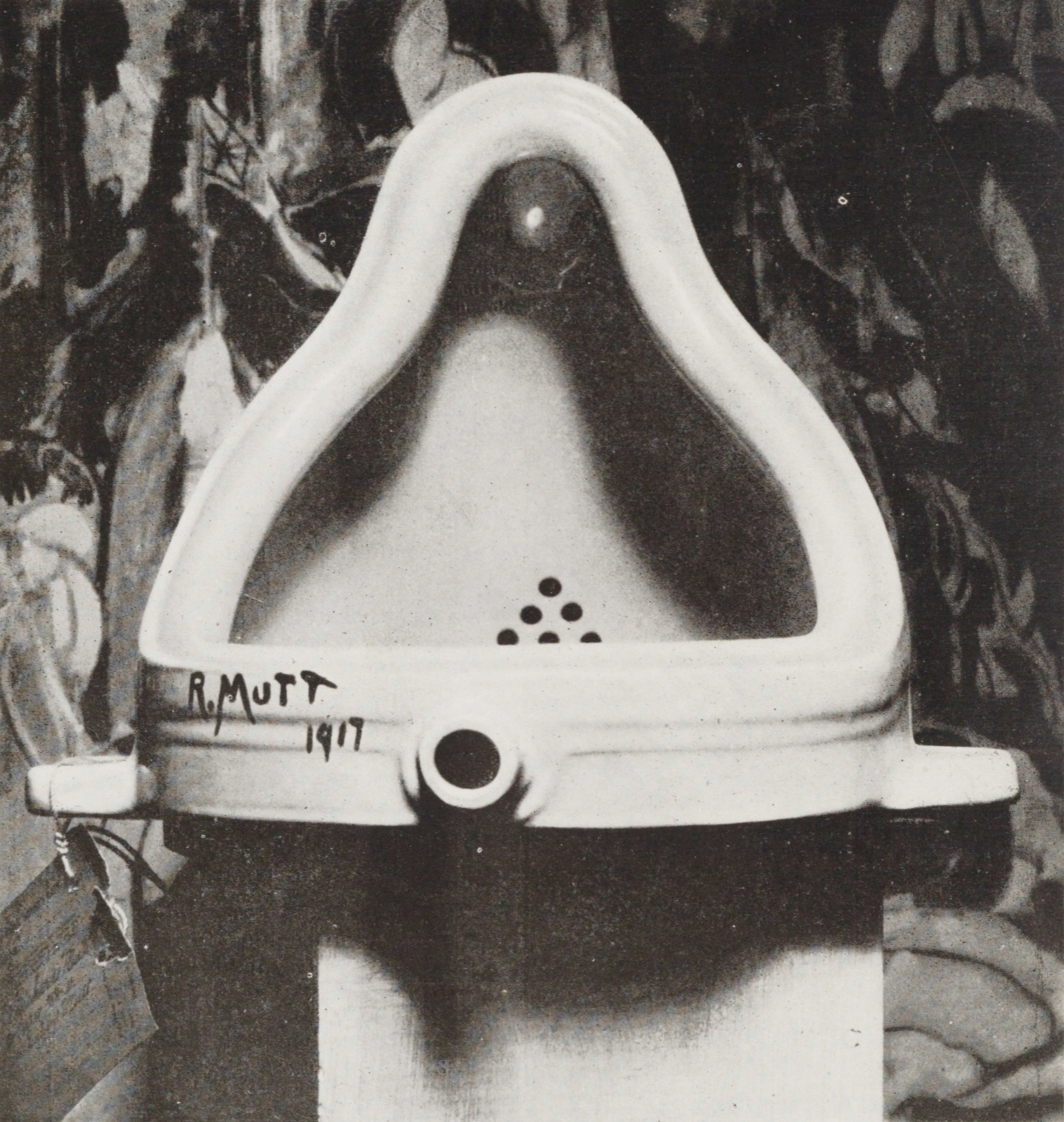
In 1917 Marcel Duchamp bought an industrial urinal, turned it over, signed it “R. Mutt” and submitted it to the Society of Independent Artists exhibition in New York. The object was rejected. That rejection belongs to the work as much as the object itself. With Fountain, manual fabrication, beauty and uniqueness ceased to be sufficient criteria for art. The artist’s choice, a shift of context, a title, a signature, scandal and discussion became aesthetic operators. Duchamp did not simply exhibit an object: he modified the function by which an artwork could be recognized.
One might say that, without a computer, he performed an early inference: if a manufactured object is chosen, named, displaced and exhibited by an artist, then its status may bifurcate. Yet this operation never succeeds alone. It requires a reception system: viewers, critics, collectors, narratives, museums—and sometimes an initial refusal. This network is precisely what the romantic legend of the solitary genius erases.
When the work became a rule
During the twentieth century, art progressively shifted part of its activity from object to instruction. A work could be a protocol, a score or a procedure executed by others. In conceptual art, the idea was no longer only a preparatory stage: it became public matter. The algorithm, in its original sense as a sequence of operations, therefore entered art long before contemporary AI systems.
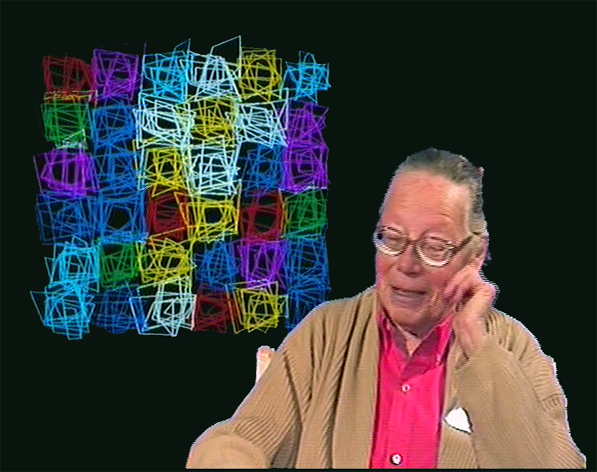
Vera Molnár occupies a decisive place here. Before she had access to a computer, she described her “imaginary machine”: a mental set of rules and variations applied to simple forms. When she began using computers, the machine did not abolish her gesture; it enabled her to explore methodically the border between order and disorder, and then to choose among the results. In Déambulation entre ordre et chaos (1975), the program makes variations calculable, while the project, constraints and judgement remain situated.
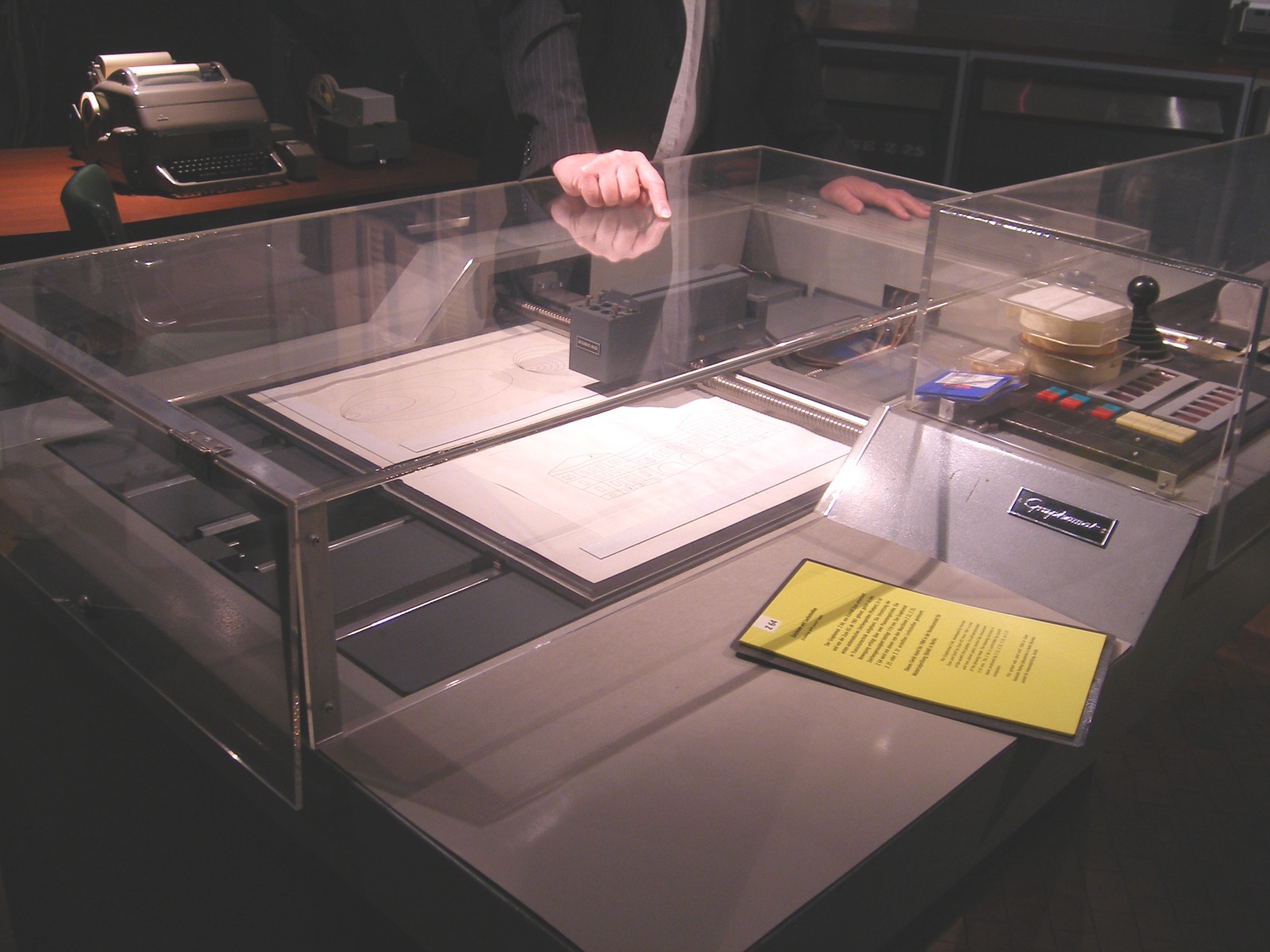
At roughly the same time, Harold Cohen developed AARON, one of the first artificial-intelligence programs devoted to artistic production. For decades Cohen wrote and rewrote the rules that allowed the system to draw. AARON did not download art history in order to recombine its surfaces: it embodied a long conversation between an artist, code and drawing machines. This distributed work already destabilized attribution. Who draws—the program, its author, the plotter, or the system made by their exchanges?
Plausibility is not rupture
Contemporary generative models possess remarkable power. They learn correlations from huge collections of images and texts and then produce a statistically plausible answer to a request. They can cross visual territories at speed, synthesize codes and produce forms I would not have drawn alone. This generative capacity can become genuine artistic material, but it is not sufficient to give a work necessity.
The model tends towards what can be recognized. Even when asked to surprise us, it often manufactures a surprise already compatible with our expectations: a readable deviation, a well-framed strangeness, something new that still resembles the known. A historical rupture, however, may initially be incomprehensible, clumsy, unsellable or invisible. It may arise from political shock, grief, exile, a meeting, economic constraint or a technical accident. It is not wholly contained in the corpus that precedes it.
MAIO would therefore begin with a paradox: attempting to calculate what, in art, resists calculation. Its usefulness would not lie in exact prediction but in staging that failure. The more the machine explained the conditions in which a work might appear, the more clearly it would show what it can neither live nor guarantee.
A machine driven by four forces
MAIO’s first layer would be a historical map. It would classify works not only by formal resemblance but by the rules a movement accepts or refuses: representation, authorship, material, originality, exhibition site, property, duration, participation and value. One work could simultaneously belong to several contradictory lineages.
The second layer would be an engine of rupture. I would distinguish at least four forces: endogenous rupture, arising from a contradiction inside art history; exogenous rupture, arriving from war, climate, science, technology or social change; intimate rupture, coming from biography and lived necessity; and economic rupture, treating the market not as an aesthetic truth but as a force able to accelerate, normalize or suffocate a proposition.
A third layer would simulate legitimation: studio, school, criticism, gallery, collection, exhibition, biennial, museum and social network. Every intermediary changes the work it supports. A radical critique welcomed by the museum it contests is no longer quite the same critique. The price displayed by MAIO would never be an appraisal; it would be an ironic indicator of how the market converts a story, rarity and connections into a number.
The final layer would be reflexive. It would investigate MAIO’s own tacit rules: its Western biases, fascination with avant-gardes, preference for rupture, gaps in the corpus and tendency to confuse visibility with importance. A critical machine incapable of criticizing itself would quickly become a new academy.
Three examples, three traps
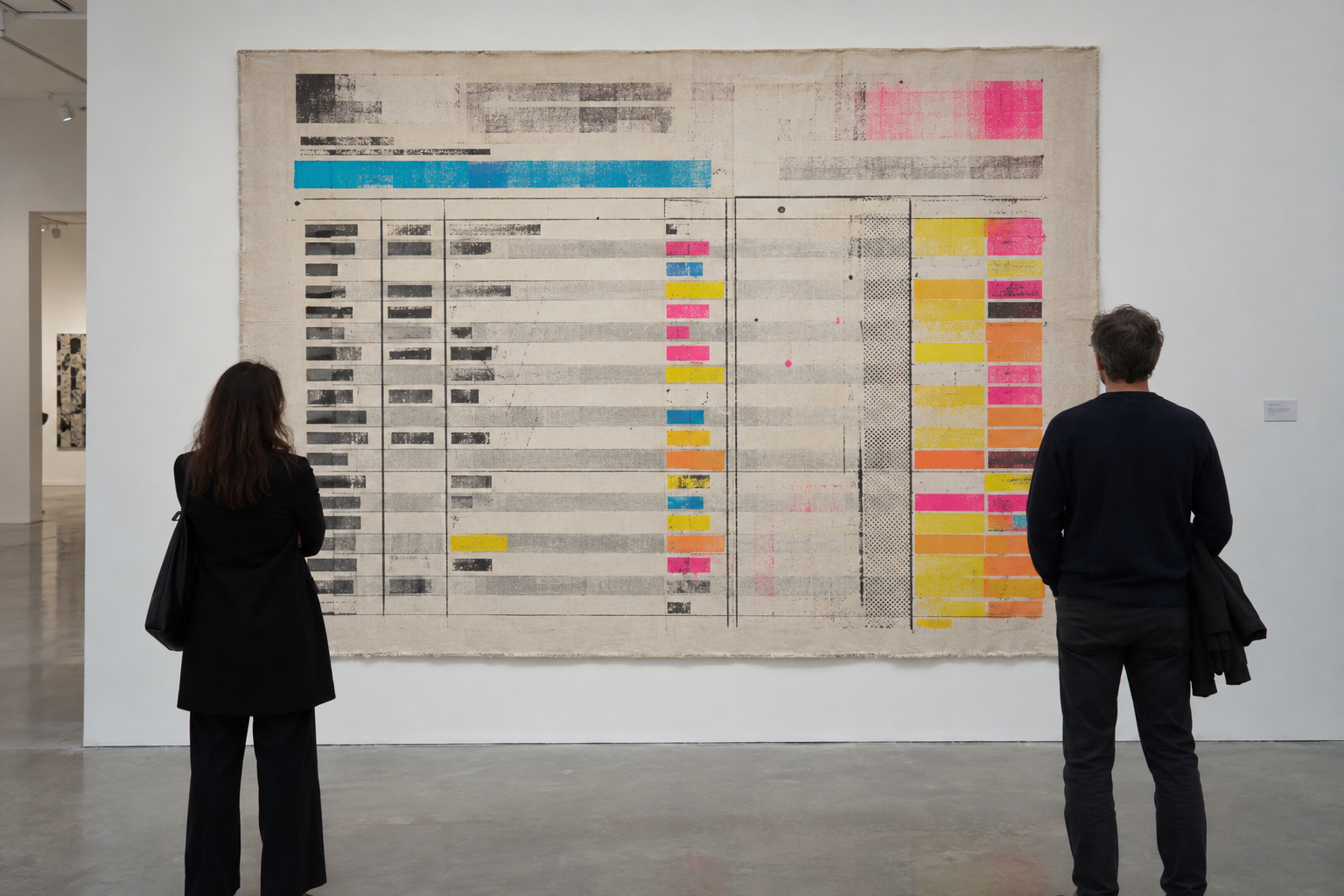
The first scenario, Untitled (bank statement, series 3), begins with an ordinary and almost shameful object: a bank statement. MAIO combines Pop art, conceptual art and social realism, then proposes replacing monetary amounts with a coloured map of anxiety. The idea immediately appears exhibition-ready. That is its first danger. By anticipating curatorial language, venue and price, the machine shows how quickly a critique of precarity can be converted into desirable merchandise.
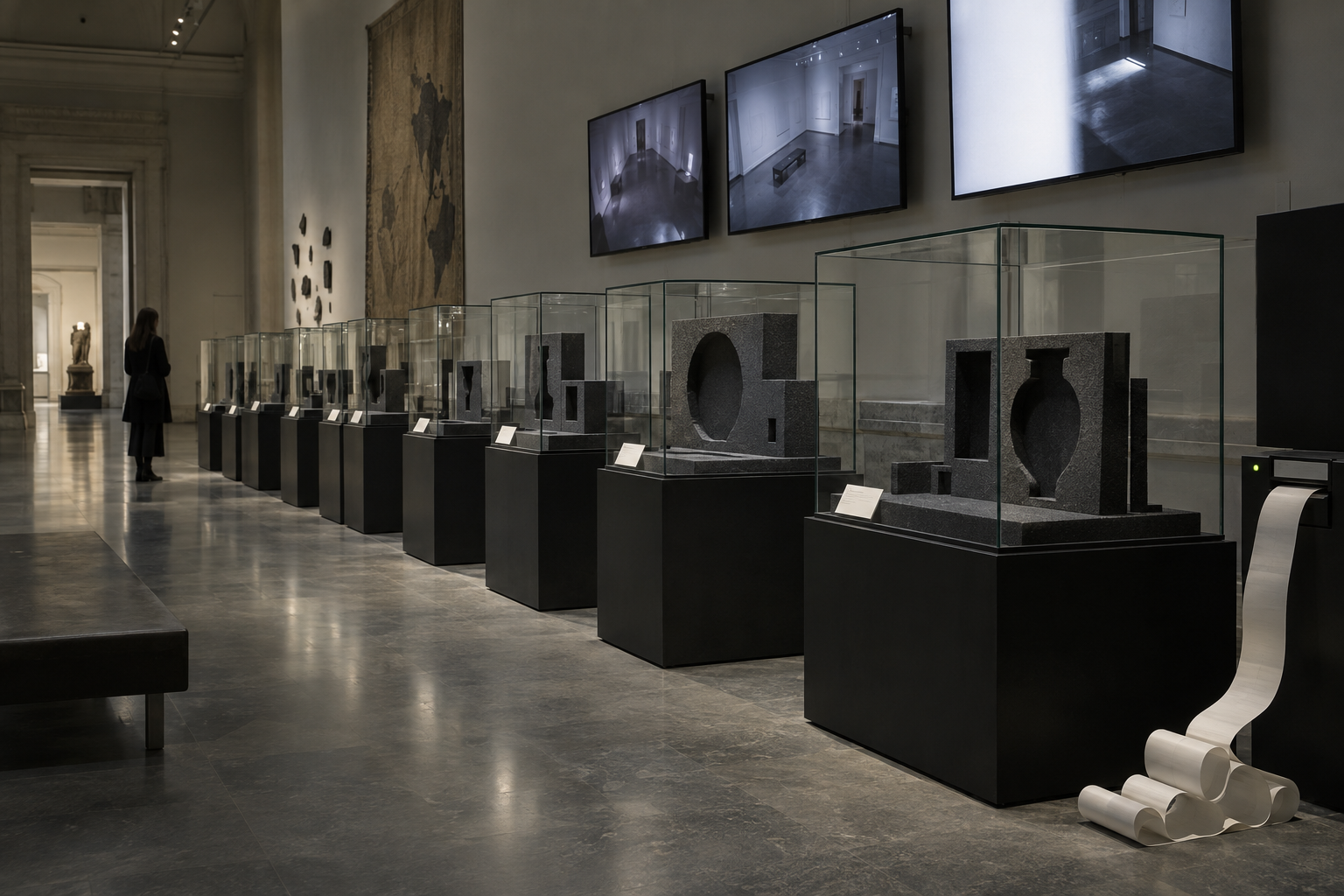
The second scenario, The Museum of Missing Evidence, imagines cases containing empty imprints of objects whose provenance cannot be established. Surveillance screens show only missing intervals in the archive. MAIO constructs an ideal trajectory towards a history museum or an institution committed to restitution, then reverses its own proposition: can an institution elegantly exhibit its omissions without repairing them? A critical work sometimes becomes the moral décor of what it denounces.
The third scenario, The Forest Does Not Sign, converts variations in living soil into vibration, breath and lines of light. No dashboard translates these signals into productivity or warning. The work refuses to make the forest a substitute author, but also refuses to treat it as a simple data reserve. MAIO proposes a provisional property regime: the technical elements may be acquired while the protocol remains attached to the place and must be renegotiated with those who care for it. The danger here is turning a concrete ecology into a contemplative atmosphere.

What MAIO will never know
MAIO can combine genealogies, articulate contradictions, produce a title, a form, a wall text and even simulate an economic trajectory. Yet it knows neither bodily fatigue nor the fear of losing one’s place, neither the euphoria of an encounter nor the obstinacy required to return to the same piece for ten years. It does not know why a material resists in the hand or the moment when a theoretically perfect idea suddenly ceases to feel right.
Nor can it reproduce relational chance. A studio conversation, a distracted viewer, a badly reproduced photograph, censorship or a misunderstanding may redirect a work and its history. Recognition is not a pure function: it is a struggle between people, institutions and narratives with unequal power. Howard S. Becker’s Art Worlds are based on chains of cooperation and shared conventions. Modelling them is useful only if the model never presents them as natural laws.
Every MAIO result should therefore include uncertainty, sources and a counter-scenario. For every seductive proposition the machine should be forced to answer three questions: who is absent from my history? Who benefits from this recognition? Which proposition have I made impossible by choosing this one?
An artwork that manufactures doubt
I see several possible futures for MAIO. It could become a teaching tool in an art school, not to grade works but to expose lineages claimed too quickly. It could act as a critical adversary for an artist: given an intuition, it would produce the most institutionally probable version, and the artist would work precisely against that probability. It could also become a public installation in which visitors observe how the value of one proposition changes when they alter the author’s name, origin, exhibition venue or gallery support.
Eventually, the machine could host several contradictory agents: a historian, an artist, a curator, a technician, an activist, a collector and a non-specialist public. None would have the final word. Their disagreements would become the principal output. MAIO would no longer generate only a possible work, but the conflict required for its appearance.
What I want to build is not a machine that replaces the artist. It is a machine that puts the very desire for replacement into crisis. It takes AI’s combinatorial capacities seriously while refusing to confuse generation, creation and history. Art is never contained only in the object: it circulates among a gesture, context, refusal, belief, price, memory and the possibility that a gaze may change.
MAIO may never tell us what an artwork is. But it could show us, with disturbing precision, everything we mobilize in order to decide that it is one.
How MAIO could actually work
To move from this model to a usable machine, I would deliberately begin with a restricted territory. Pretending to absorb all of art history in a first version would be illusory. A prototype could cover a period from the twentieth-century avant-gardes to contemporary practices, using a few hundred carefully documented works, texts, exhibitions, controversies and artists’ trajectories. Every source would be dated, attributed and accessible: MAIO could not rely on an opaque memory.
This corpus would become a relational map. A work would be described not only by its image but by materials, protocol, political context, references, the rule it contests, the institutions that displayed it and the discourse surrounding its recognition. Art historians, artists and curators would be able to correct the map. The system would preserve disagreement instead of manufacturing a single, artificial version of history.
When a user entered an intuition—a theme, intimate experience, constraint, medium or context—a first engine would retrieve relevant genealogies. A second would formulate operations of rupture: extending a rule, reversing it, displacing it into another environment or making it impossible. A third would examine how each hypothesis might be received, appropriated or rejected by different art worlds. Generative AI would then express these relations as a title, production protocol, formal description, critical text and provisional visualization.
MAIO should never deliver one definitive answer. For every proposition it would generate at least one counter-scenario and one objection. One agent might defend historical coherence, another search for pastiche and cliché, a third question social and ecological consequences, and a fourth analyse mechanisms of legitimation and markets. The final output would show their disagreements, sources and degree of uncertainty. The user could alter a hypothesis, refuse its genealogy or restart from its weakest point.
Technically, the first version could combine a documentary database, a knowledge graph, semantic search and several language models assigned contradictory roles. Images would be generated only at the end, as working sketches rather than proof that an artwork exists. Every result would be archived with its parameters, sources and transformations so that it remained reproducible and open to criticism.
I would build the prototype in three stages. The first would make the three examples shown here genuinely navigable. The second would allow invited artists to enter their own intuitions and annotate the answers. The third would publicly confront the machine with historians, curators and audiences through an installation in which its reasoning, mistakes and corrections remained visible. That process would already constitute the artwork: MAIO would learn less to manufacture art than to expose the way we discuss, select and legitimize that name.