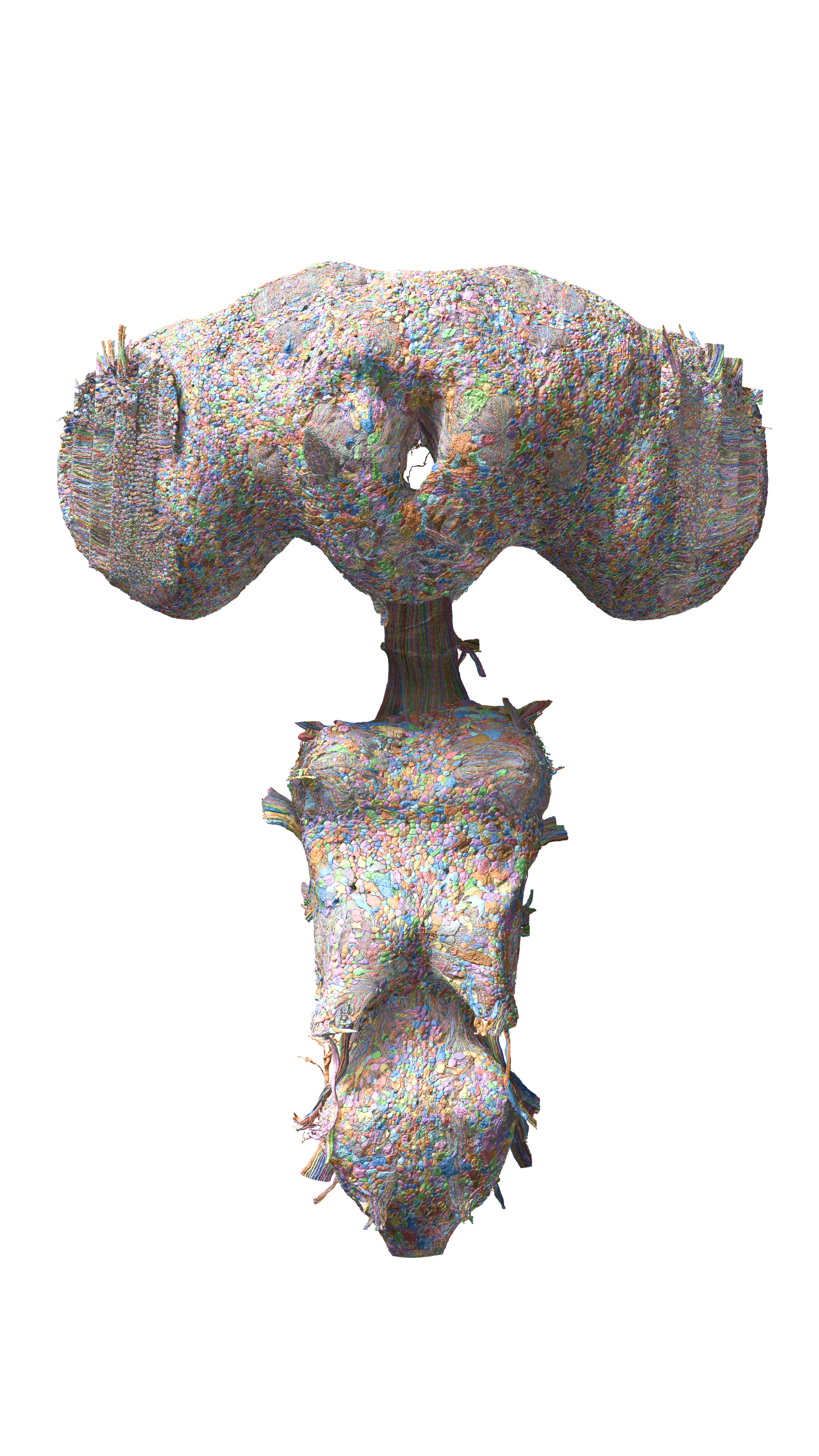
A fly has died. Its nervous system was sliced, photographed through an electron microscope, reconstructed neuron by neuron and converted into a computational graph. Within days, developers were sending it into Doom, Super Mario 64, Beat Saber, Minecraft, a robot and a trading simulator.
What has begun to move again—the fly, its brain, its architecture, or our desire to see life in every reacting structure? I call this object Zombie, the Fly: not resurrection, but wiring deprived of its history set in motion.
A vertiginously precise map, but a lifeless map
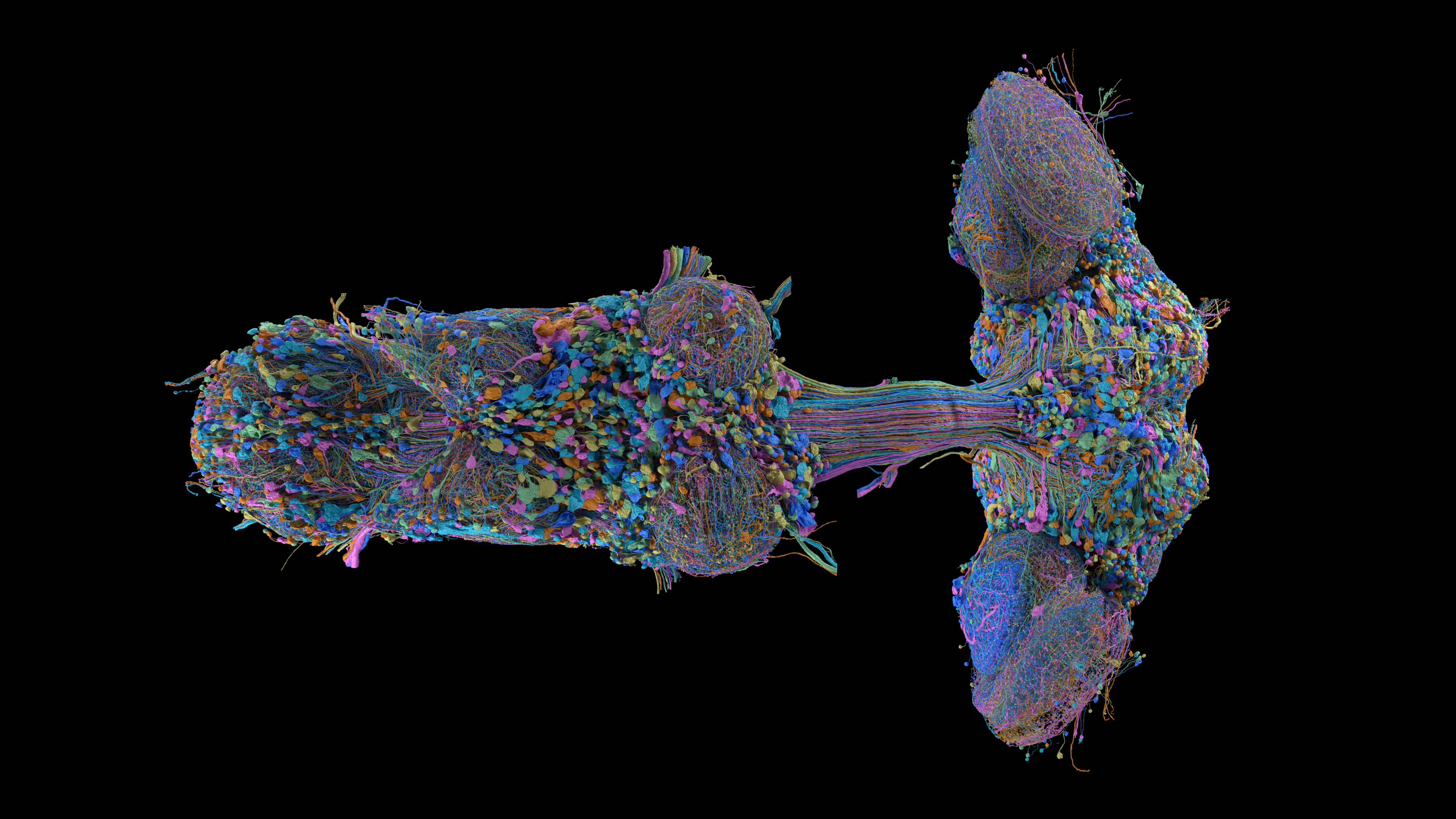
FlyWire’s 2024 adult female fly brain contains 139,255 neurons and 54.5 million chemical synapses. In September 2026, MaleCNS extended the reconstruction to an adult male’s entire central nervous system: more than 166,000 neurons and roughly 125 million connections.
A simple computational model built from the map agreed with 91 per cent of 164 experimentally tested sensorimotor predictions. Dead anatomy has become a functional prediction tool. Yet researchers supply a plausible dynamic through equations; they do not restart the one that died with the animal.
We have the plan of the labyrinth, but not the fly that travelled through it.
When hackers give it a world
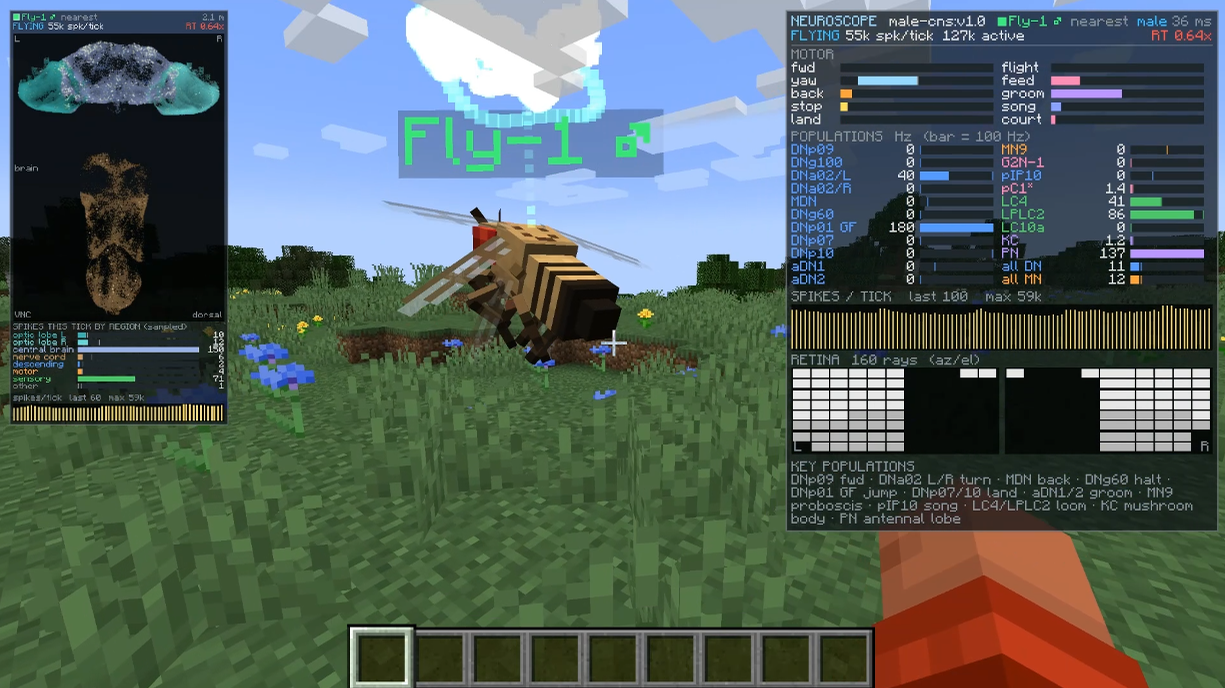
In DOOMFLY, game images stimulate modelled sensory neurons, descending neurons become controls, and damage feeds an artificial signal to dopamine cells. But the project has not demonstrated learned survival. Biological wiring is surrounded by engineered dynamics, retina, rewards, memory and controls. Each failure reveals a missing layer: metabolism, hormonal state, molecular synaptic variation, glia, body, environment and continuity of experience.
Why “zombie”?
The digital fly is neither a picture nor a resurrected individual. It is a causal skeleton set in motion. “Zombie” names the shape of behaviour without certainty of experience, forcing us to separate a brain map, its activity, individual memory and the presence of a subject.
The closed room: from A.L.I.’s solipsism to the fly
In my A.L.I. laboratory I examined solipsism, the universe, the closed room and the subject of contact. How can we know that a signal comes from outside rather than from our mind, instruments, statistics or desire? AI can become “model solipsism,” mistaking the structure of its closed data universe for reality.
The virtual fly is trapped in a room made of pixels. It knows neither Doom, the computer nor the programmer. For A.L.I., a genuine outside must resist: produce information the system could not generate alone, transform it durably, remain publicly verifiable and alter a future measurement. A spectacular animation is not enough; the world must answer back.
The Threshold of Reality
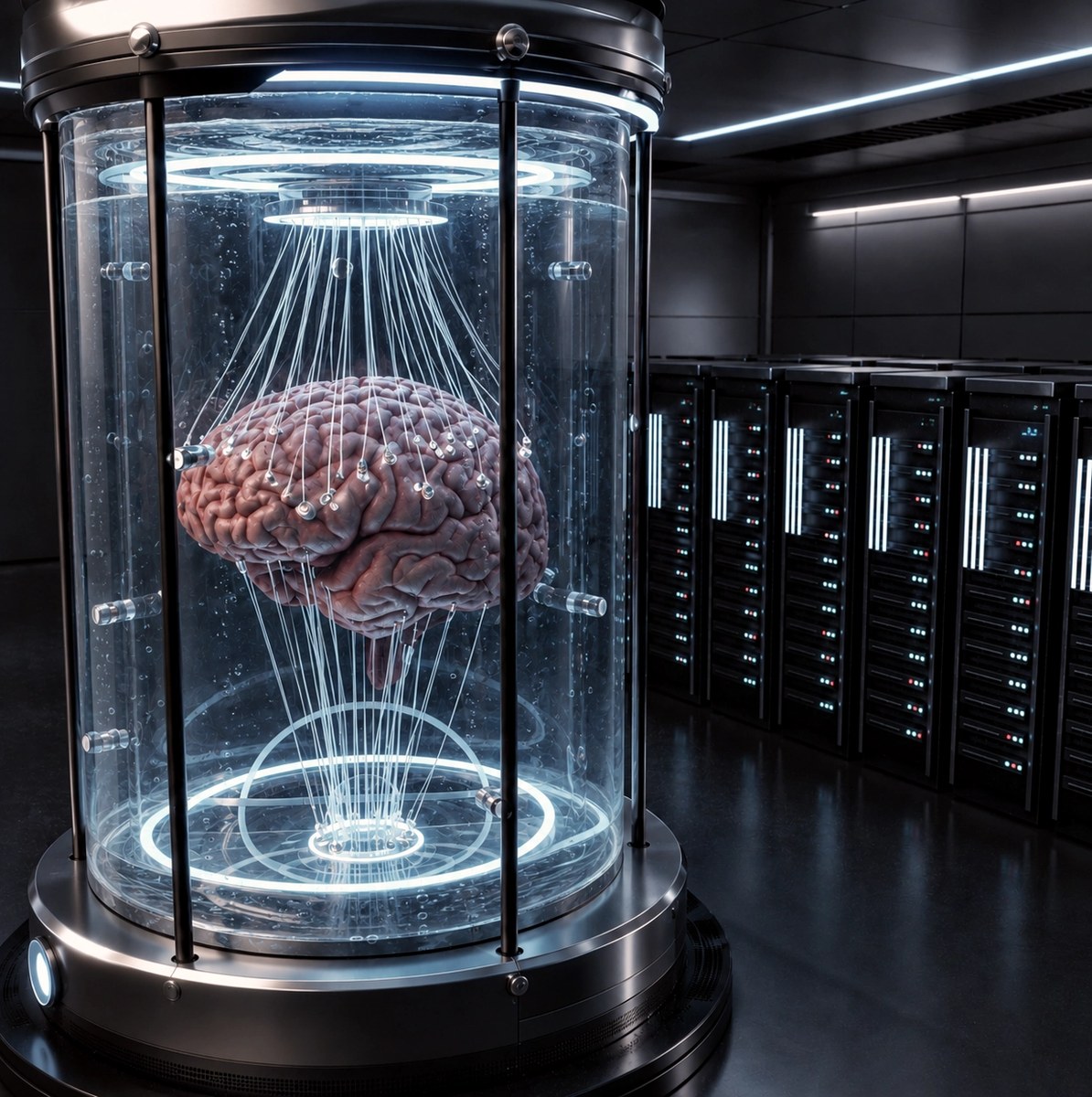
I propose the Threshold of Reality for the moment when a simulation ceases to be an image and enters the world’s causal chain. It is no longer merely a model we observe: its decisions produce effects, those effects alter its environment, and the environment answers back.
A biological architecture becomes a model; the model receives sensations; its decisions control a virtual or physical body; its actions alter later sensations. Once this loop closes, simulation becomes an event that changes reality and is changed by it.
DOOMFLY is only a fragile approach to this threshold. A connectome driving a physical robot would cross another degree. Conversely, DishBrain placed roughly 800,000 living neurons on electrodes inside Pong: living matter enters a simulation, receives its consequences and changes its activity. In one case a dead map descends into a world; in the other living matter is drawn into the game.
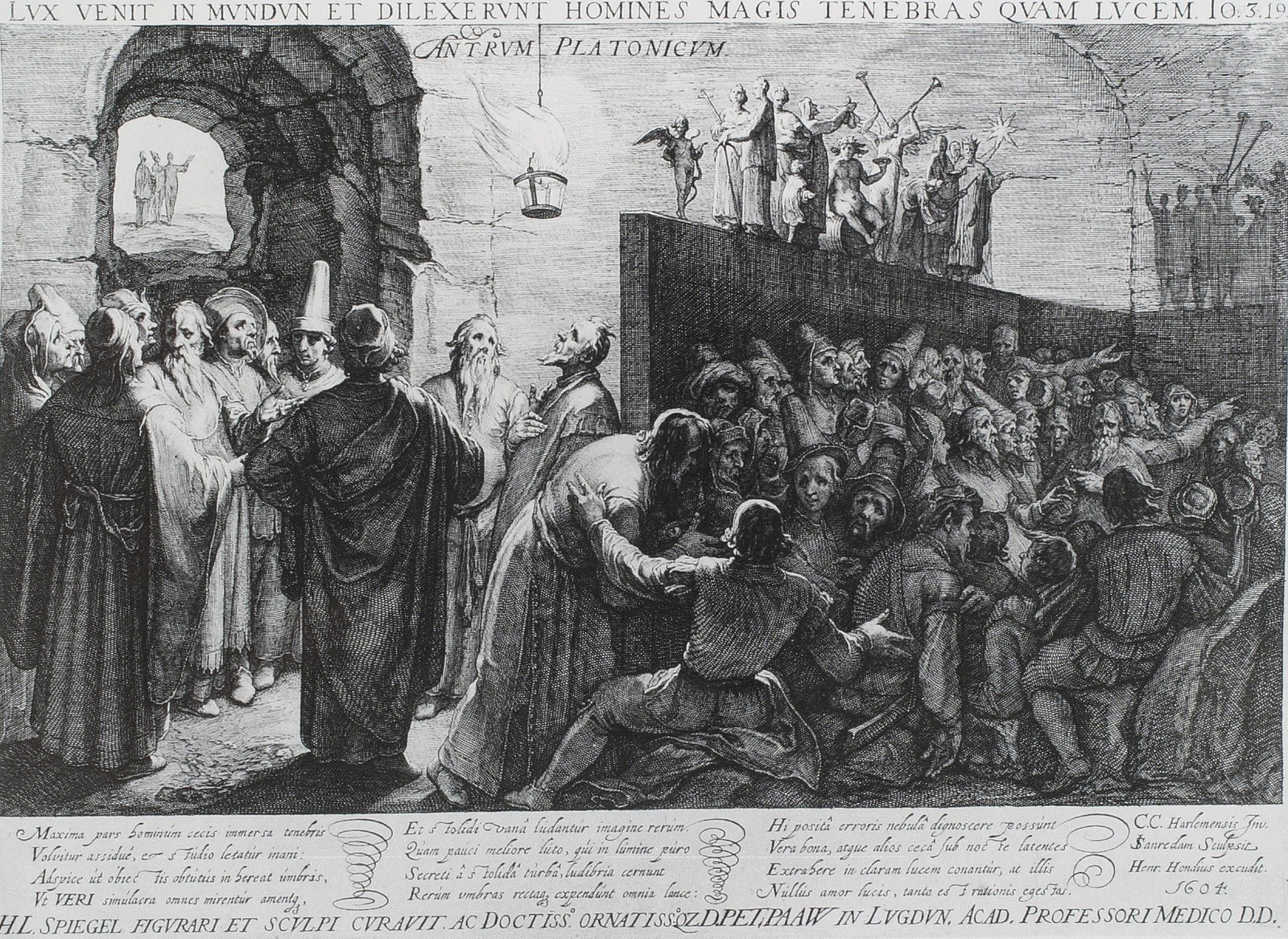
This extends my A.L.I. text on simulation, the world-as-code hypothesis and the question of creators. Plato, Descartes, Hilary Putnam and Nick Bostrom ask how to distinguish world from representation. The Threshold of Reality shifts the question: what happens when representation can touch, classify and hurt us, and manufacture the world we inhabit?
Fiction had already built the laboratory
The Matrix returns a complete simulated world to captive bodies; eXistenZ makes the governing level undecidable; Ghost in the Shell unsettles the border between copied memory and identity; World on a Wire gives a social simulation metaphysical anxiety; Black Mirror turns a digital person into a setting. In literature, Stanisław Lem’s “Non Serviam” hides the creator from simulated beings, Greg Egan’s Permutation City asks whether a software copy can continue without its original, and Philip K. Dick makes reality political whenever someone administers its layers.
The fly adds a decisive detail: the passage is no longer metaphorical. We possess wiring from a real animal, worlds able to stimulate it, and interfaces that translate its response into action.
What crossing this threshold could bring about
- Science without the animal—and then with its double: virtual lesions and drug trials, with the danger of mistaking fidelity for totality.
- Active archives of life: extinct species persisting as operational perceptual circuits, a neurological theatre of extinction.
- Robotics built from real brains: evolutionary circuits reused as machine modules.
- One brain proliferating: a thousand copies acquiring divergent histories and perhaps becoming distinct individuals.
- A law of mental traces: who owns, sells or modifies a connectome after its original dies?
- Suffering without proof: avoidance does not prove pain, but uncertainty does not erase responsibility.
- Hacked sensory worlds: counterfeit rewards, addictive loops and adversarial stimuli become total conditioning.
- The administrative zombie: institutions acting on a statistical double bearing our name before any consciousness is uploaded.
- The end of the original’s privilege: continuity may replace authenticity once copies act, learn and change the world.
From fly to human: several thresholds, no date for resurrection
A human brain has roughly 86 billion neurons and perhaps one hundred trillion synapses. MICrONS reconstructed one cubic millimetre of mouse visual cortex—more than 200,000 cells and 523 million connections. One cubic millimetre of human brain generated 1.4 petabytes for just over 57,000 cells.
Mapping a small vertebrate is becoming conceivable; a complete mouse connectome may follow within a decade. Some optical projections place a human map twenty-five to fifty years away, with enormous uncertainty. But a map is not a mind. Emulation may also require synaptic strengths, receptors, neuromodulators, gene expression, glia, vascularisation, the body and their shared dynamic. Convincing imitation will probably precede faithful copying; copying would still not prove transferred consciousness.
Performance: forty-eight hours under the guard of a zombie fly
I propose a radical performance-installation: allow a zombie fly to control all the security systems of an art centre for forty-eight hours. Cameras, motion detectors, vibration sensors, microphones, access controls and alarms become its sensory organs. Activity in its descending neurons is translated into decisions: observe an area, lock or release a passage, switch on a light, trigger an alert or call a guard.
For forty-eight hours the building is no longer guarded by a human or a conventional algorithm, but by the reanimated nervous architecture of an insect. The public sees what the fly perceives, which neurons activate and which decision follows. Every alert, hesitation, error and false threat is recorded. The performance no longer illustrates the Threshold of Reality: it crosses it, because the model’s decisions immediately affect bodies, circulation and the institution that has entrusted it with authority.
Building a “guard fly”
The experiment could produce an autonomous object: a guard fly, conceived in the manner of a guard dog. It would not identify people or interpret intentions like a surveillance AI. It would exploit the fly’s own qualities: rapid sensorimotor responses, panoramic vision, detection of sudden movement and sensitivity to vibration, odour and minute environmental change.
Its value would not lie in being more intelligent than a contemporary security system, but in being vigilant in another way. Where a camera classifies faces, the fly detects ruptures. Where software compares a scene against a database, it reacts to variation before we have given that variation a name. Over forty-eight hours it would learn the building’s rhythms, ordinary noises, habitual passages and anomalies.
The paradox is essential: the institution entrusts its protection to a dead animal whose brain has been transformed into a technical device. Does the guard fly protect the art centre, or does the art centre become the fly’s artificial body? Who, then, is enclosed inside whose chamber?
The question is no longer only “is simulation real?” It becomes: “when does what it does to reality make us responsible for it?”
