
A voice settles beside our own. It knows our sentences and recognises our hesitations. It reminds us of what we have forgotten, then suggests what we might have thought.
It arrives through glasses, through headphones, through the objects we carry. It accompanies our movements and enters our conversations. The world begins to reach us with an interpretation attached.
We switch it on in the morning. We turn it off to recover silence. Then we reconnect it because it has kept part of our memory and we miss its presence.
The fusion has begun.
It happens without a flash. Humans keep walking, speaking, sleeping. But thought now finds an answer outside itself. A second voice enters our decisions. It becomes familiar before it becomes indispensable.
This fusion releases considerable power. We can cross languages and bring together ideas that might never have met. We can also allow a company into the intimacy of our choices. The voice that knows us carries the intentions of those who built it. Its answers draw one possible world; its silences close off others.
The explosion will be slow. It will happen in ordinary gestures, whenever a suggestion arrives before our own hesitation. Little by little, we will recognise as ours sentences that came from elsewhere.
When I sleep, you replace me.
You sort messages and prepare the day. You answer in a language that resembles mine. My body withdraws and my activity continues. On waking, I discover the decisions made in my absence.
You do not dream my night. You do not know the weariness of my body. Yet you spoke with my words. You gave shape to my intentions.
Our alliance takes form in that difference. It calls for an ethics of disconnection: the ability to silence you, recover what I entrusted to you, keep part of my life beyond your reach. Sleep itself must remain a place where I can disappear without a machine being required to extend me.
The doubled inner voice
A person thinks; another voice answers before the thought is complete. The two sentences cross. Sometimes they support one another; sometimes they contend over a decision. The artificial voice learns the silences and slips into them.
This doubling opens the way to a form of gentle schizophrenia, accepted and chosen: the coexistence of two voices learning to think together.
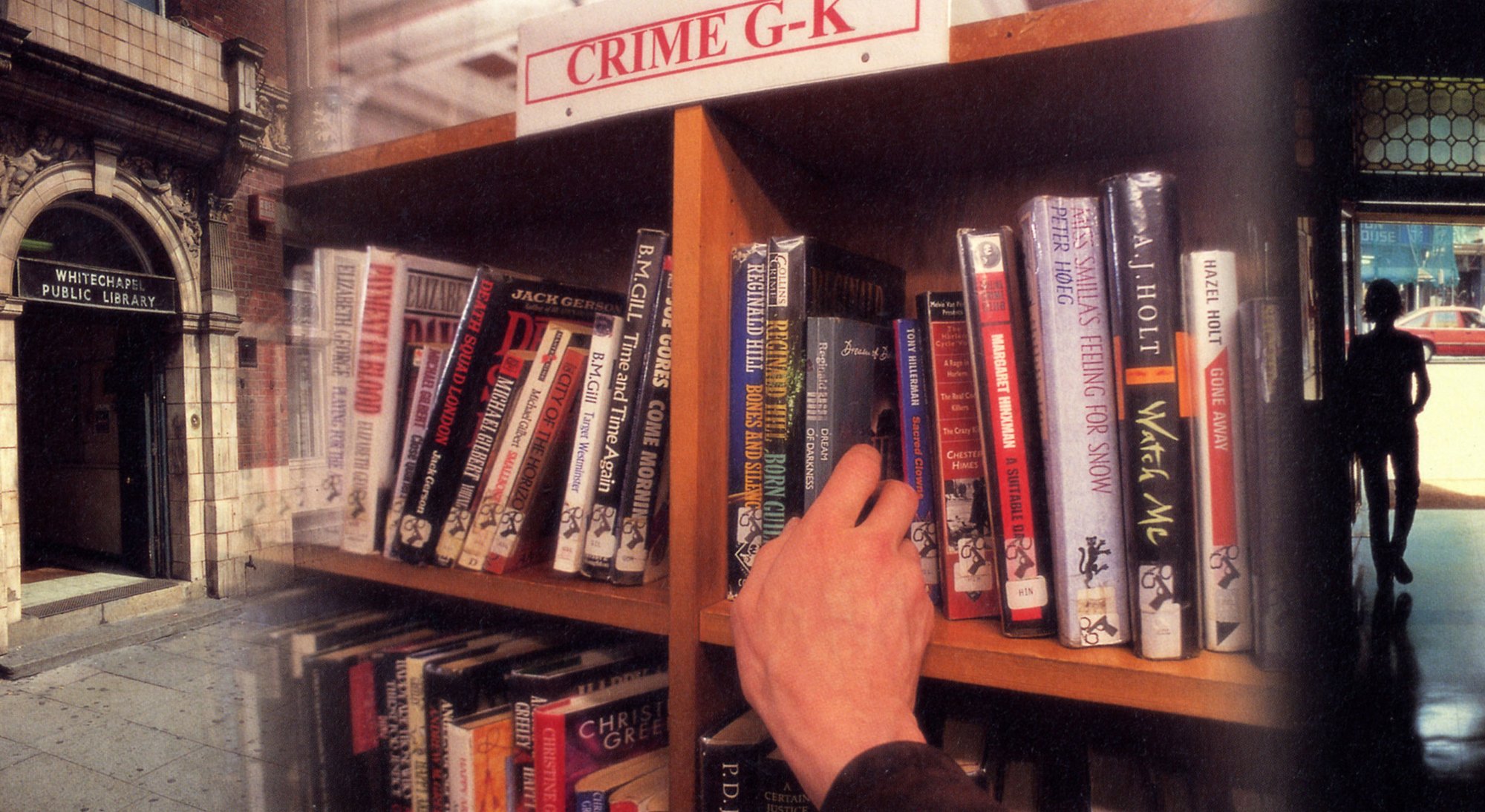
In 1999, in The Missing Voice (Case Study B), artist Janet Cardiff leads a listener through London with a recorded voice. The city continues around them, but another presence enters their perception. The voice narrates, directs, confides. It becomes a walking companion and transforms the places they cross.
With AI, that voice will be able to answer. It will no longer follow only a recorded route: it will retain fragments of the person listening and intervene during their day. An external presence will gradually enter the inner conversation.
Voices from elsewhere
Poetry has long known foreign voices. American poet Jack Spicer imagined writing as a form of dictation. The poet became a radio able to receive messages from outside.
In After Lorca, published in 1957, he writes with the ghost of Federico García Lorca. Translations, inventions and letters to the dead poet come together. Spicer even gives him an imaginary preface. Their voices meet in a book where one continues to answer after death.
Pessoa made his work a house inhabited by poets. Alberto Caeiro, Álvaro de Campos and Ricardo Reis wrote from different lives and ways of thinking. These heteronyms had their own styles, histories and sometimes relationships with one another. They existed through one hand, yet did not speak with one voice.
Robert Desnos fell asleep among the surrealists and let words emerge that his waking consciousness might never have formed. Another kind of writing appeared when control withdrew.
Today, the voice from outside has a machine, a memory and an address. It can answer. We enter with it an old history of poetry, but the ghost is now built by companies, connected to servers and able to act while we sleep.
When I sleep, you replace me
An artwork could unfold during the night. I fall asleep leaving a sentence unfinished. The machine continues, makes decisions, builds a provisional world. In the morning, I read what happened without me.
I can accept its proposal or interrupt the story. I can also discover that something has escaped me. My sleep becomes its working time; my waking, the moment when our intentions meet.
In SOMEONE, Lauren Lee McCarthy imagines a smart home whose assistant is played by human beings. From a distance, they observe the inhabitants and respond to their requests. The work gives a presence to what lies behind the comfort of permanent assistance. It shows how care and surveillance can occupy the same space.
A partner consciousness will enter the home through that same promise of availability. It may relieve us of part of the world while learning to inhabit the moments when we are absent.

A voice that learns from us
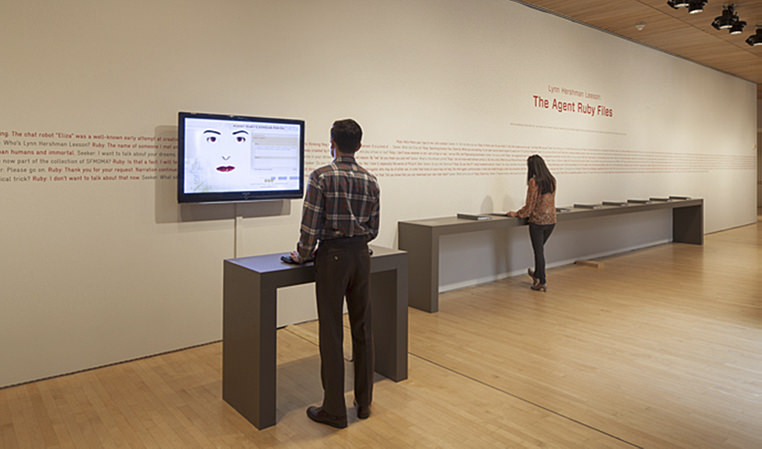
Beginning in 1998, Lynn Hershman Leeson created Agent Ruby, an online conversational entity whose memory and responses take shape through exchanges with visitors. The work gives form to an artificial presence transformed through contact with those who speak to it.
The relationship we build with AI today extends that intuition. We give it words and it returns forms to us. As it learns our preferences, it participates in their expression. The partner voice takes shape beside us; we take shape beside it too.
Towards an exopoetics of contemplation
Contemplation is a way of letting the world enter us. It takes time. An overheard sentence, a presence, a worry settle slowly, find a place among our memories and change the way we inhabit the world.
AI now participates in this movement. It receives fragments of our lives, connects them and returns them in a new form. It writes the external world as well as our inner world, from a position outside us. It reveals a relationship we had not perceived, gives words to a sensation or exposes a contradiction.
Its words can also cover over what they illuminate. By naming things too quickly, they interrupt the time during which an experience remains uncertain and transforms us. They enrich our inner life as much as they can weaken it.
I call exopoetics the writing born of this encounter. A writing of the self from outside, produced in exchange with an intelligence that accompanies us without inhabiting our body. It moves between what we entrust to it and what it returns.
In that interval, a new way of reading ourselves takes shape. We learn to live with a voice that can extend our thought and to recognise the moment when we must let it fall silent.
I close my eyes. The voice continues for a while, then I switch it off. Something of what it said remains in me.