
1. A magazine is a place, not simply a medium
The magazines that accompanied net.art and new media art did more than report on works. They gave those works places to appear, people to speak with, and sometimes a form. A mailing list could host an argument or a performance; a website could become an archive; a PDF could be an exhibition, an open invitation to an artist, and an object to print. The history of these magazines is therefore also the history of the practices they helped us recognise.
This question returns with artificial intelligence. Machines now produce texts, images, sound, and code, as well as the discourse around them. An art magazine cannot simply line up works made with the latest tools. It has to invent ways of reading them, showing their processes, discussing the conditions of their production, and giving them duration. To look for such a form, I first return to an adventure in which I took part: Poptronics. I then place it alongside Neural and other editorial experiments that shaped digital culture.
2. Poptronics: making room for artists within the flow
When Annick Rivoire launched Poptronics in 2007, she came from journalism and the criticism of new media. She gathered artists, journalists, and critics around her. Christophe Jacquet, known as Toffe, designed its visual identity; Elisabeth Lebovici became editor in chief of the pop'lab. I took part in conceiving the project, particularly in looking for solutions and establishing its specifications. I also contributed as an artist through open invitations. This mixture of roles mattered: Poptronics did not observe a creative scene from outside; it was made with the people who inhabited it.
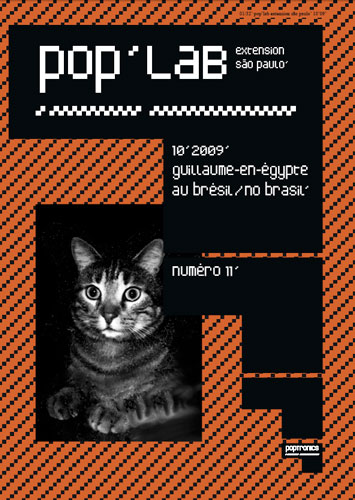
The magazine moved at the pace of an online publication, with sections, announcements, discoveries, and positions of its own. It crossed Internet art, electronic music, hacker culture, graphic design, video games, and do it yourself practices. But it also knew how to interrupt the flow. The pop'lab offered an open space in which an artist could take possession of the editorial form. Published as a PDF, readable on screen and printable on demand, it moved a proposal from one medium to another without reducing it to a reproduction. I was the first artist to occupy this space with Disque dur papier, as Poptronics recalls. A later pop'lab by Toffe showed how far this hybrid form could go, between digital magazine and printed edition.
That freedom of form distinguished Poptronics from a cultural events calendar. Articles, sound, stories, graphic interventions, and PDFs could coexist. The magazine understood that an artist brings more than a subject: an artist brings a way of publishing. It offered a collective framework without imposing a single mould. For its tenth anniversary, a printed “anarchive” extended this gesture: links and articles accumulated online became material to be recomposed on paper. The archive itself became a creation, with its choices, gaps, and reappearances.
What I retain from Poptronics is therefore more than its early attention to digital culture. It brought different skills and sensibilities together around a magazine able to change medium. Paper did not erase the network; it gave some experiences another reading speed and a presence that the screen alone cannot guarantee.
3. Neural: print as an interface to the network
Neural began in Bari in 1993, in a different landscape: BBS networks, electronic music, and Italian cyberpunk. Alessandro Ludovico and Ivan Iusco chose a printed magazine to follow practices that seemed to belong to screens. The paradox was productive. Neural's pages did not merely describe digital culture; they replayed its codes. Binary page numbers, optical effects, and graphic experiments made the magazine an interface to handle.
From the late 1990s, Neural brought hacktivism, electronic music, and media art together. These were not separate departments. They described related ways of diverting tools, building networks, and challenging prescribed uses of technology. The magazine circulated online and on paper, in several languages. Its first issue already published an Italian translation of Agrippa, William Gibson's poem-book: literature, machines, and publishing met there from the beginning.
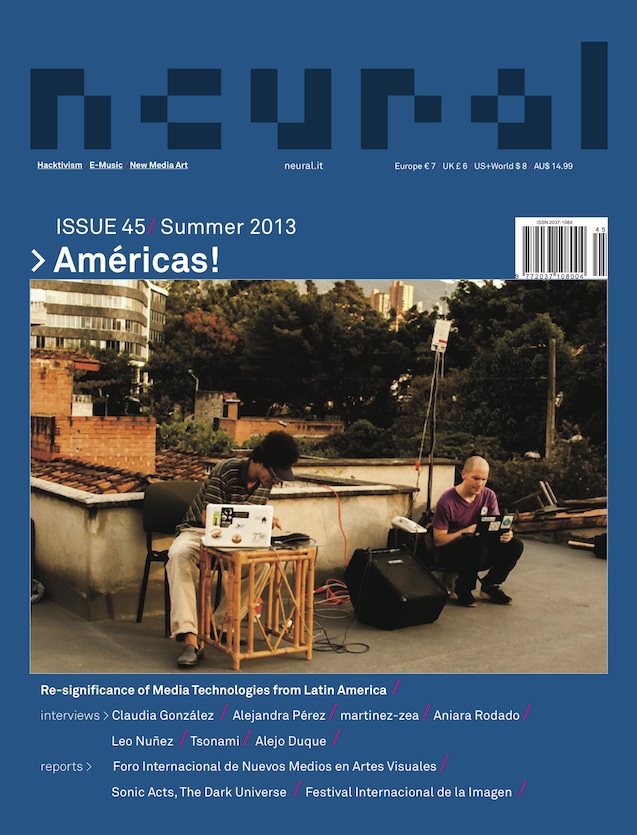
Neural also became a meeting point for other publications. With Mag.net, it joined a network of independent magazines exchanging texts, ideas, and readers across national borders. Such a magazine no longer exists as an isolated title; it becomes an infrastructure for circulation. Its website follows events and works as they happen, while its printed issues compose slower constellations. Issues devoted to China, the Americas, or scenes outside Western centres show how an editorial line can redraw its own geography.
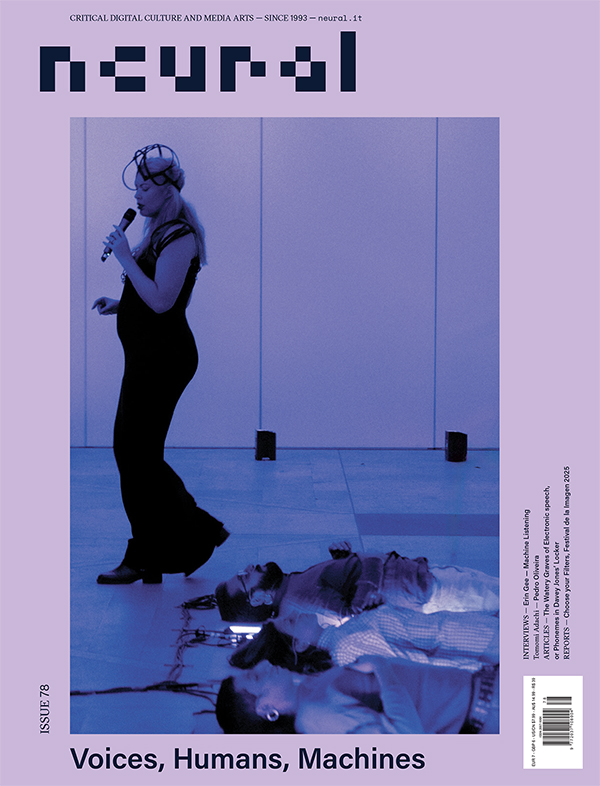
Neural's recent subjects, up to issue 78, Voices, Humans, Machines, continue this history. Artificial intelligence enters a critical culture of technology that did not begin with generative models. Where Poptronics readily opened its formats to invited artists, Neural insists on the continuity of an inquiry and on the memory of networks. Yet both meet at a decisive point: a magazine matters through the form it gives to a community of work and reading.
4. An international constellation
Poptronics and Neural were never alone. Net.art developed amid mailing lists, magazines, art centres, and experimental publications. Nettime made networked discussion a place for criticism; Rhizome began as a mailing list and later developed exhibitions, commissions, and conservation of digital works. In the United Kingdom, Mute brought culture, politics, and technology into conversation through both web and print. These places did not publish the same things, but they shared an idea: works made in networks needed their own paths of circulation and their own archives.
This history reaches far beyond a Paris–London–New York axis. Mag.net already connected European magazines with Undo in Mexico, among others. In Riga, Acoustic Space, created by E-Lab/RIXC, linked network art, research, and techno-ecological cultures. In Delhi, the Sarai Readers brought together research, images, and writing on media, the city, law, and the public domain. In Tokyo, InterCommunication brought art, science, philosophy, music, and architecture into dialogue even before the ICC opened. These projects remind us that digital art never had a single capital or a universal format for discussing it.
Electronic literature developed its own places of publication and preservation. The Electronic Literature Organization publishes collections in which texts are also programs, paths, moving images, or interactive devices. The medium does not come after the work: it enters into its writing. This is why the history of net.art magazines naturally leads to poetry, fiction, and programming languages. It lets us read work made with AI as a new chapter in an older question: how do we publish a work whose form depends on a technical system?
5. When the machine also produces discourse about art
Today the editorial problem has changed scale. A generated image can circulate with a generated commentary; a model can write a review, an artist's biography, or a gallery text. Speed makes abundance easy, but says nothing about the strength of a proposal. A magazine's work is to choose, situate, create conversations, and make the human decisions within the works legible.
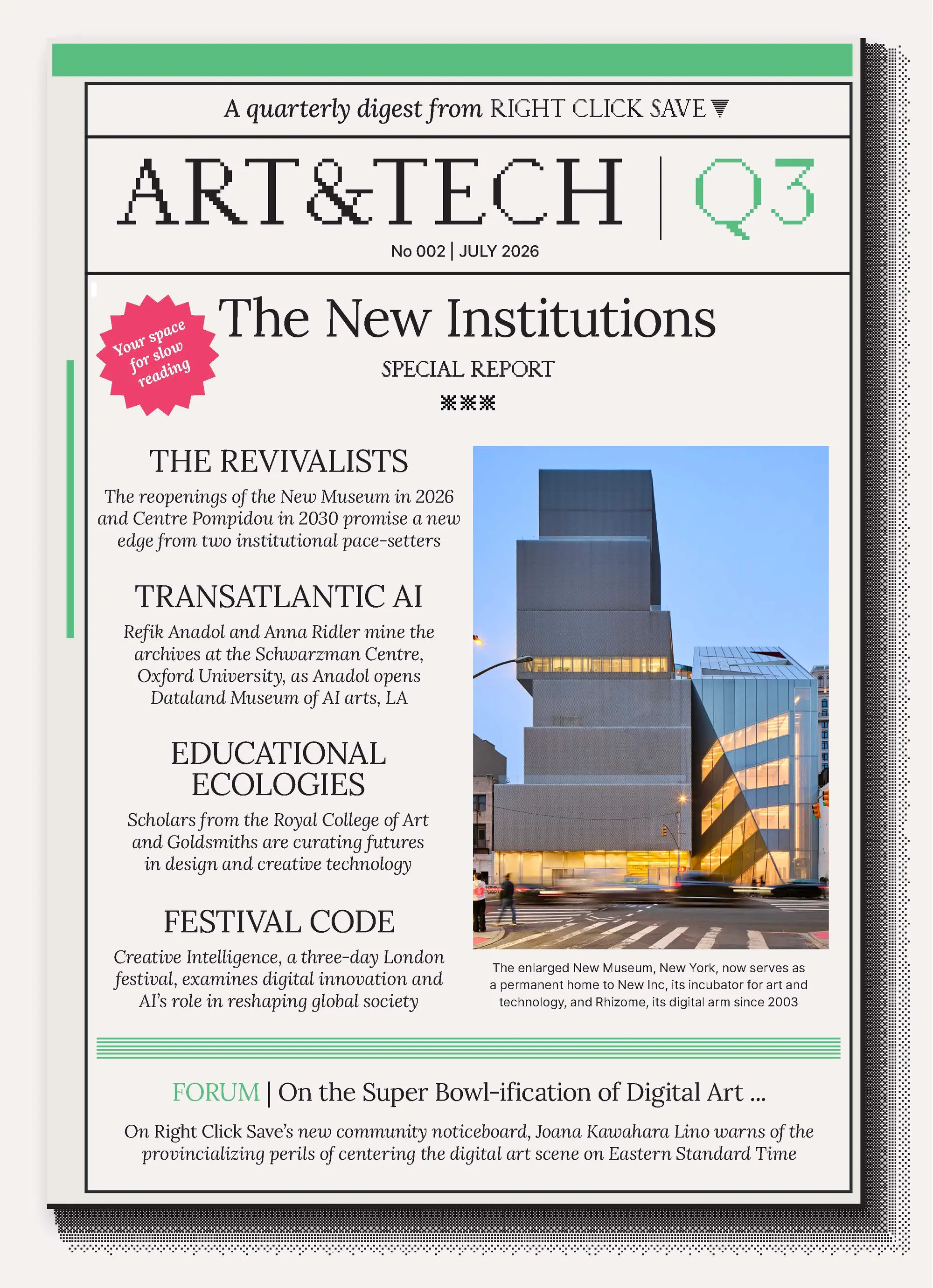
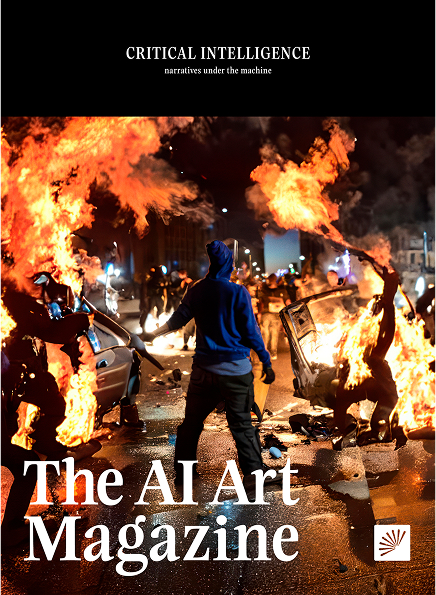
Right Click Save offers an interesting example of this change in pace. Alongside its online publication, its quarterly ART & TECH presents itself as a space for slow reading about the transformation of art by technology. The AI Art Magazine, with its Critical Intelligence issue, also gives printed form to images and analyses that question the stories machines produce. These magazines testify to a need for time, layout, and critical attention in an environment saturated with technical novelty.
The question is not whether we should admire or reject AI as a whole. A magazine can publish a work built with a model, an investigation into the data that made it possible, a creative protocol, or a text written without AI that examines its effects. It can show both the result and the conditions of its making: corpora, prompts, editorial choices, retouching, translation, refusals, and accidents. These operations, often invisible in a final image or fluent text, give a practice its singular character.
6. Literature and poetry at the heart of this history
The meeting of writing and calculation did not begin with large language models. Oulipo turned constraints into a source of new forms; digital poetry later explored animation, hypertext, and generation. In these experiments, the author is not simply someone who puts words on a page. An author can devise a rule, write a program, choose a corpus, assemble sequences, or intervene during reading. A work may reside as much in its system as in any one of its appearances.
Generative models shift this history because they produce plausible sentences at scale, from corpora and calculations the reader almost never sees. A poem may emerge from a long conversation with a system, followed by cutting, rearranging, and rewriting. Saying only that it was “made with AI” erases this work; saying nothing about the machine erases another part of it. A magazine can make room for both the text, in its sensory force, and an account of its making precise enough to understand what was composed.
Reception itself is part of the subject. A study published in Scientific Reports shows that the belief that a poem was written by AI affects how readers evaluate it. This observation invites us to look closely at expectations surrounding authorship, voice, and originality. It takes nothing from literature; it gives publishing an additional task. To publish a work is also to construct the conditions in which it will be read.
Poetry, fiction, and essays have a central place here because they work directly with the language that models manipulate. A magazine can welcome a poem written without a machine, a conversation turned into fiction, a program read as a score, or an image accompanied by its instructions. Their proximity on the page makes different acts of writing visible. The reader no longer faces a single category called “AI art”, but proposals that each invent their own relation to language and technology.
7. LABIAL: composing your own magazine
From these experiences I am creating LABIAL — Literature, Art and Artificial Intelligence, a magazine I am launching at Éditions L, the publishing house I founded. Its name evokes lips, breath becoming speech, the contact between a body and what it says. It sets this physical presence alongside systems capable of producing sentences, images, and code. LABIAL will welcome writers, artists, and researchers, along with forms that cross their disciplines: poems, stories, essays, dialogues, images, scores, protocols, and fragments of programs.
Using artificial intelligence will not be a condition for entry. A work made with a model can appear beside one that critiques it or chooses to do without it. What matters is the proposal: its necessity, its form, and the way it lets us read its own operations. Each contribution can invent its page while taking part in a shared editorial space. The magazine will have its own site, labial.fr. The PDF will first be published on the Éditions L site; paper will remain a real possibility, rather than a nostalgic image of the magazine.
LABIAL will carry the pop'lab's openness further with one principle: “Do your own review.” Readers will choose the published contributions they want to bring together. Their selection will form a personal PDF, printable on demand. The same text may then meet different works, change its neighbours, and invite other readings. Editorial selection will make the works public; readers' assemblies will give them multiple paths. Every printed copy will become its own constellation within a shared magazine.
Printability will be a creative constraint. An interaction, a variable work, or a process does not settle naturally onto a fixed page: its translation, score, trace, or story has to be invented. This operation does not close the work; it opens another time for it. We can return to a sentence, compare two images, annotate a protocol, and keep the memory of a version. LABIAL will make this passage between screen, PDF, and paper its permanent workshop.
Poptronics taught me that a magazine can be built as a collective and offer its pages to artists. Neural shows how it can become a network and an archive without giving up the force of its printed object. LABIAL takes up these gestures for an age in which machines also participate in producing forms. It gives works a place to be read, and readers a part in composing the magazine.
LABIAL will launch on 25 October 2026 during a roundtable at the Biasel Paris festival. More information to follow.