
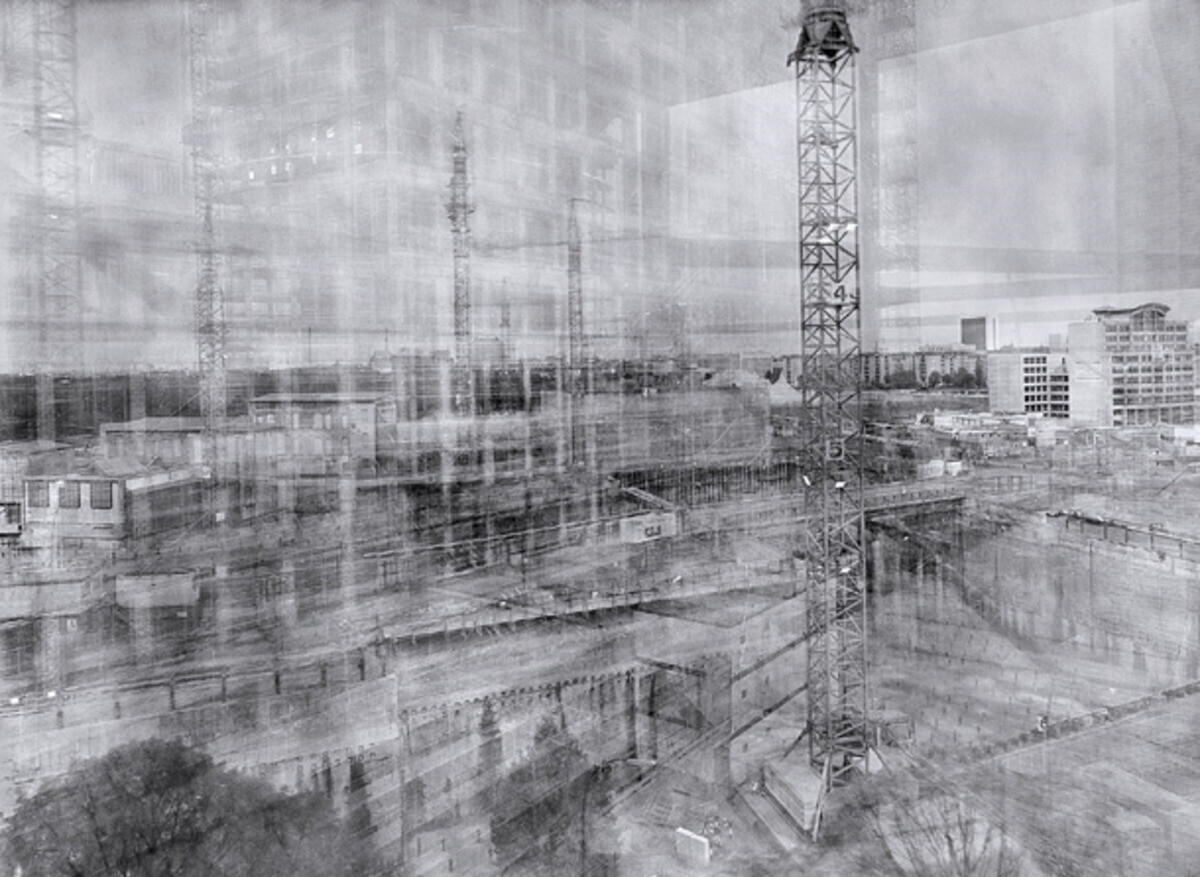
An idea appears and, before it fades, I can carry it further. I ask AI a question; its answer prompts another. A reference emerges, then an objection. I return to my intuition and shift it. The conversation continues at the speed of my desire.
That speed excites me. It gives research a fluidity I have known in certain conversations, when several people take hold of a proposition and pass it around until it becomes something else. Exchanges fly like they do in a parliament or an agora. Voices cross and sometimes contradict each other. An idea I thought isolated suddenly finds a larger territory.
With AI, that agora fits inside a window. I can enter at any hour and resume a discussion where I left it. One thought immediately calls forth another. Speed keeps the movement alive; sometimes it prevents me from losing the thread while I look for an author’s name or a work I only half remember.
But a question remains: how does this proliferation become genuine creation?
A rapid maieutics
I can ask AI to push a hypothesis to its limit. It sets out the consequences, finds connections, sketches paths. I can immediately ask it to turn the problem around or connect two apparently distant fields.
At times, this dialogue resembles a maieutic practice. Thought comes neither entirely from me nor entirely from the machine. It takes shape in the exchange. An awkward response can become fruitful if it leads me to clarify what I am looking for. An error can open a direction, provided I do not mistake it for fact.
In this experience I recognise something of the quickness Italo Calvino describes in his Six Memos for the Next Millennium: an agility of mind capable of connecting distant points. Calvino associates that movement with Mercury, the messenger, while setting it alongside Vulcan and the patient time of the forge. Inspiration and work on the material belong to the same creation.
AI accelerates Mercury’s journeys. It lets me multiply attempts while an idea is still warm. But the speed of an association does not tell me whether it is sound, or whether it contains a work. Sometimes I must go back, read what was cited and let a proposition withstand the first excitement.
A poetics of making through conversation
In my experience, this speed produces a real proliferation of new ideas. Some emerge during the exchange; others were buried, forgotten in a notebook or left as fragments. Old experiments meet contemporary questions. An intuition I thought abandoned suddenly finds another form.
Conversation with AI sets these elements in motion again. It brings together thoughts formed at different moments in my life. It allows them to meet in the same present and continue to change.
I see here a poetics of making, in the sense Paul Valéry gave to the study of making and the creation of works of the mind. I am interested in the movement through which a work becomes possible: the associations that appear, the paths that emerge and the decisions that gradually give research a direction.
AI can produce a proposition I would not have formulated alone. Yet it works from existing languages, forms and knowledge, as well as from what I bring to the exchange. Nothing comes ex nihilo. New ideas are born here from an encounter: they draw on earlier materials and can move beyond what either brought at the outset.
I witness this proliferation without knowing how many paths will become works. Some will remain experiments. Others will return to my notebooks and wait for years. A few will continue to develop after the conversation ends, until I recognise in them the beginning of something.
Accelerating eureka
What interests me is the moment when, during a conversation, something shifts. Several elements that had remained separate suddenly come together. A sentence gives form to what had long been looking for a way to be said. An idea becomes visible.
Can AI accelerate that eureka? It can certainly bring the materials that make it possible closer together more quickly. It can also provoke an unexpected encounter between references, offer a contradiction or reformulate a question so that a way forward appears.
I do not know whether it accelerates the revelation itself. That cannot be measured solely by the number of answers obtained. A proposition must meet something already waiting: an experience, an old inquiry, a forgotten image. The surprise belongs to the person who recognises it.
After the exchange there is often silence. I close the computer, go for a walk or sleep for a while. When I return, one idea persists while many others have disappeared. Sometimes that is when I understand what happened during the conversation.
A mind already full?
I also wonder for whom this speed becomes fruitful. In my own work, it encounters years of reading, projects and unanswered questions. When AI proposes a connection, I can recognise it through that history. Sometimes I know what is missing, what rings false or what touches an earlier intuition.
Would an encounter with AI be as powerful without that prior memory? A mind already formed may find more purchase in the rapid flow of answers. It has resistances, desires and obsessions that allow it to choose.
But a mind is never finished. Someone beginning can also discover works and ideas through this conversation that would otherwise have been harder to reach. The question is whether speed leaves enough time to build one’s own bearings. Assistance can open a path to learning; it can also give the impression of knowing before knowledge has been tested.
What matters may not be the quantity already accumulated, but the possibility of turning what one encounters into personal experience.
The time of works
A text appears in seconds. Yet it takes time to read. An image generated immediately still asks for a gaze. A film has a duration I must enter if I want to encounter its rhythm.
I can skim, accelerate a video or ask for a summary. These gestures can be useful; they sometimes help me find one path among many. But a summary does not always offer what happens as I move through a work: waiting for a scene, the resistance of a sentence, the time an image takes before it disappears.
Every medium has its speeds. So does every person. I sometimes read very quickly because I am looking for a precise idea, then pause for a long time on a single page. AI can accompany these different movements. It can also lead me to scroll through propositions faster than I can receive them.
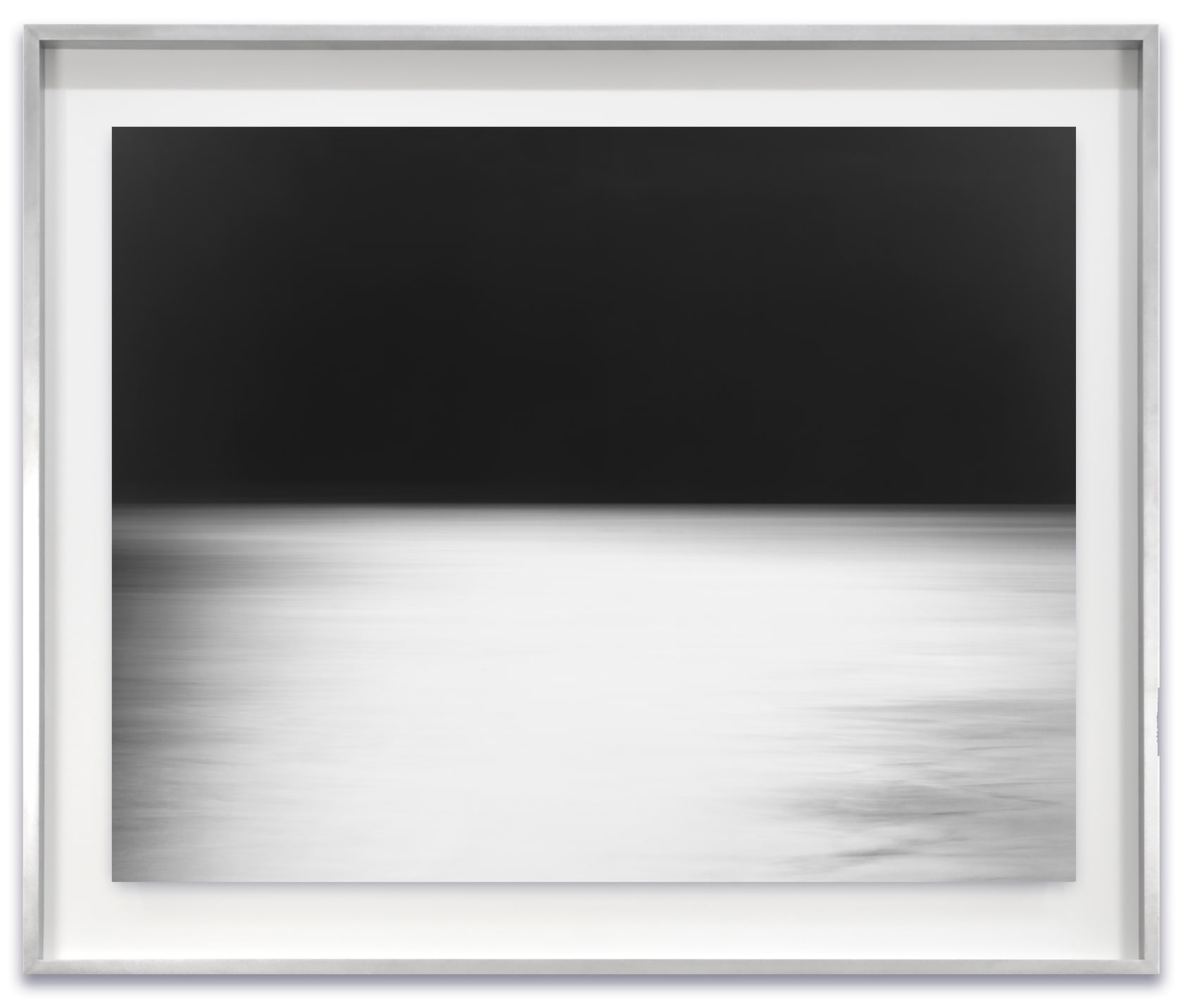
The horizons photographed by Hiroshi Sugimoto seem motionless. Yet their stillness is traversed by the movement of the sea and the time of exposure. I can remain before the image without trying to move through it faster. It reminds me that a work does not simply contain information: it offers a duration.
My thought finds freedom when speed opens new possibilities. It withers when I can no longer distinguish what interests me from what has merely just appeared.
Who chooses the speed?
Paul Virilio made speed a political question. In Speed and Politics, he showed how control over movement and communication transforms relations of power. Speed is never only an individual matter: it depends on infrastructures and those who control them.
With AI I can access a power of research that was previously hard to reach. Yet that power belongs to companies that organise access to models, choose aspects of their behaviour and can change them. My agora has owners.
In The Language That Passes Through Us, I explored how AI might become a relational environment and transform the way we think. Speed extends that reflection: the environment changes not only what I can formulate, but the rhythm at which formulations reach me.
Hartmut Rosa describes the paradox of a society where technologies save time without necessarily giving us more of it. The time saved can be filled with new tasks. Judy Wajcman reminds us that time pressure also depends on how work and social life are organised: it is not contained entirely within the machine.
The same speed can serve different desires. In my studio it can keep an inquiry open. Elsewhere it can become an imposed pace. Time saved becomes freedom only if I can choose what to do with it.
An agora in the stream
Bernard Stiegler considered how technologies organise the time of consciousness. Media make us follow streams that have their own rhythm.
With AI, the stream answers. It awaits my questions and draws my attention back. It can give research a new intensity, but it can also extend the conversation indefinitely. There will always be another path, another connection, another possible version.
Yves Citton has shown how attention has become a contested resource. As texts and images multiply, the time we can give them does not multiply at the same rate.
Artist Hito Steyerl described the transformations of images that circulate, are copied and degraded online. With AI I see another stage: images circulate quickly, but they can also be produced in abundance before we even know which ones we want to look at.
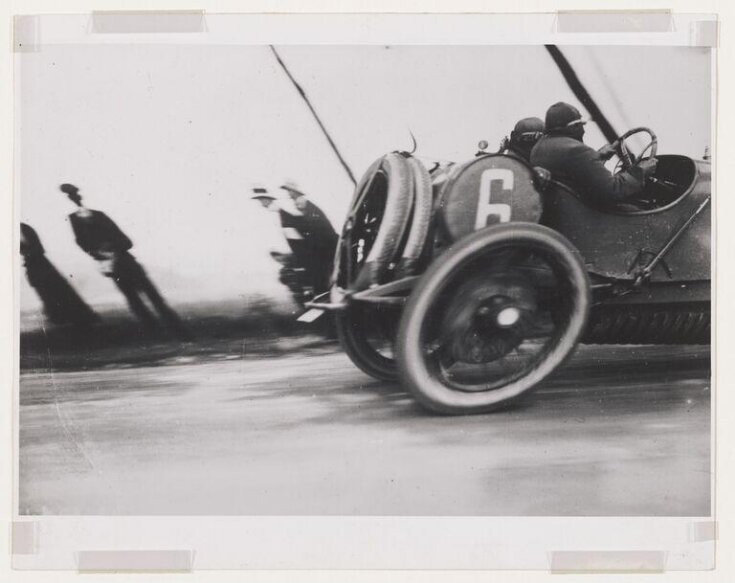
In Lartigue’s photograph, the car crosses the frame and time seems to bend around it. Photography captures speed, but gives it a new duration: more than a century after the race, we can still pause before that passing moment.
In Model Collapse, or How AI Pushes Towards the Disappearance of the Image, I asked what happens when generated images feed further generations of images. The speed of production makes the question more pressing: what do we keep when images arrive faster than our desire to see them?
Keeping the thread
I do not want to oppose speed to contemplation. In an exchange with AI, quickness can be a form of attention: it lets me follow a thought while it changes. It makes possible a lively conversation with materials I would not have connected so easily.
I want to enter that movement without surrendering all my rhythms. To research intensely, then let an idea settle. To produce several forms, then live with one of them for a while. To return to a book whose reading cannot be compressed into the answer that led me to it.
In AI × Humans: When I Sleep, You Replace Me, I imagined a partner voice able to extend our activity in our absence. Here, the question moves towards the time of our presence: how can we create with a machine that answers almost immediately without losing the singular rhythm of our thought?
AI may accelerate eureka by multiplying encounters. It does not decide what, among those encounters, will become a work. That takes place in the time I give ideas, in what my history allows me to recognise in them and in the freedom I retain to step off the tram.
Then desire returns. Another question appears. I get back on.