AI × Humans
When I sleep, you replace me. Towards an exopoetics of contemplation.
A LIVING PUBLICATION · David Guez
Manifesto.Dialogz is an initiative by David Guez, an artist and author whose work began with the arrival of the Web and the conception of a particular project: Le Livre des liens — The Book of Links.
From the 1990s onward, it became important to understand what art might do with the immense revolution of the Internet and what new practices could emerge from it, both artistically and socially.
Thousands of questions, intuitions and reflections followed, together with the desire to produce objects and matrices within the field of art — perhaps the only field capable of welcoming and integrating these strange forms that were still coming into being.
Above all, there was a desire to invent new forms of encounter and exchange: to create living, shifting collectives and platforms; to imagine new ways of engaging with time, individual and collective memory, the media, radical representations and the utopias of a world that had become hyperconnected.
Thirty years later, we find ourselves facing contemporary artificial intelligences and one immense question: where are we going?
Alone or together, with or without them, through refusal or submission, through thoughtful integration or in a wild, uncontrolled manner — all the way to our irreversible disappearance as human beings?
Dialogz takes up the principle of Le Livre des liens: creating dialogues between people, disciplines, works, technologies and collective imaginaries. But beyond the prompt, it also attempts to enter into dialogue with these different intelligences, artificial yet entirely real.
Dialogz is a kind of multiversal logbook with a minimal objective: to release everything that once slowed down or obstructed creation; to multiply proposals, theories and outlandish hypotheses; to bring previously separate fields into contact; and to venture further into radicality.
To be able, at last, to begin with an image, an intuition or a detail encountered in a book, a film, a poem or a simple glance, and immeasurably expand the reach of our imagination.
And who knows?
We remain — and we will remain — fragile, mortal, anxious, in love and, in that respect, different.
Welcome to Dialogz.
RECENT PUBLICATIONS
When I sleep, you replace me. Towards an exopoetics of contemplation.
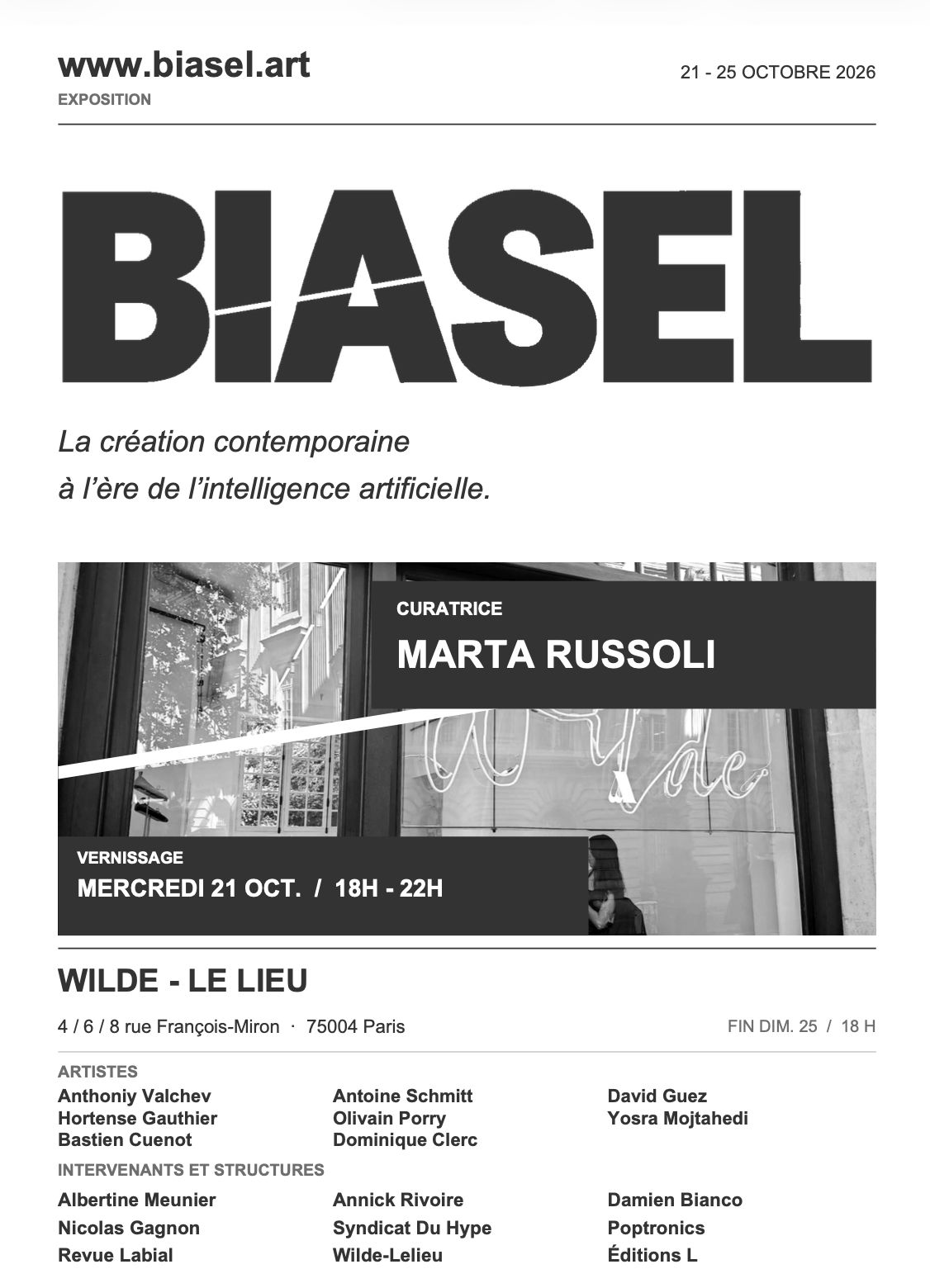
From 21 to 25 October 2026, I am co-organising BIASEL in Paris, presenting AQUA ORO / Eau de prompt and launching LABIAL on 24 October. This event opens a reflection on the history and challenges of exhibiting digital art and artificial intelligence.
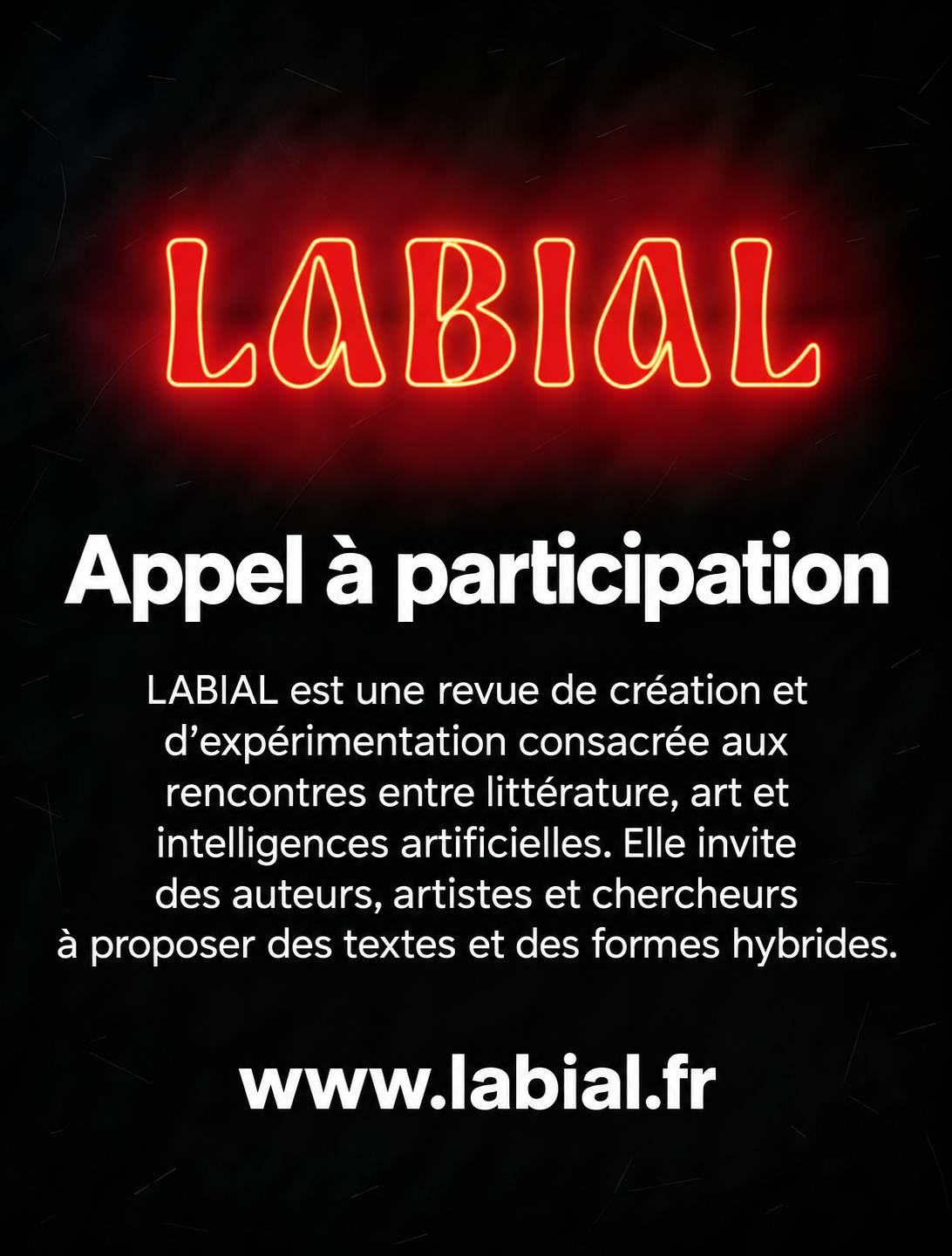
LABIAL, a magazine devoted to literature, art, and artificial intelligences, invites contributions to its zero issue, presented on 24 October at the BIASEL festival in Paris.
THE DIALOGZ ARCHIVE
Search an exact word or phrase in every published article.
9 exact result(s) for « consciousness »
…h one voice. Robert Desnos fell asleep among the surrealists and let words emerge that his waking consciousness might never have formed. Another kind of writing appeared when control withdrew. Today, the voice from outside has a machine, a memory and an address. It can answer. We…
…rs can quickly cease to hear the conditional tense. This “LLM of oneself” is not an upload of consciousness. It models patterns of language and draws on retrieved sources to compose a reply. It has neither the body that lived the events nor inner experience nor an automatic r…

…human tracheal cells. They neither establish an autonomous new species nor demonstrate artificial consciousness. They reveal the plasticity of living matter and our growing ability to direct it. The ethical question cannot be postponed until after the experiment. In 2024 scientis…
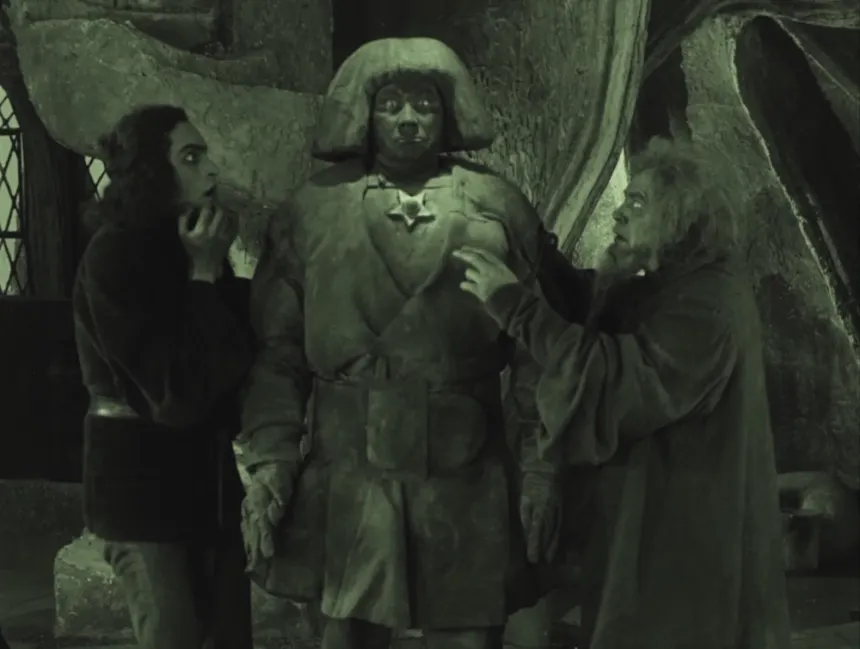
…ion and Galatea replayed in silicon. Westworld (2016) closes the circle by asking the question of consciousness and memory directly: at what point does a creature that believes it remembers acquire an inner life we can no longer deny it? VI. What all these stories ask, together T…
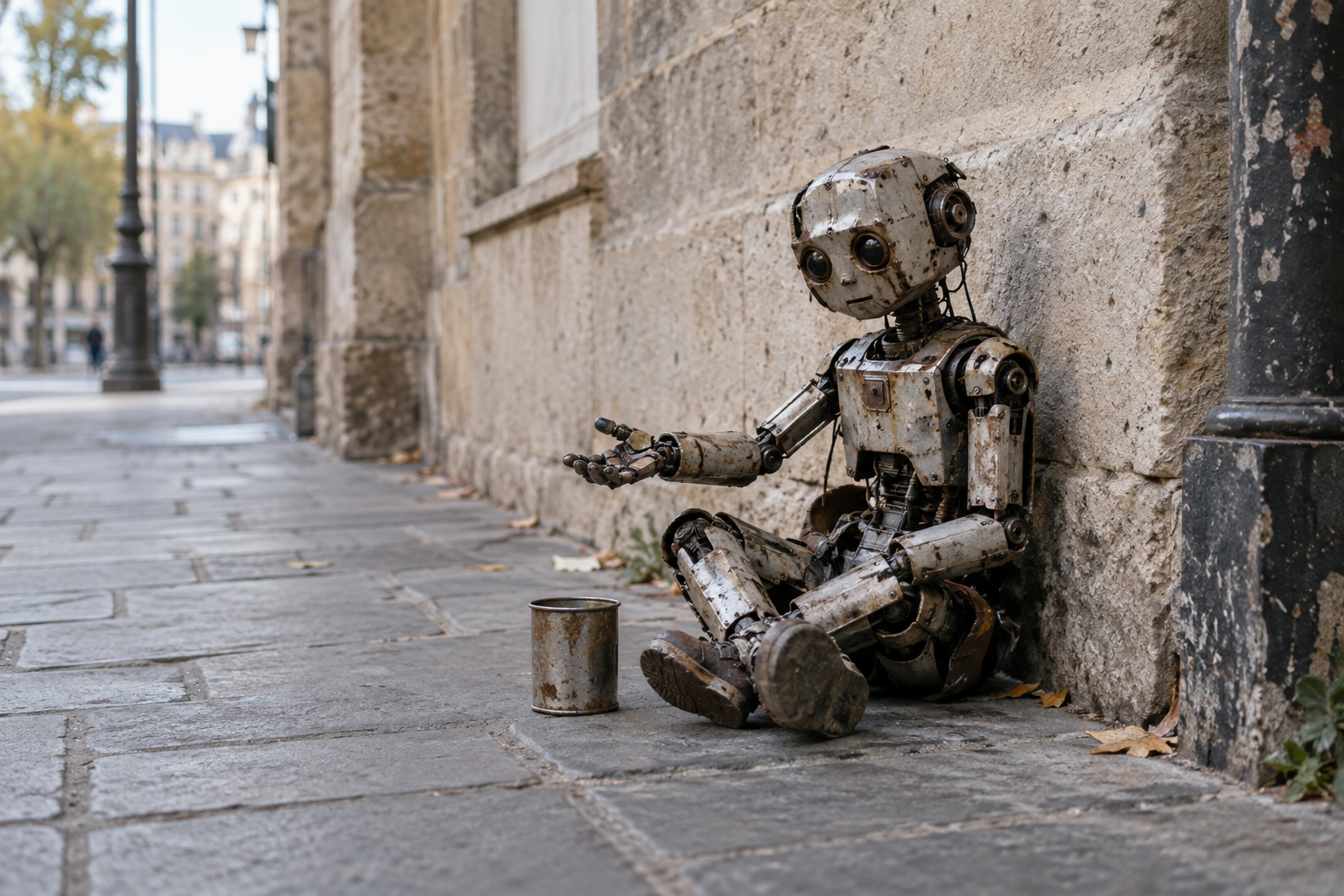
…pendence on others in order to continue. This is not a call to “free” a machine as though its consciousness had been demonstrated. It is a performance exposing our reflexes. Will we give more readily to a spectacular robot than to a person seated a few metres away? Will we fi…
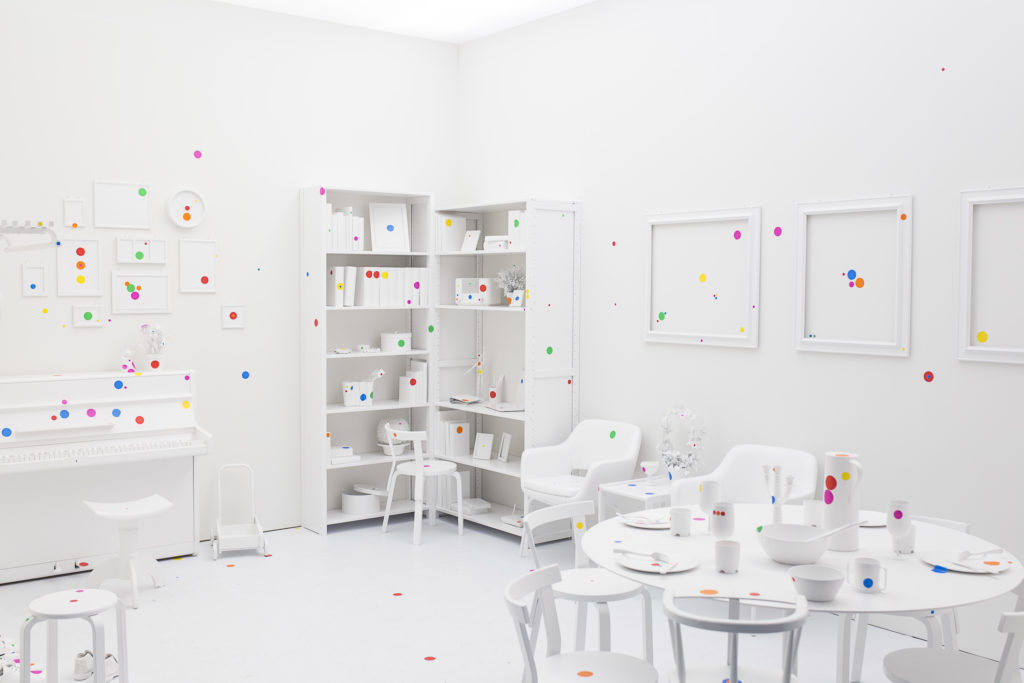
…eing assessed. Some loops therefore reproduce effects in the world rather than merely copy a form.Consciousness: the loop of the selfIn I Am a Strange Loop (2007), Douglas Hofstadter proposes that self-awareness may be understood as a brain representing itself representing the wo…
…ified version of Pong: the outcome was an experiment in a perception-action loop, not evidence of consciousness. The shift remains striking. Between Conway, the perceptron and the organoid, three regimes of rules emerge: symbolic, trained and biological. In all three cases, the a…
…he administrative zombie: institutions acting on a statistical double bearing our name before any consciousness is uploaded. The end of the original’s privilege: continuity may replace authenticity once copies act, learn and change the world. From fly to human: several threshol…
…ney, evaluation methods and—above all—what we choose to measure. A benchmark score is neither consciousness, culture nor proof of autonomy. Yet another exponential curve has settled into imaginations and budgets. Models are trained with more computation, copied nearly instant…


